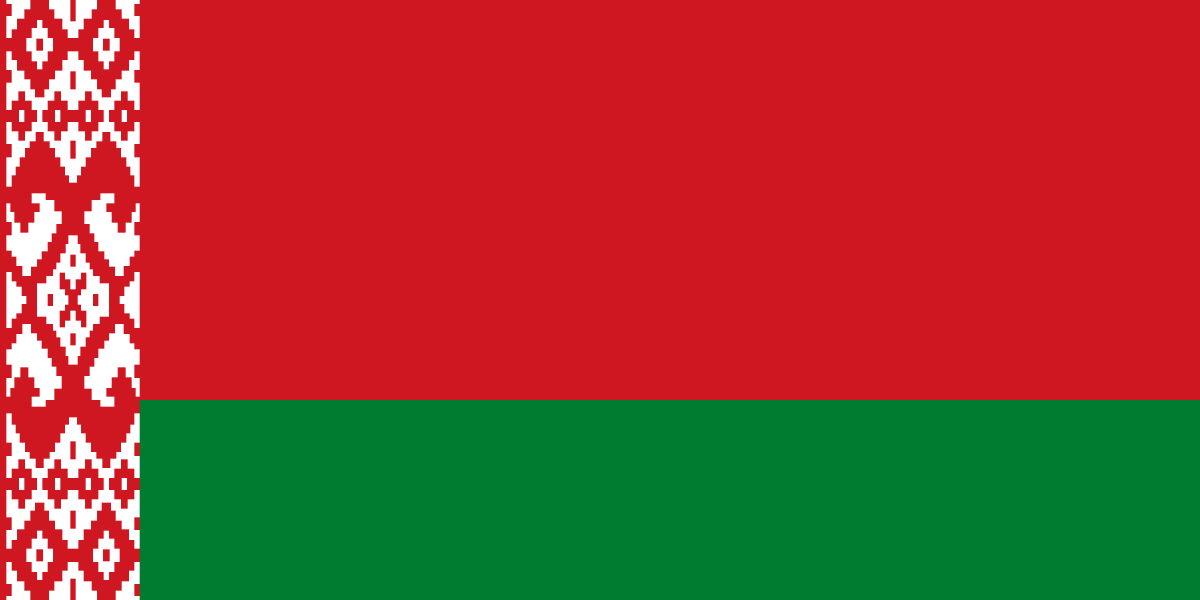
Veterinarian who chaired the First All-Belarusian Congress and, as chairman of the Rada, presided over the declaration of independence
Born in Zadzvieja in the Minsk Governorate in 1879, he graduated from the veterinary school in Warsaw in 1903 and worked as a veterinarian and as a teacher at the agricultural college in Marjina Horka. He served in the Russo-Japanese War and was active in the Belarusian Socialist Hramada. Elected chairman of the First All-Belarusian Congress in December 1917, he was arrested when it was dispersed. In February 1918 he was a Belarusian delegate at the Brest-Litovsk peace talks; as chairman of the Rada from March he presided over the session of 24–25 March that proclaimed independence, and from July to November he headed the People’s Secretariat. In the 1920s he worked in agriculture in Soviet Byelorussia; arrested in 1930 in the case of the “Union of Liberation of Belarus”, he passed through exile and the Gulag, and his fate after his release in 1943 is unknown.
Career timeline
1907–1911Veterinarian in the Minsk Governorate; teacher at the Marjina Horka agricultural college
1917Chairman of the First All-Belarusian Congress
1918Member of the Belarusian delegation at the Brest-Litovsk peace talks
1918Chairman of the Rada of the Belarusian People’s Republic
1918Chairman of the People’s Secretariat and secretary for foreign affairs
1925–1929Docent at the Belarusian Agricultural Academy
In December 1929, Yakovlev proposed that 'at least a third' of farmland be collectivized by spring 1930. Stalin dismissed it as too cautious. Yakovlev backed down and faithfully executed the more extreme timetable.
Born Epstein. He joined the Bolsheviks in 1913 and after the revolution led party work in Ukraine. In 1923 he became editor of Krestyanskaya Gazeta (Peasants' Gazette), rising as an authority on rural affairs. Appointed the USSR's first People's Commissar for Agriculture in 1929, he chaired the Politburo commission on collectivization and drafted the landmark decree of January 5, 1930, which set a forced timetable for collectivizing major grain regions and proclaimed the 'liquidation of the kulaks as a class.' He also sponsored Trofim Lysenko, helping set Soviet biology on its anti-scientific course. Arrested during the Great Terror and executed in 1938.
Career timeline
1929–1934Agriculture commissar and collectivization administrator
Soviet Union
Soviet communism
1930–2018
○ Natural causes
A chairman caught between preserving the Union and Belarusian sovereignty
“The Union would never have fallen apart if I had been in power.”
Nikolai Dementey was a Soviet and Belarusian politician who rose from agricultural administration through the Communist Party of Byelorussia to preside over its parliament. He chaired the adoption of the Byelorussian SSR’s Declaration of State Sovereignty in 1990 while continuing to support a reformed Union rather than its dissolution. After openly backing the August 1991 coup attempt, he resigned, becoming a representative figure of the Soviet order’s final crisis.
Career timeline
1958–1962Instructor of the Vitebsk regional party committee, second secretary of the Vitebsk district party committee, and chairman of the district executive committee
1974Secretary of the Vitebsk regional committee of the Communist Party of Byelorussia
1977Head of the agricultural department of the Central Committee of the Communist Party of Byelorussia
1979–1989Secretary of the Central Committee of the Communist Party of Byelorussia, responsible for agriculture
1989–1990Chairman of the Presidium of the Supreme Soviet of the USSR and Deputy Chairman of the Supreme Soviet
1990–1991Chairman of the Supreme Soviet of the Byelorussian SSR
1997–2000Member of the Council of the Republic of Belarus