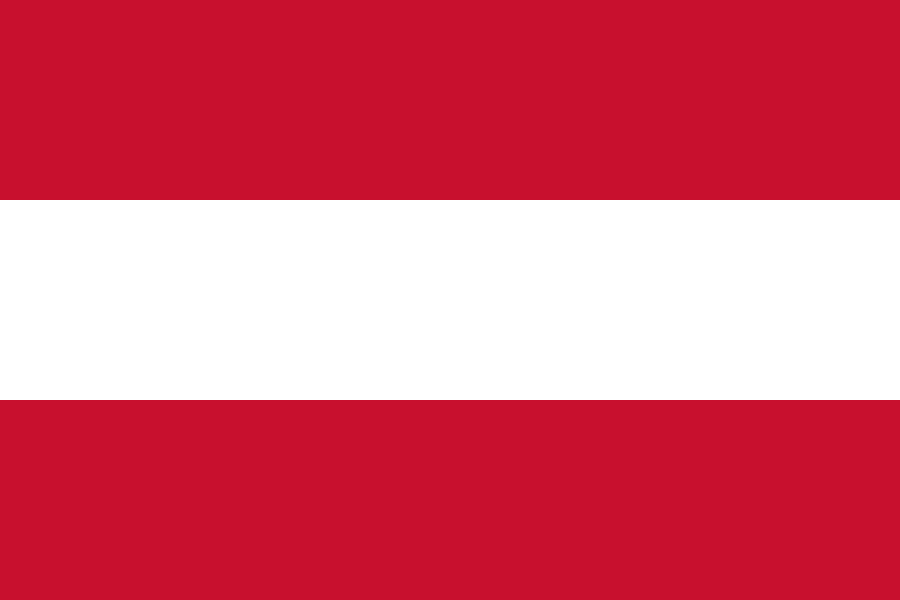
Austrian Social Democratic leader who signed the Treaty of Saint-Germain and founded the Second Republic in 1945
Born to an ethnic German farming family in Moravia, he studied law in Vienna, joined the Social Democrats and entered the Imperial Council in 1907. An Austromarxist theorist of “personal autonomy” on the national question, he was criticised by Lenin and Stalin. In 1918 he became the first chancellor of German-Austria, leading a grand coalition that introduced the eight-hour day among other reforms, and had to accept the ban on union with Germany and the territorial losses of Saint-Germain. He supported the Anschluss in 1938. In April 1945, at Soviet direction, he formed a provisional government, and that year became president. He died in Vienna in 1950.
Career timeline
- 1896Joined the Social Democratic Workers’ Party of Austria
- 1907–1918Member of the Reichsrat
- 1918–1920Chancellor and foreign minister of German-Austria (Austria)
- 1919Head of the delegation at Saint-Germain
- 1931–1933President of the National Council
- 1945Head of the provisional government; declared independence
- 1945–1950President of Austria
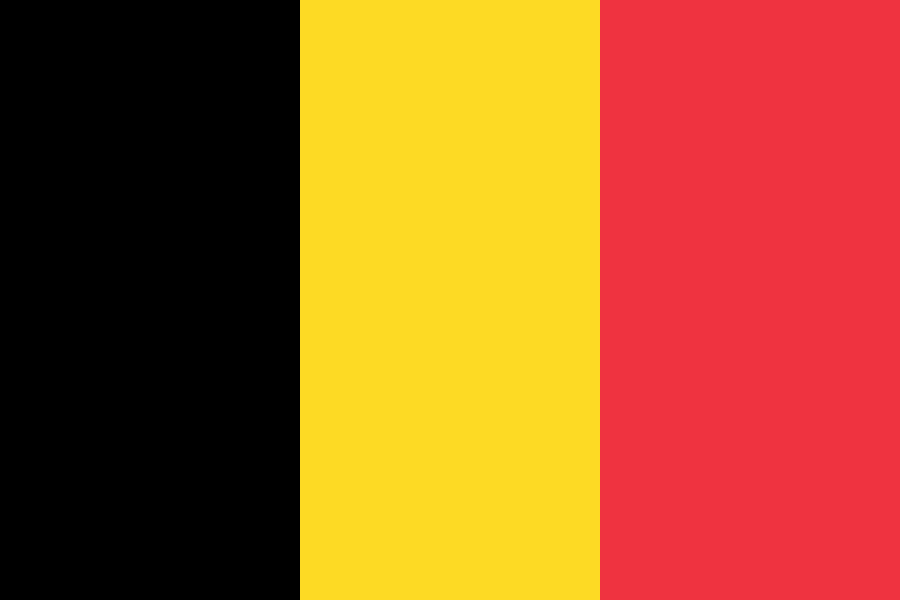
Secretary of the Second International from 1905 to 1922 who kept its Bureau alive in the war and later became Belgian prime minister
In 1917, the Socialist International’s Bureau, led by Huysmans, sought to mediate among socialists in the belligerent countries through a Stockholm peace conference; Allied governments’ refusal to issue passports prevented it from taking place.
A Flemish teacher and journalist, he was secretary of the International Socialist Bureau from 1905 to 1922. When war came he moved the Bureau to the neutral Netherlands, tried to bring the belligerent parties back together and prepared the Stockholm conference of 1917. Between the wars he was a Belgian deputy and education minister; in the Second World War he fled to London and again served as the International’s secretary. He was prime minister of Belgium in 1946–1947.
Career timeline
- 1905–1922Secretary of the Second International
- 1910–1965Member of Belgium’s House of Representatives
- 1925–1927Minister of Education
- 1933Became mayor of Antwerp
- 1936–1939President of Belgium’s House of Representatives
- 1946–1947Prime Minister of Belgium
- 1947–1949Minister of Education
Veterinarian who chaired the First All-Belarusian Congress and, as chairman of the Rada, presided over the declaration of independence
Born in Zadzvieja in the Minsk Governorate in 1879, he graduated from the veterinary school in Warsaw in 1903 and worked as a veterinarian and as a teacher at the agricultural college in Marjina Horka. He served in the Russo-Japanese War and was active in the Belarusian Socialist Hramada. Elected chairman of the First All-Belarusian Congress in December 1917, he was arrested when it was dispersed. In February 1918 he was a Belarusian delegate at the Brest-Litovsk peace talks; as chairman of the Rada from March he presided over the session of 24–25 March that proclaimed independence, and from July to November he headed the People’s Secretariat. In the 1920s he worked in agriculture in Soviet Byelorussia; arrested in 1930 in the case of the “Union of Liberation of Belarus”, he passed through exile and the Gulag, and his fate after his release in 1943 is unknown.
Career timeline
- 1907–1911Veterinarian in the Minsk Governorate; teacher at the Marjina Horka agricultural college
- 1917Chairman of the First All-Belarusian Congress
- 1918Member of the Belarusian delegation at the Brest-Litovsk peace talks
- 1918Chairman of the Rada of the Belarusian People’s Republic
- 1918Chairman of the People’s Secretariat and secretary for foreign affairs
- 1925–1929Docent at the Belarusian Agricultural Academy
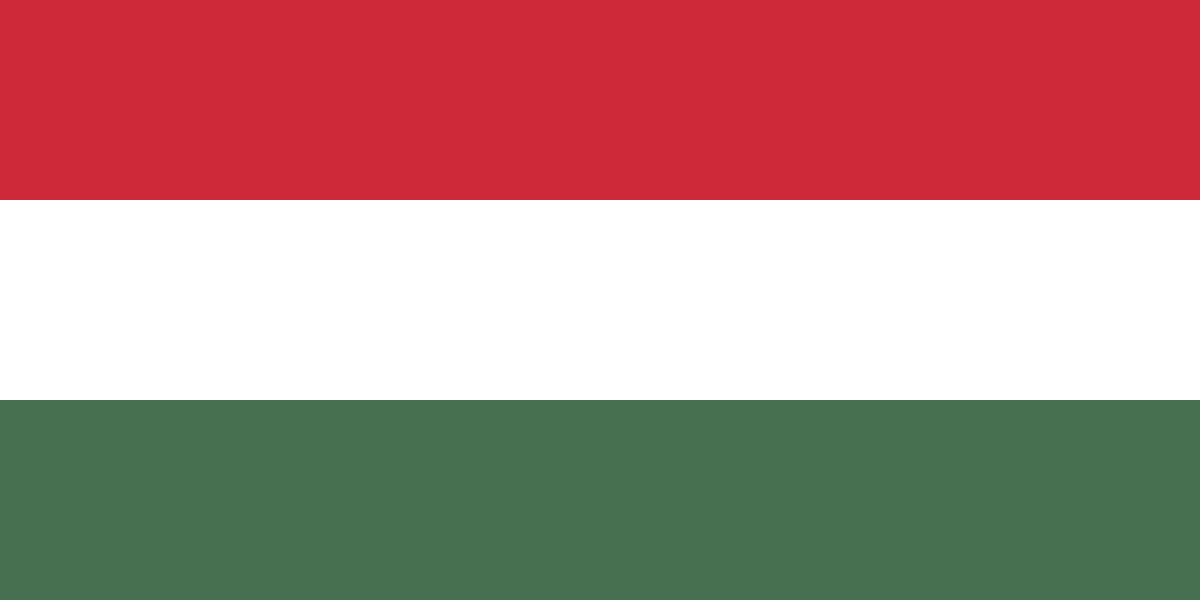
Social Democratic leader who was defence commissar and Red Army commander-in-chief of the Hungarian Soviet Republic
Born to a middle-class Jewish family, he trained as a mechanic and rose through the iron and metal workers’ union to the Social Democratic leadership. He became war minister in the Berinkey government in January 1919 and took part in the merger talks with the Communists. In the Soviet Republic he was defence commissar and commander-in-chief of the Red Army, and in July, as envoy in Vienna, he agreed with the Entente missions, on behalf of the Social Democratic leadership, on removing the council government. In exile he lived in Vienna, Czechoslovakia and Sweden; he headed the Hungarian legation in Sweden from 1946 to 1948 and resigned when the Social Democrats were merged into the Communist Party. He died in Stockholm in 1949.
Career timeline
- 1911Member of the Trade Union Council
- 1919War minister in the Berinkey government
- 1919Defence commissar and Red Army commander-in-chief
- 1919Envoy in Vienna
- 1946–1948Head of the Hungarian legation in Sweden
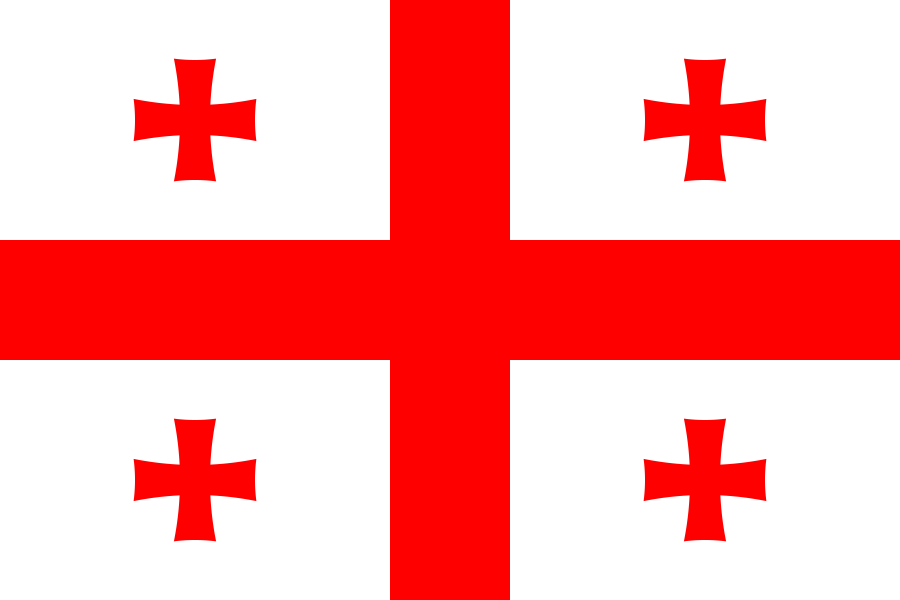
Menshevik politician who chaired the Transcaucasian Commissariat and became foreign minister of the Democratic Republic of Georgia
Born to a noble family in Martvili in 1881, he joined the Social Democratic movement as a student at Moscow University, became a Menshevik and sat in the Third State Duma from 1907 to 1912. From November 1917 to March 1918 he chaired the Transcaucasian Commissariat, then served as minister of war under the Transcaucasian Sejm. He signed the Georgian declaration of independence in May 1918 and was foreign minister, justice minister and deputy head of government of the Democratic Republic of Georgia. He left for France in March 1921 and from 1953 until his death in Paris in 1954 headed the government in exile.
Career timeline
- 1907–1912Member of the Third State Duma
- 1917Russian Provisional Government commissar for western Georgia
- 1917–1918Chairman of the Transcaucasian Commissariat
- 1918–1921Minister of Foreign Affairs of the Democratic Republic of Georgia
- 1953–1954Head of the Georgian government in exile
Founder of the Hramada who, as prime minister of the Belarusian People’s Republic, sought its recognition at the Paris Peace Conference
Born into an impoverished noble family in Šiauliai in 1884, he founded the Belarusian Revolutionary Hramada (later the Belarusian Socialist Hramada) with his brother Ivan and others in 1903. In Vilnius he brought out the first Belarusian newspapers, Nasha Niva among them, and under German occupation in 1915 he led the clandestine Belarusian People’s Committee. As president of the Belarusian Council of Vilnius he took part in the declaration of independence in 1918, and in October he became prime minister and then foreign minister. In 1919 he led the delegation to the Paris Peace Conference and negotiated a union with Poland, but with no result he resigned in February 1920. He devoted himself to publishing and education in Western Belarus until the Soviet authorities arrested him in 1939, and he died in 1942 while being transferred to a prison camp.
Career timeline
- 1903Co-founder of the Belarusian Revolutionary Hramada
- 1915Head of the clandestine Belarusian People’s Committee in Vilnius
- 1918President of the Belarusian Council of Vilnius
- 1918–1920Prime minister and foreign minister of the Belarusian People’s Republic
- 1921President of the Belarusian National Committee in Vilnius
- 1921–1939Director of the Belarusian Museum in Vilnius