People of the Revolution and the USSR

Grigory Ivanovich Kotovsky

Григорий Иванович Котовский

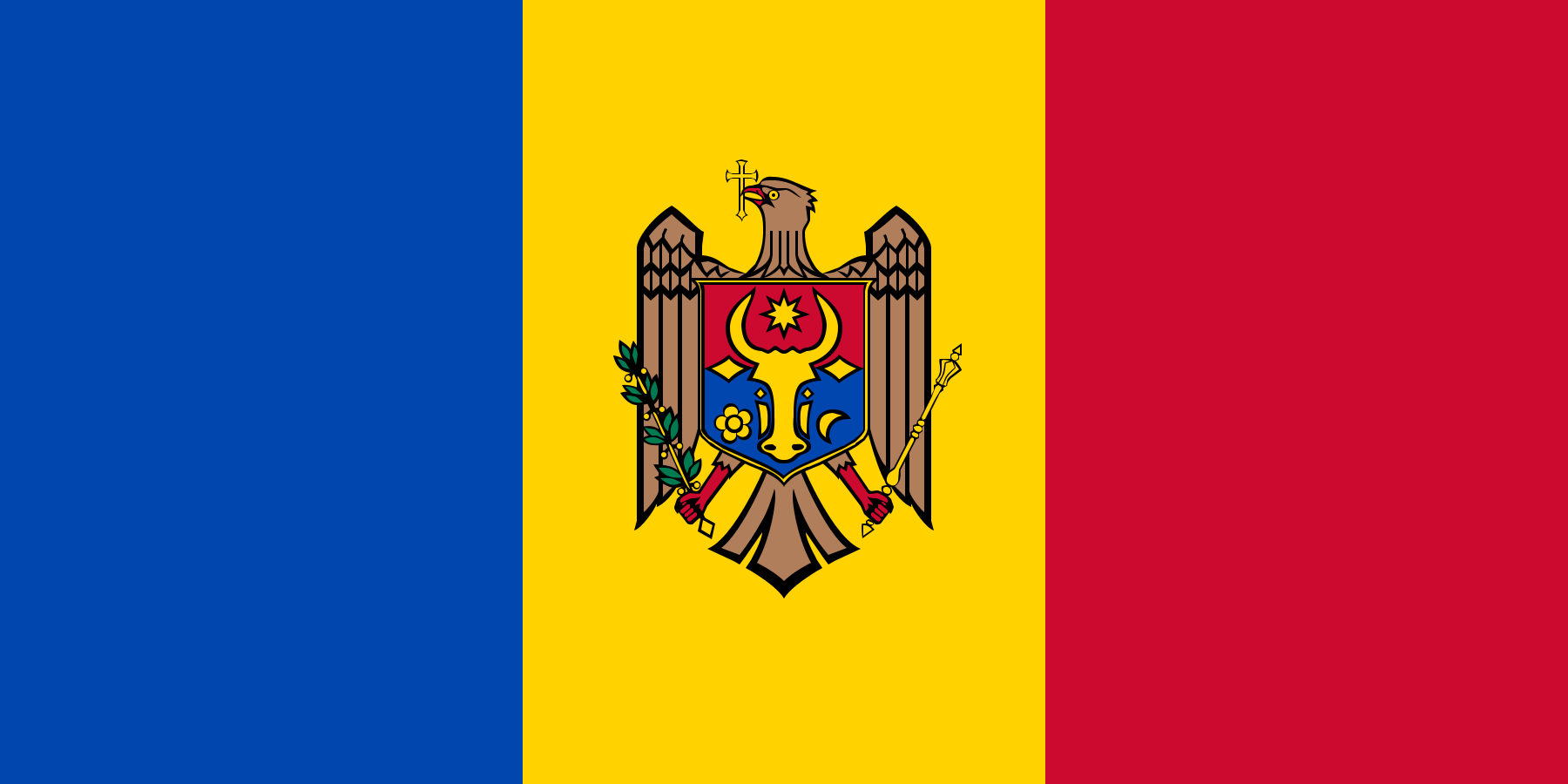
Soviet Union Soviet communism Soviet Union Moldova 1881–1925 ✕ Murdered

The Bessarabian 'Red Robin Hood' who rose from Tsarist outlaw to legendary Soviet Civil War commander

In May 1917, during Carmen at the Odesa Opera House, the recently pardoned Kotovsky appeared to a standing ovation, delivered a revolutionary speech from the stage, and watched his prison shackles auctioned for 10,000 rubles.

A Bessarabian revolutionary commander. Notorious under the Tsar as a bandit who sided with the poor, he led Red cavalry in the Civil War and helped establish the Moldavian ASSR. Mythologized in his lifetime as a legend of Soviet folklore; murdered in 1925.

Career timeline
  • 1905–1916Led armed raiding bands in Bessarabia and Odesa; repeatedly arrested and escaped; sentenced to death 1916, commuted to hard labor
  • 1917Amnestied after February Revolution; served on Romanian Front, awarded George Cross for bravery; joined Left SRs
  • 1918–1919Commanded cavalry in Tiraspol Detachment defending Odesa Soviet Republic; military commissar of Ovidiopol, commander 2nd Brigade, 45th Rifle Division
  • 1920Awarded Order of the Red Banner; joined RCP(b); commanded cavalry brigade on Soviet-Polish front
  • 1921Commander, 17th Cavalry Division of Red Cossacks; wounded suppressing Makhnovist and Antonov uprisings; awarded Honorary Revolutionary Weapon and second Red Banner
  • 1922–1924Commander, 2nd Cavalry Corps; contributed to founding Moldavian ASSR; awarded third Order of the Red Banner
  • 1924–1925Member of USSR Central Executive Committee and Ukrainian/Moldavian CECs; member of Revolutionary Military Council

Sergei Georgiyevich Lazo

Сергей Георгиевич Лазо
Soviet Union Soviet communism Soviet Moldova 1894–1920 ✕ Burned alive

Moldovan nobleman turned Bolshevik revolutionary who established Soviet power in the Far East

Standing alone and unarmed before the cadets of Russky Island, Lazo declared: 'For this Russian land on which I now stand, we will die but give it to no one!'

A Moldovan boyar by birth and an Imperial Russian Army officer, Lazo joined the 1917 Revolution and became the Bolshevik military leader who established Soviet power across Siberia and the Russian Far East. He seized control of Krasnoyarsk for the Soviet, commanded the Transbaikal Front against Grigory Semyonov's White forces, and after underground work and partisan warfare in Primorye, organized the January 1920 Vladivostok uprising that ended Kolchak's rule in the Far East. Captured by Japanese troops in April 1920, he was burned alive in a locomotive firebox alongside his comrades, becoming one of the most commemorated martyrs of the Soviet Civil War.

Career timeline
  • 1916Commissioned ensign, 15th Siberian Rifle Reserve Regiment, Krasnoyarsk
  • 1917Chairman of soldiers' section, Krasnoyarsk Soviet; delegate to 1st All-Russian Congress of Soviets
  • 1917–1918Military commandant of Irkutsk; member of Centrosibir
  • 1918Commander, Transbaikal (Daurian) Front — defeated Semyonov's White forces
  • 1918–1919Underground Bolshevik work, Vladivostok; member, Far Eastern Regional Committee of RCP(b)
  • 1919Commander-in-chief of Primorye partisan detachments
  • 1920Organized Vladivostok uprising; Deputy Chairman, Military Council, Provisional Government of the Far East