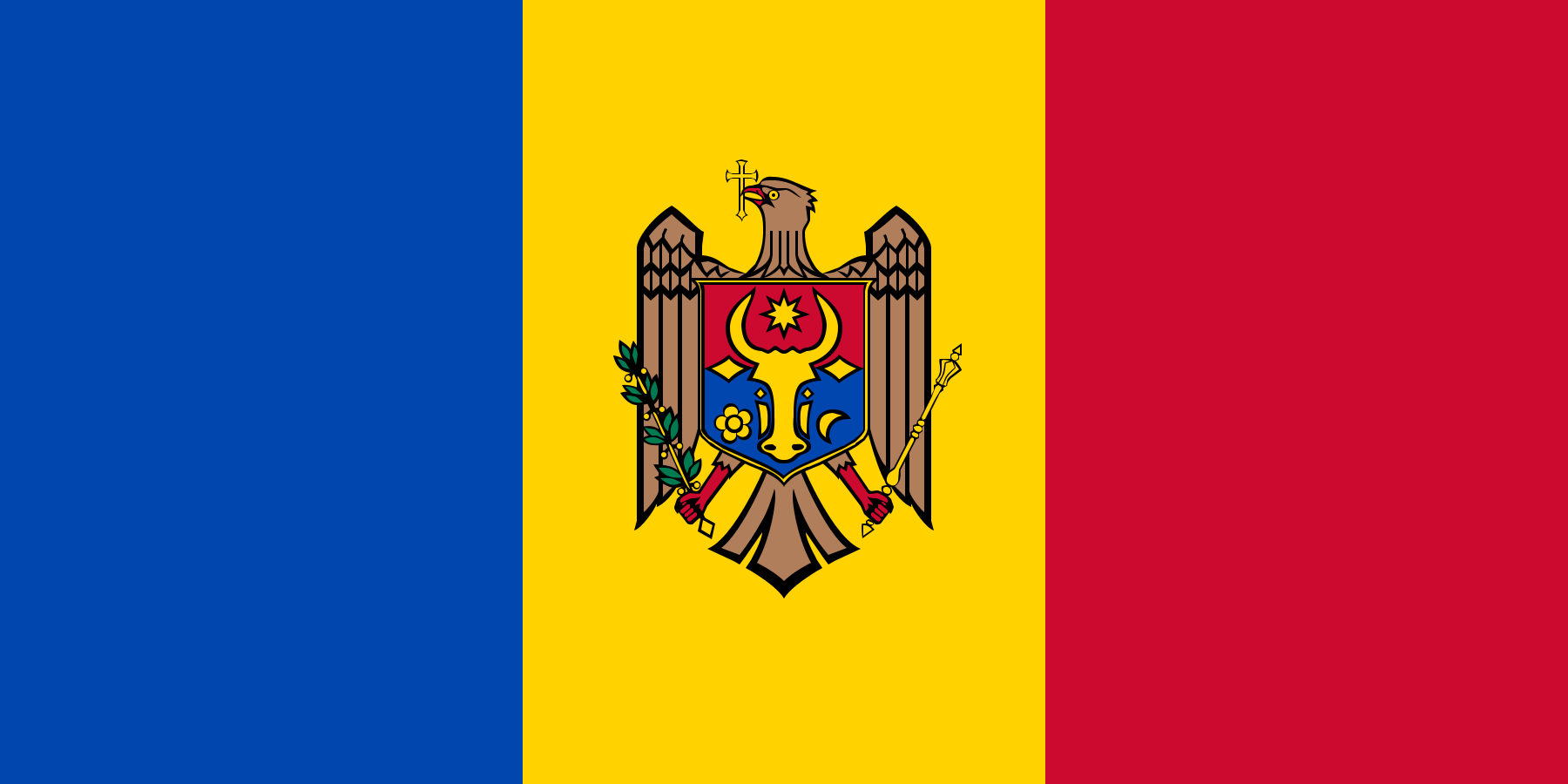
Soviet Union
Soviet communism
1935–2024
○ Natural causes
The final head of Soviet Moldavia's Communist Party
He called the 1991 banning of the Communist Party “an illegitimate act.”
Grigore Eremei was a Moldavian party and state official whose career reached its decisive moment at the end of the Soviet system. As First Secretary of the Communist Party of Moldavia in 1991, he occupied the republic's leading party post while the Union was breaking apart and Moldova moved toward independence. After the party was dissolved, he continued in public life as a Moldovan diplomat and parliamentarian, linking a Soviet political career to the institutions of the independent republic.
Career timeline
1952Began working as a village secondary-school librarian
1954–1956Served in the Soviet Army
1966–1970First Secretary of the Kotovsk district party committee
1970–1980Deputy and First Deputy Chairman of the Council of Ministers of the Moldavian SSR
1980–1990Chairman of the Moldavian republican council of trade unions
1989–1991People's Deputy of the USSR
1991First Secretary of the Communist Party of Moldavia and member of the CPSU Politburo
A politician who moved from Soviet party leadership to Moldova's presidency
In the 1996 runoff, backed by left and centrist forces, he defeated Mircea Snegur to win the presidency.
Pyotr Luchinsky rose through the party apparatus of the Moldavian Soviet republic and became a link between late Soviet republican politics and the making of the independent Moldovan state. He became first secretary of the Communist Party of Moldova's Central Committee in 1989 and served on the CPSU Politburo from 1990 to 1991. After independence, he was ambassador to Russia and speaker of parliament before winning the 1996 presidential election and serving as Moldova's second president from 1997 to 2001. His career shows how Soviet institutional continuity and the adjustment of a new state's sovereignty and foreign orientation could converge in one politician.
Career timeline
1960–1971Instructor, department head, secretary and first secretary of the Moldavian Leninist Komsomol Central Committee
1971–1976Secretary of the Communist Party of Moldova Central Committee and member of its Politburo
1976–1978First secretary of the Communist Party's Chișinău City Committee
1978–1986Deputy chief of a department of the CPSU Central Committee
1986–1989Second secretary of the Communist Party of Tajikistan Central Committee
1989–1990First secretary of the Communist Party of Moldova Central Committee
1990–1991Secretary of the CPSU Central Committee and member of its Politburo