Japanese Colonial Rule and the Anti-colonial Movements in Taiwan
In Japan's first colony, why did armed resistance give way to political and social movements, and why did those movements split and fail?
The Treaty of Shimonoseki made Taiwan Japan's first colony in 1895. The Republic of Formosa and twenty years of armed resistance ended with the Tapani Incident of 1915, and in the 1920s the petition movement for a Taiwanese parliament, the Taiwanese Cultural Association, the Taiwanese People's Party, the Taiwan Farmers' Union, trade unions and the Taiwanese Communist Party followed one another. The movements split over autonomy, class struggle and national independence, and after the crushing of the Wushe rising of 1930 and the crackdown of 1931 they had all ended by the time the kōminka campaign began in 1937.
How did Taiwan become Japan's first colony?
The First Sino-Japanese War, fought between Qing China and Japan over Korea in 1894, ended in Qing defeat. On 17 April 1895 the Qing plenipotentiary Li Hongzhang and the Japanese prime minister Itō Hirobumi signed a peace treaty at the Shunpanrō inn in Shimonoseki. Under this Treaty of Shimonoseki the Qing gave up its suzerainty over Korea, ceded Taiwan, the Penghu (Pescadores) Islands and the Liaodong Peninsula to Japan in perpetuity, and agreed to pay an indemnity of 200 million taels. Liaodong was soon handed back after the Triple Intervention of Russia, Germany and France, but Taiwan and Penghu stayed Japanese. Taiwan was Japan's first overseas colony, and it remained under Japanese rule for fifty years. 1 2 3
When news of the cession arrived, Taiwan's local gentry protested fiercely. On 25 May they proclaimed a "Republic of Formosa" with the Qing governor of Taiwan, Tang Jingsong, as president. Its flag showed a yellow tiger on a blue field, and its era name, Yongqing, meant "forever Qing". A proclamation issued on 15 May declared that "the people of Taiwan have no choice but to be their own masters" and vowed that they "would rather all die fighting and lose Taiwan than hand it over with folded arms". No state recognised the republic. 4 5
Historians still disagree about what kind of state the Republic of Formosa was. As its era name and proclamations show, its leaders acknowledged the Qing as suzerain and promised to return to Qing rule once the Japanese were driven out. The Chinese Wikipedia therefore describes the regime as essentially loyal to the Qing, and the English Wikipedia notes that present-day supporters of Taiwan independence who call for a "Republic of Taiwan" are wary of claiming the 1895 republic as a forerunner. The popular claim that it was "Asia's first republic" does not hold either: the Lanfang Republic in Borneo (1777) and the Republic of Ezo in Hokkaido (1868) came earlier. 4 5
Japanese troops landed at Aodi in north-eastern Taiwan on 29 May and took Keelung on 3 June; Tang Jingsong soon fled to Xiamen. On 17 June the first Governor-General, Kabayama Sukenori, proclaimed the "start of government" in Taipei. In the south the former Black Flag commander Liu Yongfu was chosen as second president on 26 June and fought on from Tainan, but on 19 October he too crossed to the mainland; Tainan fell two days later and the republic was gone. In Taiwan this war of resistance in 1895 is called the Yiwei War, after that year's name in the sexagenary cycle. 4 6 7
How did the Government-General rule Taiwan?
The centre of colonial rule was the Government-General of Taiwan, set up in 1895. In March 1896 the Imperial Diet promulgated Law No. 63, known as the "Law 63", which empowered the Governor-General to issue ordinances (ritsuryō) with the force of law, and in an emergency to issue them without the emperor's sanction. Holding executive power, the Governor-General now also legislated, and when he was a military officer he commanded the army as well, so Taiwanese called him a "local emperor". Law 63 was replaced by Law 31 in 1906 and by Law No. 3, enacted in 1921 and in force from 1922, which gradually narrowed his law-making power, but government through the Government-General remained to the end. 8 9 10
Armed resistance went on, and in 1897 there was even talk in the Diet of selling Taiwan to France for 100 million yen. The turning point came in 1898, when General Kodama Gentarō became the fourth Governor-General and the physician-turned-official Gotō Shinpei his chief of civil administration. Gotō held that colonial administration had to follow "biological principles", and began with land, household and customary-practice surveys. In the land survey from 1898, land whose owners could not produce documents became state property, and the survey found 630,000 kō of farmland where late-Qing estimates had counted 360,000, so land-tax revenue rose sharply. Police reached deep into the villages, handling not only public order but household registers, hygiene, taxes and political thought. 6 11 12 9
The policy combined inducement with repression. Gotō offered armed rebels terms of surrender, yet on 25 April 1902, at "surrender ceremonies" in Douliu and other towns, more than 200 Taiwanese who had come in to surrender were shot on the spot. By the Government-General's own figures, which Gotō quoted, it killed 11,950 Taiwanese "bandits" in the four years from 1898 to 1902, and in the first eight years of rule some 32,000 people were killed by the Japanese side, more than one per cent of the population. In the economy, Japanese capital moved into sugar, beginning with the Mitsui group's Taiwan Sugar Company in 1900, and farmers had to sell their cane only to the designated mill near their land at a price the mill set. The Government-General summed up its line as "industrial Japan, agricultural Taiwan". 6 11 7
In 1919 Den Kenjirō arrived as the first civilian Governor-General, and the line changed. Having agreed with the party prime minister Hara Takashi, he proclaimed "homeland extensionism", treating Taiwan as an extension of Japan proper, and introduced local administrative reform, a Governor-General's advisory council, joint schooling of Japanese and Taiwanese, and the abolition of flogging. The aim was to assimilate Taiwanese into loyal Japanese subjects. Taiwan still had none of the political rights of Japan proper, however, and the political and social movements of the 1920s grew in that gap. 6 8
Why did armed resistance end with the Tapani Incident?
After the Republic of Formosa collapsed, armed resistance broke out almost every year until 1902. After a rising around Yunlin in 1896, Japanese reprisals killed somewhere between 6,000 and 30,000 people in what is called the Yunlin massacre, and leaders such as Jian Dashi, Lin Shaomao and Ke Tiehu became known as the "three fierce anti-Japanese fighters". From the Beipu incident of 1907 to 1915 thirteen smaller risings followed; eleven of them came after the Xinhai Revolution of 1911, and four were directly inspired by it. 6 7
The last and largest rising was the Tapani Incident of 1915. Its leader, Yu Qingfang, a former assistant policeman who had joined the Zhaijiao lay Buddhist sect, gathered followers at the Xilai Temple (Seiraian), a shrine to the Wangye gods in Tainan, and planned to found a new state called the "Great Ming Compassionate Kingdom". The affair is named after the temple, or after Tapani (today Yujing in Tainan), where the main fighting took place. The plot was discovered in May and Luo Jun was arrested in June, but Yu joined forces with Jiang Ding's band in the mountains and from July attacked police stations. In early August Japanese police and troops struck back with machine guns and artillery; Yu was captured on 22 August and executed on 23 September. 13 14 15 16
Sources give different figures for the repression and the trials. By the Government-General's count 1,957 people were arrested. The Chinese Wikipedia puts the number sentenced to death by the special court at 866, while Paul R. Katz of the Institute of Modern History at Academia Sinica counts 1,482 indicted, 915 sentenced to death, 135 actually executed and more than 200 who died in prison. In November 1915 most death sentences were commuted to life imprisonment on the occasion of the Taishō emperor's enthronement. Villagers' deaths went unrecorded and were long disputed; from the household registers of ten villages Katz found 1,789 deaths between July and December 1915, 993 of them on 6 August alone, while stressing that the causes ranged from battle and massacre to disease. 13 15 16
After Tapani the island's Han Chinese never again took up arms against Japanese rule. The Chinese Wikipedia sums up that the incident convinced Taiwanese that, given the gap in military power, armed risings could not succeed, and that they turned to social movements and political demands instead. Historians of Taiwan therefore often divide the colonial era into a period of armed resistance (1895 to 1915) and one of political resistance (1915 to 1945). After 1915 armed resistance was left to the indigenous peoples of the mountains, and it peaked in the Wushe Incident of 1930. 13 6
What did Taiwanese intellectuals demand?
In the late 1910s Taiwanese students in Tokyo were stirred by the freer climate of Taishō democracy, by President Wilson's doctrine of national self-determination, and by Korea's March First Movement and China's May Fourth Movement. In 1920 the Taichung landlord Lin Hsien-tang, Cai Huiru and others gathered students into the New People's Society (Shinminkai) and launched the magazine Taiwan Youth. The first aim was to abolish Law 63, the legal basis of the Governor-General's autocracy. Lin Chenglu argued, however, that abolishing Law 63 would deny Taiwan's distinct character and accept homeland extensionism, and proposed instead a separate Taiwanese parliament in which Taiwanese would take part. The same year Tsai Pei-huo wrote in Taiwan Youth that "Taiwan is the Taiwanese people's Taiwan", which became the central slogan of the Taiwanese national movement. 17 18 7
On 30 January 1921 a "Petition for the Establishment of a Taiwanese Parliament", headed by Lin Hsien-tang and signed by 178 people, was submitted to the Imperial Diet. It argued that Taiwan's conditions differed from Japan proper and required special legislation, that as subjects of a constitutional state Taiwanese were entitled to constitutional government, and that a Governor-General holding both legislative and executive power violated the spirit of the constitution, so that a Taiwanese parliament should handle special legislation and the budget. The petition was submitted fifteen times over fourteen years until 1934, and was never accepted. The powers asked for also shrank: an explanatory statement with the fifth petition in 1924 retreated to asking only for "the right to deliberate on the budget for Taiwan's administrative expenses" and on local regulations, powers equal to those of a local assembly in Japan. 17 19 20
On 17 October 1921 the Taiwanese Cultural Association was founded in Dadaocheng, Taipei. 1,031 people attended; Lin Hsien-tang became president and the physician Chiang Wei-shui managing director. The association promised the police it would stay out of politics, but in practice it ran the petition movement from behind the scenes. Around its paper, the Taiwan Minpao, it set up more than ten reading rooms and organised courses in history, law and hygiene, lecture tours, reform theatre and film screenings. With illiteracy widespread, lectures mattered most, and in 1925 and 1926 they drew some 230,000 listeners. In his short piece "Clinical Lecture" Chiang Wei-shui diagnosed Taiwan as a patient suffering from "cultural malnutrition". 21 22 23 24
In January 1923 the Government-General extended Japan's Public Order and Police Law to Taiwan and, within three days, banned the "League for the Establishment of a Taiwanese Parliament" that Chiang Wei-shui and others had formed for the petition. When the league was refounded in Tokyo, the authorities searched homes across the island on 16 December and arrested, searched or summoned 99 people: the "Public Order Police Law Incident". In court Chiang Wei-shui and Tsai Pei-huo received four months each. Because the defendants were doctors, lawyers and landlords at the core of Taiwanese society, and the trials were public, opinion swung their way: signatures for the sixth petition rose to over 700, and lecture audiences and Minpao sales grew sharply. 21 17 18
How did farmers and workers organise?
The farmers' movement of the 1920s began with the price of sugar cane. The sugar companies held monopsonies over designated districts and set prices and weights unilaterally, and when Japanese-style Hōrai rice spread from 1922, rice and cane competed for the same land. A saying went, "The biggest fool plants cane and has it weighed on the company's scales." In June 1925 Lee Ying-chang, a physician and director of the Cultural Association, founded the Erlin Cane Farmers' Union in Changhua and demanded higher prices from the Lin Pen-yuan Sugar Company. On 22 October, when the company tried to force the harvest under police protection, a clash broke out, and from the next day police arrested more than 400 people, Lee among them. In April 1927, 25 were convicted. This was the Erlin Incident. 25 6
In November of that year Jian Ji, a teacher in Fengshan in the south, left his post to take up a land dispute and founded the Fengshan Farmers' Union. In June 1926 leaders of the local unions resolved to form an island-wide body, and in September the Taiwan Farmers' Union was founded with Jian Ji as chairman of its central committee. One immediate cause was the Government-General's sale, at knock-down prices, of state land, some of it already farmed by peasants, to retired Japanese officials. Influenced by the Japan Farmers' Union and the Labour-Farmer Party, the union leaned left from the start; in 1927 and 1928 it led many tenancy and land disputes and passed 20,000 members, becoming the largest social movement organisation in Taiwan. 26 27 28
The labour movement built island-wide organisations at the same time. In March 1927 Lien Wen-ching of the Cultural Association helped found the Taipei Machinists' Union, and other unions followed; on 19 February 1928, under Chiang Wei-shui's leadership, 130 delegates of 29 unions founded the Taiwan Workers' Federation. A year later it had 65 affiliates and over 10,000 members, and it led a string of strikes by construction, carpentry, printing and barbers' workers for higher wages. But the labour movement soon divided over which line should lead it. Lien wanted a "Taiwan General Trade Union" of left-wing unions alone, while Wang Min-chuan wanted to unite left and right unions from below. 29 21 30 28
Before dawn on 12 February 1929, during the lunar new year holiday, police raided some 300 Farmers' Union offices and leaders' homes across the island at once. In this "February 12 Incident" 59 people were formally arrested, and Jian Ji received one year in prison on appeal. Accounts from the communist side hold that the real target was the Communist Party, which the authorities feared could turn the countryside into a revolutionary base. The union became in effect illegal; moderate farmers left in large numbers and membership fell, but the cadres who remained joined the Communist Party and took their work underground. 26 28 27
Why did the movement split into left and right?
The Cultural Association had mixed several currents from the start. According to the Chinese Wikipedia, Lien Wen-ching followed the line of the Japanese socialist Yamakawa Hitoshi, Wang Min-chuan that of Fukumoto Kazuo, and Chiang Wei-shui was most influenced by Sun Yat-sen's Three Principles of the People. The left wanted the association to back the farmers' and workers' movements directly and even to form a party, while right-wingers such as Lin Hsien-tang and Tsai Pei-huo wanted to keep to its founding purpose of cultural enlightenment. At an extraordinary congress in the Taichung public hall on 3 January 1927 the left won, and Lien and Wang became the new leaders; the association from then on is called the "New Cultural Association". 21 22
Chiang Wei-shui, Lin Hsien-tang, Tsai Pei-huo and others who left the association set out to found a party. The Government-General banned a "Taiwan Self-Government Association" and then a "Taiwan People's Party (Minto)", and allowed a party only on condition that it did not profess nationalism and was not controlled by Chiang Wei-shui. On those terms the Taiwanese People's Party, the first party Taiwanese founded under Japanese rule, was launched in Taichung on 10 July 1927. A lecture tour that spring by Yanaihara Tadao, the Tokyo Imperial University scholar of colonial policy, guided round the island by Tsai Pei-huo, encouraged the party plans. The party demanded that municipal and village councils become decision-making rather than advisory bodies with elected members, and it denounced the Government-General's opium licensing policy to the League of Nations. 31 32 33
The People's Party went down the same road. As Chiang Wei-shui poured his energy into the labour movement through the Workers' Federation, the party's policy leaned towards class struggle, and in early 1929 control passed to Chiang's faction. Tsai Pei-huo came to see Chiang as "a second Lien Wen-ching". On 17 August 1930 Lin Hsien-tang, Tsai, Yang Chao-chia and others founded the Taiwan Alliance for Local Self-Government, with the single demand of local self-government, and in December the People's Party expelled them. The left mocked the alliance as a second edition of the pro-Japanese "Public Interest Society". As one of the few groups the Government-General tolerated, the alliance was able to carry on after the crackdown of 1931. 31 34 18
On 18 February 1931, when the People's Party's fourth congress passed a new programme putting the interests of the propertyless classes first, the Taipei police chief appeared in the hall, read out an order banning the association and dissolved the party. Chiang Wei-shui and fifteen other leaders were arrested and released the next day. Chiang died of typhoid on 5 August that year. In the Cultural Association, the communist faction had expelled Lien Wen-ching at the third congress in November 1929, and after Wang Min-chuan became chairman in January 1931 the association became a front organisation of the Communist Party. Su Xin later reflected that the association had been an anti-Japanese united front of all classes in Taiwan, not a party, and that splitting it through theoretical struggle had been a mistake. 31 23 21 35 28
What did the Taiwanese Communist Party stand for, and how was it destroyed?
Around 1925 young Taiwanese studying in Shanghai and Moscow began preparing a communist party. Under the Comintern's principle of "one party per country", the party of Japan's colony had to be a branch of the Japanese Communist Party, and in late 1927 the Japanese party drafted its political and organisational charters. On 15 April 1928, in the French Concession of Shanghai, Lin Mu-shun, Xie Xuehong, Weng Zesheng and others founded the "Taiwanese National Branch of the Japanese Communist Party", the Taiwanese Communist Party. The Chinese Wikipedia records that Peng Rong of the Chinese Communist Party and Yeo Un-hyeong, representing Korea, attended. Lin Mu-shun became general secretary. 28 36 37
The founding programme called for "Down with the Governor-General's autocracy, down with Japanese imperialism", "Independence of the Taiwanese nation", "Establish a Republic of Taiwan", "A seven-hour working day", "Land to the farmers", "Defend the Soviet Union" and "Defend the Chinese revolution", among other points. The Taiwanese Communist Party was the only political organisation inside Taiwan under Japanese rule that openly called for Taiwanese independence and a Taiwanese revolution. Its programme defined the Taiwanese revolution as a national revolution to overthrow Japanese imperialism and make Taiwan independent, and a democratic revolution with the prospect of social revolution; following Lenin's theory of colonial revolution, it put the national revolution ahead of the class revolution. 28 36 37
The party wobbled from the start. Ten days after its founding, on 25 April, Xie Xuehong was arrested in the Shanghai Reading Society Incident, and in Japan the March 15 arrests had wrecked the Japanese party's leadership, which could not guide it. Some members who were to return to Taiwan fled to China instead, and in October 1928 the Japanese party chairman Watanabe Masanosuke, returning from Shanghai by way of Taiwan, shot a policeman who stopped him on entering Keelung harbour and, hunted down, killed himself; Chinese-language accounts say he was carrying Comintern money and instructions for the Taiwanese party. Released for lack of evidence and deported to Taiwan, Xie Xuehong rebuilt the party in Taipei in November 1928, used the International Bookshop as its base, and spread its influence inside the Cultural Association and the Farmers' Union. She worked cautiously, using legal organisations as cover for illegal work. 28 36 38
When the Great Depression struck, younger members held that the revolutionary moment had come and attacked Xie Xuehong's line as "closed-door" and "do-nothing". Behind them stood the "Shanghai University faction" around Weng Zesheng, who had joined the Chinese Communist Party there and controlled the link to the Comintern's Far Eastern Bureau. Differences surfaced at the Matsuyama meeting in October 1930, and in January 1931 Wang Wan-de, Su Xin, Zhao Gang and others formed a "Reform League". The second extraordinary congress, opening on 31 May, accepted the guidance of the Chinese Communist Party and expelled Xie and her associates. The Chinese Wikipedia also explains the conflict as one between a Taiwanese consciousness represented by Xie and a Chinese consciousness represented by Weng; the English Wikipedia explains it as a change of line, the 1931 charter downgrading alliance with the bourgeoisie and putting class struggle first. 28 36 39
As the party's open activity grew, the police pieced together its outline. Xie Xuehong was arrested on 26 June 1931, and when the last leader, Su Xin, was caught in Luodong on 13 September the organisation on the island collapsed. The Chinese Wikipedia gives 79 arrested and 49 sentenced, including 13 years for Xie, 15 for Pan Qinxin, 12 each for Su Xin, Wang Wan-de and Zhao Gang and 10 for Jian Ji; the English Wikipedia gives 107 members arrested between 1931 and 1933. Sources also differ in emphasis on the party's relations with the Japanese and Chinese parties. Formally it was a branch of the Japanese party, which repression left unable to guide it; the Chinese Wikipedia holds that the Chinese party's influence was great but that it did not lead the Taiwanese party, and the English Wikipedia records that in 1931 the Comintern raised the Taiwanese party to a full party answerable directly to itself. 28 36 39 38
Why did the Wushe Incident happen, and how was it crushed?
The Government-General called the mountain indigenous peoples "banjin" (barbarians) and ruled them under a separate "aborigine control" policy, distinct from that for the lowland Han. After subduing the mountains by force in the 1910s it turned to development and schooling, and Wushe in the central highlands was made a model district. Yet hunting, facial tattooing and other customs were banned, guns had to be deposited with the police, and the people were repeatedly conscripted for forestry and construction. Between 1928 and 1930 the Seediq of Wushe were called out for labour nine times, with wages docked or taken as "donations" for building a Shinto shrine. Japanese policemen often married chiefs' daughters for policy reasons and then abandoned them. 40 41
On 7 October 1930, at a wedding feast in the village of Mhebu, the chief Mona Rudao's eldest son Tado Mona offered a drink to the Japanese policeman Yoshimura Katsumi, who shook off his hand, calling it an "unclean feast", and a fight broke out. Mona Rudao went to apologise, but Yoshimura refused and threatened to report the matter. Before dawn on 27 October Seediq from six villages led by Mona Rudao attacked police posts and then the Wushe public school, where a sports day was being held for a Shinto festival, killing 134 Japanese. Two Han Taiwanese wearing Japanese clothes were also killed by mistake. The attack was aimed at Japanese alone, and the several hundred Han residents of Wushe were escorted down the mountain that afternoon. 40 41 42
Governor-General Ishizuka Eizō sent some 1,200 soldiers and 1,300 police and bombed from the air. Indigenous villages that were feuding with the rebels over hunting grounds were drawn in with bounties and arms and sent ahead as "friendly tribe" raiding parties. The Japanese army is reported to have used poison-gas shells and incendiary bombs. Of the 1,236 people of the six rising villages, 639 died in battle, in air raids, by beheading or by hanging themselves. Mona Rudao had his wife and grandchildren killed and then took his own life deep in the mountains. Japanese military dead numbered 22 soldiers and 6 policemen. In January 1931 Governor-General Ishizuka and his civil administrator resigned over the affair. 40 41
On 25 April 1931 Toda warriors, egged on by the police, raided the camps holding the rebels who had surrendered and killed 216 people. After this "Second Wushe Incident" the 298 survivors were forcibly moved in May to Kawanakajima (today Qingliu village in Nantou). Since the last Han armed rising had been in 1915, Wushe was the last major armed uprising in Taiwan under Japanese rule. Assessments of Mona Rudao differ. He is remembered as a symbol of resistance, but the Chinese Wikipedia also records elders' testimony that he once cooperated with Japanese rule and in 1920 raided an Atayal village together with Japanese, and the Toda memory of him as an enemy who took their hunting grounds. Accounts also differ on who planned the rising: Mona Rudao himself, or the young warriors Pihu Sapo and Pihu Walis. 40 42 41
How did the movements end in the 1930s?
Around the Manchurian Incident of 1931 the Government-General banned the People's Party, the New Cultural Association, the Communist Party and the Farmers' Union and arrested their leaders; Wang Min-chuan was jailed again over the "Taiwan Red Relief" case. Only the Alliance for Local Self-Government remained legal, and the petition movement, deprived of its supporting organisations, voted to stop on 2 September 1934. In November 1935 the Government-General brought in a local government reform under which half the members of prefectural, municipal and village councils were elected, and Taiwan held its first elections. The Taiwanese historian Chen Tsui-lien counts this as an achievement of the movement, while arguing that as long as the colonisers held the law and the institutions, resistance within the system could not overturn colonial power relations and ended in only "half" of self-government. 17 34 35
As war approached, even this space closed. In 1936 Lin Hsien-tang, accused of having said in Shanghai that he had "returned to the motherland", was slapped by a Japanese right-wing ronin at the anniversary ceremony of Japanese rule in Taichung on 17 June: the "motherland incident". In September 1936 the Government-General restored military Governors-General. In April 1937 the Chinese-language section of the Taiwan Nichinichi Shinpō was abolished, and after war with China broke out in July the Alliance for Local Self-Government dissolved itself on 15 July. With that, every legal political and social movement begun in the 1920s had ended. 43 34 6 44
From late 1936 the Government-General pursued the kōminka movement to turn Taiwanese into "imperial subjects" loyal to the emperor. It privileged "national language families" that spoke only Japanese, had Shinto altars replace ancestral tablets, and from 1940 allowed Han Taiwanese to adopt Japanese names. The Chinese Wikipedia notes that in Taiwan name changes required application and approval, so that by the end of 1943 only about 2 per cent of the population had changed their names, and compares this with the far more coercive policy in Korea. In 1941 the Imperial Subjects Public Service Association enrolled every resident, a volunteer system began in 1942 and conscription in 1945. Japanese rule ended on 25 October 1945, when the Republic of China took over Taiwan. 44 6 7 9
Consequences
The Government-General ended armed resistance by force and inducement, and the movements of the 1920s won neither a Taiwanese parliament nor self-government before most were broken up in the 1931 crackdown. Local elections for half of council seats came in 1935, but the last legal organisation dissolved in 1937. The slogan "Taiwan is the Taiwanese people's Taiwan", the communist programme of Taiwanese independence, and the paths of activists such as Xie Xuehong, Su Xin, Jian Ji and Lin Hsien-tang ran on after 1945 into the February 28 Incident and the White Terror.
Timeline & Map
- 11895.04.17
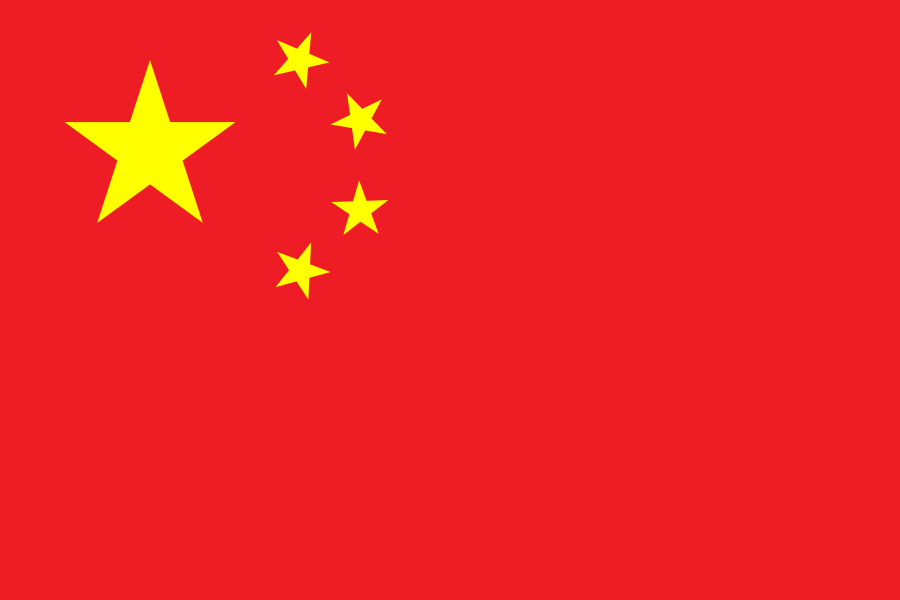
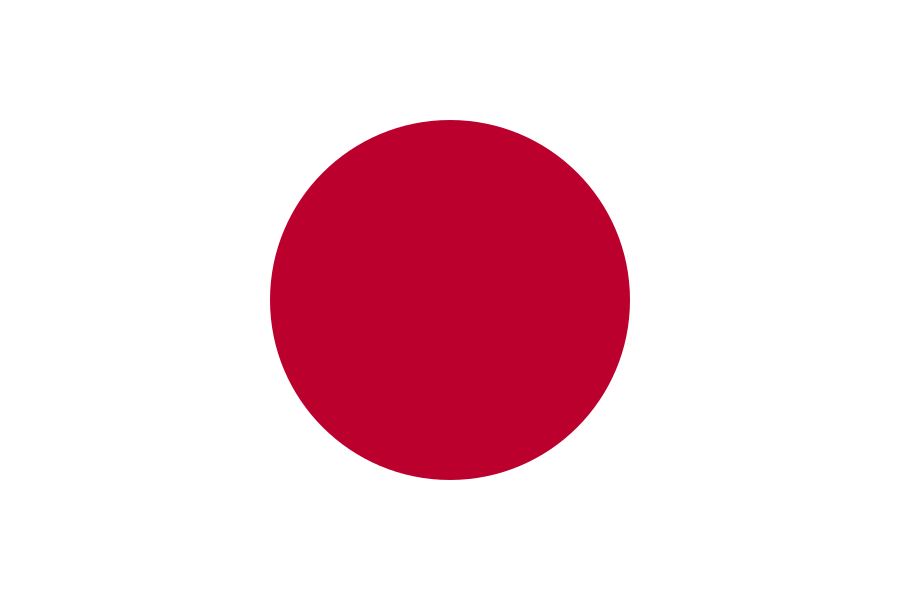 Treaty of Shimonoseki signed
Li Hongzhang and Itō Hirobumi sign the peace treaty at Shimonoseki, and the Qing cedes Taiwan and the Penghu Islands to Japan.
- 21895.05.25
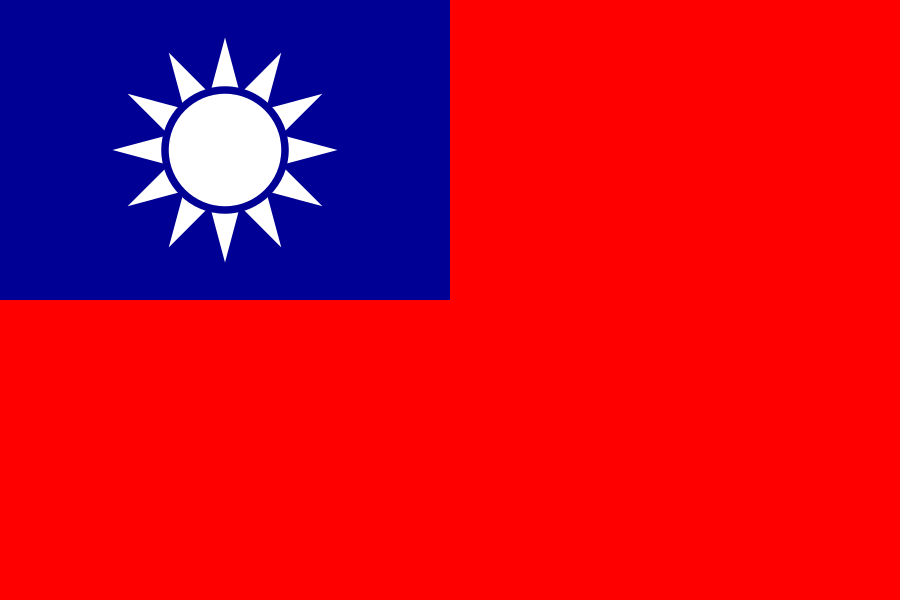 Republic of Formosa proclaimed
Gentry in Taipei proclaim the Republic of Formosa with the Qing governor Tang Jingsong as president.
- 1895.06.17The Government-General begins rule
The first Governor-General, Kabayama Sukenori, proclaims the start of Japanese government in Taipei.
- 31895.10.21Tainan falls; the Republic of Formosa ends
Japanese troops occupy Tainan, two days after Liu Yongfu crossed to the mainland.
- 1896.03.31Law 63 promulgated
The Imperial Diet promulgates Law No. 63, giving the Governor-General power to issue ordinances with the force of law.
- 1898.02.26Kodama and Gotō take office
Kodama Gentarō is appointed fourth Governor-General and Gotō Shinpei chief of civil administration.
- 1902.04.25Killings at the surrender ceremonies
At surrender ceremonies in Douliu and elsewhere the Japanese side shoots more than 200 Taiwanese who had come in to surrender.
- 41915.08.06Suppression at Tapani
Japanese troops and police advance on Tapani; 993 people die that day in the ten villages studied, and 300 houses around Zhuwei are burned.
- 1915.09.23Yu Qingfang executed
Yu Qingfang, leader of the Tapani rising, captured on 22 August, is executed.
- 51921.01.30First petition for a Taiwanese parliament
A petition headed by Lin Hsien-tang and signed by 178 people is submitted to the Imperial Diet.
- 61921.10.17Taiwanese Cultural Association founded
1,031 people meet in Dadaocheng, Taipei, and found the Cultural Association with Lin Hsien-tang as president.
- 1923.12.16Public Order Police Law Incident
Police search members of the parliament league across the island, arresting, searching or summoning 99 people.
- 71925.10.22Erlin Incident
Members of the Erlin Cane Farmers' Union clash with the sugar company and police forcing the harvest.
- 81926.09Taiwan Farmers' Union founded
The island-wide Farmers' Union is launched in Fengshan with Jian Ji as chairman.
- 1927.01.03The Cultural Association splits
At an extraordinary congress in Taichung the left wins; Lien Wen-ching and Wang Min-chuan take over and the right walks out.
- 91927.07.10Taiwanese People's Party founded
Chiang Wei-shui, Lin Hsien-tang and others found the first Taiwanese political party in Taichung.
- 1928.02.19Taiwan Workers' Federation founded
130 delegates of 29 unions found the island-wide labour federation in Taipei.
- 101928.04.15Taiwanese Communist Party founded
Lin Mu-shun, Xie Xuehong and others found the Taiwanese National Branch of the Japanese Communist Party in the French Concession of Shanghai.
- 1929.02.12February 12 Incident
Police raid some 300 Farmers' Union offices and leaders' homes at once and arrest 59.
- 111930.10.27Wushe Incident
Seediq led by Mona Rudao attack the sports day at the Wushe public school and kill 134 Japanese.
- 1931.02.18People's Party dissolved
Police order the party banned in the hall of the fourth congress that has just adopted a new programme.
- 1931.06.26Xie Xuehong arrested
Mass arrests of the Taiwanese Communist Party begin with the arrest of Xie Xuehong.
- 1934.09.02Petition movement ends
After fourteen years and fifteen petitions the movement for a Taiwanese parliament votes to stop.
- 1935.11.22Local government reform takes effect
A reform under which half of the members of prefectural, city, town and village councils are elected takes effect.
- 1937.07.15Self-government alliance dissolves
After the outbreak of war with China, the Taiwan Alliance for Local Self-Government votes to dissolve itself.
Related people 19
Leadership12
Made president of the Republic of Formosa in May 1895; fled to Xiamen after Keelung fell.
Leader of the Tapani IncidentYu Qingfang1879–1915Raised the 1915 rising from the Xilai Temple; captured and executed.
Leader of the petition movement and the Cultural AssociationLin Hsien-tang1881–1956Led the parliament petitions, presided over the Cultural Association, helped found the People's Party and advised the self-government alliance.
Leader of the Cultural Association and the People's PartyChiang Wei-shui1890–1931Ran the Cultural Association as managing director, then led the People's Party and the Workers' Federation; died in 1931.
Activist of the Cultural Association and the petition movementTsai Pei-huo1889–1983Wrote that "Taiwan is the Taiwanese people's Taiwan", was jailed in the 1923 police-law case and co-founded the self-government alliance.
Leader of the New Cultural Association, labour organiserLien Wen-ching1894–1957Led the left-wing Cultural Association from 1927 and organised unions; expelled in 1929.
Last chairman of the New Cultural AssociationWang Min-chuan1889–1942Became chairman of the Cultural Association in 1931, backed the communists and the workers' and farmers' movements, and was jailed again.
Chairman of the Taiwan Farmers' UnionJian Ji1903–1951Founded and led the Farmers' Union, joined the Communist Party and was sentenced to ten years in 1931.
General secretary of the Taiwanese Communist PartyLin Mu-shun1906–1934Drafted the 1928 programme and became general secretary, but stayed in Shanghai.
Founding member and rebuilder of the Taiwanese Communist PartyXie Xuehong1901–1970Helped found the party in 1928 and rebuilt it on the island; expelled and arrested in 1931, she was sentenced to 13 years.
Leader of the Taiwanese Communist Party's Reform LeagueSu Xin1907–1981Organised miners and loggers, led the 1931 Reform League, and was arrested in September and sentenced to 12 years.
Leader of the Wushe Incident, Seediq chief of MhebuMona Rudao1880–1930Led the rising of six villages in October 1930 and took his own life as it was crushed.
Implementers & commanders4
Signed the peace treaty with Li Hongzhang at Shimonoseki in April 1895, securing the cession of Taiwan.
Fourth Governor-General of TaiwanGentarō Kodama1852–1906As Governor-General from 1898 to 1906 he crushed armed resistance with Gotō Shinpei and laid the foundations of colonial rule.
Chief of civil administration, Government-General of TaiwanShinpei Gotō1857–1929Under his "biological principles" he ran land, household and custom surveys and police rule, combining offers of surrender with killings.
Japanese prime minister, homeland extensionismTakashi Hara1856–1921In 1919 agreed with the first civilian Governor-General, Den Kenjirō, on assimilation treating Taiwan as an extension of Japan proper.
Witnesses & chroniclers2
Visited Taiwan in 1927 and lectured around the island, guided by Tsai Pei-huo.
Attended the founding congress of the Taiwanese Communist PartyYeo Un-hyeong1886–1947According to the Chinese Wikipedia, attended the founding congress in Shanghai in April 1928 as the Korean representative.
Related terms
Sources: reference 1reference 2reference 3reference 4reference 5reference 6reference 7reference 8reference 9reference 10reference 11reference 12reference 13reference 14reference 15reference 16reference 17reference 18reference 19reference 20reference 21reference 22reference 23reference 24reference 25reference 26reference 27reference 28reference 29reference 30reference 31reference 32reference 33reference 34reference 35reference 36reference 37reference 38reference 39reference 40reference 41reference 42reference 43reference 44