The February 28 Incident in Taiwan
Why did the people of Taiwan, freed from Japanese colonial rule, rise against the Nationalist government within eighteen months, and how did the crackdown change Taiwanese society?
The Nationalist government's Executive Office, which took over Taiwan in 1945, lost public support through monopolies, corruption and discrimination. When a cigarette raid in Taipei on 27 February 1947 ended in bloodshed and the revolt spread across the island, local notables formed the February 28 Incident Settlement Committee to demand autonomy and reform, and armed groups such as the 27 Brigade rose in central and southern Taiwan. Chief executive Chen Yi feigned negotiation while summoning reinforcements; the troops that landed on 8 March, through martial law and village clearance, killed people in numbers estimated from several thousand to tens of thousands. The incident became a prelude to the martial-law order of 1949 and remained a taboo for forty years.
How did the Nationalist government take over Taiwan?
Taiwan had been ceded to Japan by the Treaty of Shimonoseki in 1895 and ruled for fifty years by the Government-General of Taiwan. When Japan surrendered in August 1945, General Order No. 1 of the Allied supreme commander, MacArthur, told the Japanese forces on Taiwan to surrender to Chiang Kai-shek as supreme commander of the China theatre. The Nationalist government of the Republic of China, led by the Kuomintang, set up the Taiwan Provincial Administrative Executive Office in Chongqing and made Chen Yi, a former governor of Fujian, chief executive and garrison commander of Taiwan Province. On 25 October 1945, in the Taipei public hall (today's Zhongshan Hall), Chen Yi accepted the surrender of the last Japanese governor-general, Andō Rikichi, and proclaimed the day Taiwan's "Retrocession". 1 2 3 4
The Nationalist government decreed that the people of Taiwan would resume Chinese nationality from 25 December 1945, but Britain and the United States made it clear that they did not accept a unilateral change of territorial sovereignty and nationality before a peace treaty with Japan. In Taiwan itself the mood was at first welcoming. Activists of the Japanese era such as Lin Hsien-tang formed preparatory committees to welcome the National Government, teaching the national anthem and building welcome arches. But Taiwan was not given an ordinary provincial government: a single chief executive held administrative power, wide delegated legislative power, supervision of the courts and military command, and islanders mocked the arrangement as a "new Government-General". 2 1 4
Why did discontent reach breaking point within eighteen months?
Chen Yi kept the monopoly system the Japanese had left: a Monopoly Bureau controlled tobacco, liquor, camphor and matches, and a Trade Bureau monopolised the purchase and export of rice, sugar, coal and other staples. Hundreds of Japanese-owned factories and mines were taken over, and as the takeover turned into private enrichment islanders punned on "takeover" (jieshou) as "plunder" (jieshou written with the character for robbery). Rice and sugar were shipped to the mainland, then in civil war. The price of rice rose a hundredfold between the takeover and the spring of 1946 and four hundredfold by January 1947, and by the end of 1946 an estimated 400,000 to 500,000 people were out of work in a population of about six million. 2 1 5
Taiwanese were also shut out of politics. Mainland officials took the middle and senior posts of the Executive Office, and Taiwanese were excluded on the grounds that they lacked talent or could not speak the national language (Mandarin). In the same office and grade, waishengren (people who came from the mainland after 1945) were paid more than benshengren (people already living in Taiwan). The garrison troops of the 70th Army were notorious for looting and shooting and were nicknamed "thief soldiers". Against mainland officials who accused Japanese-educated Taiwanese of being "enslaved", islanders said: "The dogs go and the pigs come." Local elections in 1946 created a Provincial Consultative Council, but its members' questions did not change the Executive Office. 1 2
How did a cigarette raid become an island-wide uprising?
On the evening of 27 February 1947, Monopoly Bureau agents in front of the Tianma Tea House in Taipei's Dadaocheng seized the cigarettes and cash of Lin Jiang-mai, a widow in her forties selling contraband. When she begged for them back, one agent struck her on the head with the butt of his pistol; as an angry crowd gathered, the fleeing agent Fu Xuetong fired, hitting a bystander, Chen Wen-xi, who died the next day. The crowd went to the police and the gendarmerie to demand the culprits but was turned away. 1 2 6
On 28 February townspeople called a general closure of shops, schools and workplaces, stormed the Monopoly Bureau's Taipei branch, beat two employees to death and burned its stock. In the afternoon a procession went to petition the Executive Office, and guards on its upper floor opened fire with a machine gun, killing at least two or three people. Protesters seized the Taiwan Broadcasting station in Taipei New Park and announced the revolt to the whole island, and Chen Yi declared temporary martial law in Taipei that day. In the streets mainland officials, gendarmes and police, and mainland merchants and residents who could not be told apart from them, were beaten. At the same time many Taiwanese hid and protected mainlanders. 1 2 7
From 1 March the unrest spread to Keelung, Taoyuan, Hsinchu, Taichung, Chiayi, Tainan, Kaohsiung and Pingtung. Crowds surrounded or occupied government offices and police stations, and in many places took over police and army weapons and kept order themselves. Participants ranged from students, Taiwanese soldiers back from the Japanese army without work and the unemployed to local notables and street toughs, and demands and actions differed from place to place. In the east and on the outlying islands things went little further than taking custody of police arms, without major clashes. 1 2
What did the Settlement Committee demand?
On 1 March the Taipei City Council, together with National Assembly delegates and provincial councillors, formed a committee to investigate the cigarette-raid bloodshed and sent Wang Tien-teng and others to ask Chen Yi for a joint official and civilian settlement committee. Chen agreed, and the February 28 Incident Settlement Committee met at Zhongshan Hall on 2 March. As representatives of the chamber of commerce, unions, students, citizens and the Taiwan Political Construction Association joined, and then councillors from every county and city, the committee turned from a body to settle the incident into one demanding political reform. On 4 March it told seventeen counties and cities to form branches, and on 6 March it issued a "Message to Compatriots of the Whole Nation". What the committee asked for was Chen Yi's dismissal, political reform, broad autonomy and elections for the governor and county and city heads; it had no intention of rebelling against the central government. 7 1 8
The committee's propaganda chief, Wang Tien-teng, drafted the "Thirty-Two Articles for Settlement", which the committee adopted on 7 March and presented to Chen Yi. They called for a provincial autonomy law, elected county and city heads, at least two thirds of provincial department heads to be people who had lived in Taiwan for more than ten years, abolition of the Monopoly and Trade Bureaus, and freedom of speech, publication and strikes. As printed in the People's Herald, the articles read: "County and city mayors shall be popularly elected before June of this year, and the county and city councils re-elected at the same time." "Arrest and detention of a political nature shall be prohibited." The document also asked that government armed units everywhere be temporarily disarmed, with their weapons held jointly by the settlement committees and the gendarmerie, and that the Garrison Command be abolished, and further demands were added during the meeting. Chen Yi rejected it in fury as soon as he read it. 9 10 1 11
The committee was not of one mind. Chiang Wei-chuan, who led the Political Construction Association and was in close contact with the Executive Office, contested the leadership with Wang Tien-teng and Chen Yi-song, and while some local committees sought broad autonomy, others hoped for United Nations trusteeship or independence. The intelligence services also worked inside the committee. Introduced to Chen Yi by Lin Ting-li, head of the Defence Ministry's Secrets Bureau station in Taiwan, and with Chen's approval, Hsu Te-hui formed a "Loyal Service Corps" that was supposed to keep order but recruited street toughs; his later report called the operation "counter-espionage work". Ko Yuan-fen, chief of staff of the Garrison Command, treated the committee from the start as a communist plot and planted people in it to divide it. 7 12 2 8
Where did armed resistance break out?
Alongside the path of negotiation, a path of armed action appeared in central and southern Taiwan. On 2 March a citizens' assembly in Taichung chose Xie Xuehong, a former leader of the Taiwanese Communist Party, as its chair, and the crowd occupied the police bureau and collected its weapons. On 3 March Xie set up an operations headquarters of the Taichung security committee. In early March the 27 Brigade was formed out of the Democratic Defence Corps of Taichung Normal School students; its name came from the cigarette-raid bloodshed of 27 February. Chung Yi-jen, who had organised the citizens' assembly with the writer Yang Kui, became its commander, and Xie Xuehong was listed as commander-in-chief. 13 1 14
The fiercest fighting was in Chiayi. Militias of townspeople and students attacked the armoury at Hongmaopi in early March and besieged the Nationalist troops at Chiayi airfield. Uong'e Yatauyungana (Kao Yi-sheng), the Tsou leader from Alishan who was then head of Wufeng Township, sent young men down the mountain to help keep order, and Tsou fighters under Yapasuyong'e Yulunana (Tang Shou-jen), a former Japanese army officer, joined the attack on the armoury and the siege of the airfield. The troops at the airfield held out with supplies flown from Taipei, and the representatives who went to negotiate were seized. 1 15 2
In Kaohsiung the fortress commander, Peng Meng-chi, refused to negotiate and prepared to march. On 6 March the mayor Huang Chung-tu, the city council speaker Peng Ching-kao, Tu Kuang-ming and others went up to the fortress headquarters on Shoushan with peace terms; Peng, alleging that Tu had tried to draw a pistol on him, arrested the delegation and had Tu Kuang-ming, Fan Tsang-jung and Tseng Feng-ming shot. That afternoon his troops advanced on Kaohsiung station, Kaohsiung First Middle School and the city hall auditorium where the local settlement committee was waiting, and killed people there with grenades and machine guns. A report sent to the Nanjing government put the dead at 500 to 600 civilians, and Peng was afterwards called the "Butcher of Kaohsiung". 1 16 17
The role of the Communists is disputed. The Taiwan Provincial Work Committee of the Chinese Communist Party, which entered Taiwan after 1945, was small at the time; the Chinese-language Wikipedia summarises its role in the incident as limited, while noting that it actively recruited participants afterwards on the back of popular disillusionment. Xie Xuehong regarded herself as an underground party member, but the work committee's secretary, Tsai Hsiao-chien, refused to recognise her membership on the grounds that her admission had not been completed. Leftists later recalled that former Taiwanese Communists such as Su Xin helped Wang Tien-teng with the Thirty-Two Articles, but the historian Chen Tsui-lien holds that this lacks corroboration from other sources. The Nationalist government defined the incident as a rebellion by communists and Japanese-educated "malcontents". 1 13 11 2
How did the Nationalist government crush the uprising?
Chen Yi bought time by pretending to accept the Settlement Committee's demands. On 28 February he had already reported to Chiang Kai-shek that "bandits and traitors had colluded with hooligans"; on 2 March he called the situation grave and asked the chief of the general staff, Chen Cheng, for heavy reinforcements; and on 6 March he cabled that the Taiwanese crowds "want to leave China and become independent". Chiang Kai-shek, chairman of the Nationalist government, decided on 5 March to send troops and gave personal instructions to Liu Yu-ching, commander of the Reorganised 21st Division. On the night of 8 March gendarmes from Fujian landed at Keelung, and the 21st Division followed through Keelung and Kaohsiung. On 8 March the committee, sensing the danger, announced that it withdrew the Thirty-Two Articles, but to no avail. 1 8 18
On 9 March Chen Yi declared martial law in Taipei and Keelung, and on 10 March he placed the whole island under martial law and dissolved the Settlement Committee and its local branches as "illegal organisations". Soldiers shot passers-by who did not understand orders in Mandarin and even students on their way to school. In Keelung harbour, swept by the troops of the fortress commander Shih Hung-hsi, the bodies of people tied together and thrown into the sea floated up. On the night of 8 March several hundred young people were shot in front of the army warehouse at Yuanshan in Taipei; the control commissioner Yang Liang-kung, shown the scene the next morning, reportedly doubted the official account because the dead were middle-school boys of eighteen or nineteen and there were no signs of fighting. On 13 March Chiang Kai-shek cabled Chen Yi: "Strictly forbid military and government personnel to take revenge, or it will be punished as disobedience of orders." The reprisals did not stop. 1 8
In central Taiwan the 27 Brigade withdrew to Puli on 12 March so that Taichung would not become a battlefield, and on 16 March it inflicted losses on the 21st Division around the Wuniulan bridge before running out of ammunition and disbanding. Xie Xuehong escaped to the mainland, and some members joined Chen Chuan-ti's band, which fought on as guerrillas in the hills further south. The siege of Chiayi airfield collapsed, and four city councillors who had gone to negotiate, among them the painter Chen Cheng-po, were seized and shot in public in front of Chiayi station on 25 March. In Tainan the lawyer Tang Te-chang burned the list of Settlement Committee members, saving his colleagues, and was shot in a park on 13 March. 1 13 19 20 21
The targets were not only those who had taken up arms. The list of twenty "chief culprits" that Chen Yi sent Chiang Kai-shek on 13 March included the provincial councillor Wang Tien-teng, the National Taiwan University professor Lin Mao-sheng, the banker Chen Xin, Juan Chao-jih and Wu Chin-lien, manager and editor of the Taiwan Shin Sheng Daily News, and the lawyer Li Jui-han; most of them were taken away soon after the army entered Taipei and never returned. The Executive Yuan report of 1992 noted that only one of them, Chen Xin, was executed after a trial. Bai Chongxi pointed out that Ko Yuan-fen, chief of staff of the Garrison Command, worked on the principle that "it is better to kill ninety-nine innocents wrongly, as long as one real one is killed". About a fifth of Taiwan's judges, prosecutors and lawyers were killed, went missing or were arrested. 8 22 11 23 1
How did the "village clearance" and the aftermath unfold?
Military suppression was followed by qingxiang, "village clearance", the name Chinese governments since the late Qing had used for military sweeps against bandits and opponents in the countryside. Chen Yi issued a proclamation on village clearance on 20 March (some sources date it 26 March), and the Garrison Command and the 21st Division divided Taiwan into seven pacification zones (Taipei, Keelung, Hsinchu, central, eastern, southern and Magong) to check household registers, collect weapons and register surrenders and "self-renewals". People were threatened with collective punishment of relatives and neighbours, and rewards for informers brought a wave of false accusations born of private grudges. In October the Garrison Command reported that 3,905 people had registered for self-renewal. 1 24 8
The defence minister, Bai Chongxi, arrived on 17 March as the government's envoy of "pacification and consolation"; he broadcast a policy of leniency and ordered an end to reprisals, public trials and no punishment for students, which reduced the casualties. He recommended Ko Yuan-fen's dismissal but in the end leaned to Chen Yi's side and proposed rewards for Peng Meng-chi and Shih Hung-hsi. On 22 March a plenary session of the Kuomintang Central Executive Committee passed a motion by Liu Wen-tao and fifty-four others to dismiss and investigate Chen Yi, but Chiang Kai-shek overrode it with his powers as party leader. On 22 April the Executive Yuan abolished the Executive Office and replaced it with a Taiwan provincial government, and martial law and village clearance ended on 16 May, when Wei Tao-ming took office as its first chairman. 1 8 23 4
Those responsible for the suppression went unpunished. Chen Yi became chairman of Zhejiang province in June 1948, and Peng Meng-chi rose to command the Taiwan garrison and later became chief of the general staff. In January 1949 Chen Yi was caught trying to go over to the Communists, was taken to Taiwan and was shot for espionage at Machangding in Taipei on 18 June 1950; he was not executed for February 28. 2 1 17
How did February 28 lead to martial law in 1949?
After the incident many Taiwanese withdrew from politics, but some took the road of opposing the regime. The Chinese-language Wikipedia summarises that the Taiwan Provincial Work Committee of the Chinese Communist Party, whose role before the incident had been small, used the disillusionment that followed to recruit participants and expand rapidly, and that many young people joined the student movement in the north led by the underground party. In 1949, as the Kuomintang was collapsing in the civil war, Chen Cheng was chairman of the Taiwan provincial government and garrison commander. 1 25
On 20 March 1949 two students of National Taiwan University and the Provincial Normal College, riding a bicycle together in Taipei, were beaten and detained by police; several hundred students of the two schools surrounded the police station, and the next day more than a thousand students and townspeople surrounded police headquarters and forced the police to apologise. Chen Cheng decided on suppression and charged Peng Meng-chi, now deputy garrison commander, with arresting the "ringleaders". On 6 April soldiers and police surrounded the dormitories of both schools to seize six named students and took students away in lorries. Of the six named in this April 6 Incident, only one was actually a Communist Party member. The university's president, Fu Ssu-nien, protested against arrests on campus without legal process, and in 2001 the education minister, Tseng Chih-lang, apologised to the victims on behalf of the government. 25 17
On 19 May 1949 Chen Cheng, by Proclamation No. 1 of the Taiwan provincial government and Garrison Command, declared martial law throughout Taiwan Province from midnight on 20 May. It was Taiwan's second martial law after Chen Yi's in 1947, and in November that year Taiwan was brought within the scope of the national martial-law decree. Rules banning assemblies, associations, petitions, student strikes and labour strikes and laws such as the Statute for the Punishment of Rebellion followed, and martial law lasted thirty-eight years and fifty-six days, until it was lifted on 15 July 1987. The English Wikipedia states that over this period more than 100,000 people were imprisoned for political reasons and more than 1,000 executed. The government kept February 28 participants on registers under labels such as "wuyin elements" and watched them for life. 26 2 1
How many people died?
The exact number of deaths is still unknown, and estimates differ widely by source. Nationalist figures right after the event were small: the Garrison Command recorded 398 dead, Bai Chongxi's report 220 killed, wounded or missing, and the report of control commissioners Yang Liang-kung and Ho Han-wen 2,012 killed or wounded. A Taiwanese delegation in Nanjing, by contrast, spoke of 3,000 to 4,000 executed, and six Taiwanese associations in Shanghai claimed more than 10,000 dead. George H. Kerr, then US vice-consul in Taipei, cited 10,000 in Formosa Betrayed (1965) and wrote that adding those seized since March 1947 on the pretext of involvement might bring the figure to 20,000. 1 2
The Executive Yuan's February 28 Incident Research Report of 1992 wrote that casualties "may have been several thousand, perhaps over ten thousand". The often-quoted range of 18,000 to 28,000 is an estimate made during that research by the demographer Chen Kuan-cheng from death statistics before and after the incident; it was not printed in the published report. The writer Li Qiao estimated 19,146 from population figures for 1946 to 1953. In 2021 the 228 Memorial Foundation's report on truth and transitional justice counted only deaths recorded in official archives and arrived at a minimum of 8,317 to 11,824, with 89 mainlanders dead or missing. The English Wikipedia, however, states that over 1,000 mainlanders were killed, so the scale of mainland casualties also varies by source. 8 1 2
Compensation claims are far fewer. By the time the 228 Memorial Foundation closed applications in January 2022, it had accepted 2,340 cases: 687 deaths, 181 disappearances and 1,472 cases of detention, imprisonment and the like. Hau Pei-tsun, the former premier who had set up the 1990 inquiry, questioned in 2012 whether "over 10,000 were killed", since only about 1,000 compensation claims had been made. Others reply that the secrecy and taboo of the martial-law years left many families unaware of their relatives' deaths or unable to apply, and the Chinese-language Wikipedia notes a gap of close to tenfold between the archival count and the number of applications. Lai Tse-han, the professor who led the drafting of the research report, pointed out that it was limited to 1947 and did not cover the greater repression of the 1950s and 1960s. 27 2 1
How was the silence broken, and how do interpretations differ?
Under martial law February 28 was a taboo that could not be spoken of in public. The Democratic Progressive Party, founded in September 1986, wrote in Article 51 of its action programme: "Make public the truth of the February 28 Incident and designate that day as 'Peace Day', so as to dissolve prejudice based on provincial origin." In February 1987 fifty-six groups joined the February 28 Peace Day Promotion Association led by Chen Yung-hsing, Lee Sheng-hsiung and Cheng Nan-jung to demand disclosure of the truth, an apology and compensation; it was the first public commemoration of February 28 on the island. As democratisation went on, Premier Hau Pei-tsun set up a research group in 1990, and the February 28 Incident Research Report was published in February 1992. 28 1 2
On 28 February 1995, at the unveiling of the 228 monument in Taipei, President Lee Teng-hui became the first head of state to apologise publicly to the victims' families. The same year the February 28 Incident Disposition and Compensation Act created the 228 Memorial Foundation; the Kuomintang insisted on the word "compensation" rather than "reparation", which would have admitted state wrongdoing, and the term was changed to "reparation" under Chen Shui-bian's government. February 28 became a public holiday, Peace Memorial Day, in 1997. In 2006 the foundation's Research Report on Responsibility for the 228 Massacre concluded that "Chiang Kai-shek should bear the greatest responsibility", with Chen Yi, Ko Yuan-fen and Peng Meng-chi next. The Transitional Justice Commission, established in 2018, exonerated in 2019 the protesters convicted in the aftermath. 1 29 30 2 31
Interpretations still diverge. The Nationalist government defined the incident as a rebellion plotted by Communists and by Taiwanese shaped by Japanese "enslavement education", and in 2010 the Academia Sinica academician Huang Chang-chien and others rejected the conclusion that Chiang bore the greatest responsibility. The Chinese Communist Party first presented the incident as a struggle "against the Chiang clique and US imperialism" and later as an anti-imperialist struggle of Chinese patriots, holding that the protesters were not seeking self-government or a separate identity. Leftists in exile stressed the Communist role in books such as Taiwan's February Revolution. The Taiwan independence movement sees the incident as the moment Taiwanese were betrayed by China, and many researchers count February 28 as a key spark for today's Taiwanese identity and the independence movement. 1 2
Consequences
The Settlement Committee and the militias were crushed, and many Taiwanese intellectuals, notables and lawyers were executed or disappeared. The Executive Office was abolished and a Taiwan provincial government set up, but those responsible for the crackdown went unpunished. Martial law was proclaimed on 20 May 1949 and lasted until 1987; after democratisation February 28 was reassessed through the 1992 research report, the president's apology and the compensation act of 1995, and the responsibility report of 2006.
Timeline & Map
- 11945.10.25
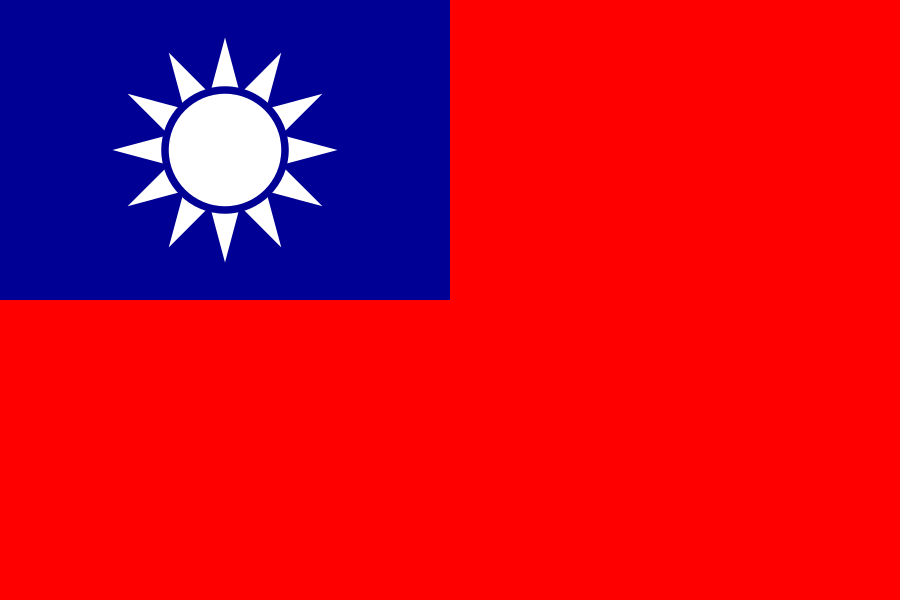 Japanese surrender accepted in Taipei
Chen Yi accepted the surrender of the last governor-general, Andō Rikichi, at the Taipei public hall, and the Executive Office began work. Chen proclaimed the day Taiwan's "Retrocession".
- 21947.02.27Bloodshed at a cigarette raid outside the Tianma Tea House
A Monopoly Bureau agent struck the cigarette vendor Lin Jiang-mai with his pistol butt in Dadaocheng, and a shot fired by a fleeing agent hit the bystander Chen Wen-xi, who died the next day.
- 31947.02.28Shooting at the Executive Office and seizure of the radio station
Amid a general strike, guards machine-gunned a procession petitioning the Executive Office. Townspeople seized the Taiwan Broadcasting station and told the whole island, and Chen Yi declared temporary martial law in Taipei.
- 41947.03.02First Settlement Committee meeting and the Taichung citizens' assembly
The February 28 Incident Settlement Committee met for the first time at Zhongshan Hall in Taipei. The same day a citizens' assembly in Taichung elected Xie Xuehong chair and occupied the police bureau.
- 1947.03.05
 Chiang Kai-shek decides to send troops
Chiang Kai-shek, chairman of the Nationalist government, decided to send troops to Taiwan and the next day gave personal instructions to Liu Yu-ching, commander of the Reorganised 21st Division.
- 51947.03.06The Kaohsiung massacre
The fortress commander Peng Meng-chi arrested the delegates who brought peace terms, shot three of them and sent troops to fire on townspeople at Kaohsiung station and the city hall auditorium.
- 61947.03.07The Thirty-Two Articles presented
The Settlement Committee adopted the Thirty-Two Articles drafted by Wang Tien-teng and presented them to Chen Yi, who rejected them.
- 71947.03.08Reinforcements land at Keelung
Gendarmes from Fujian landed at Keelung harbour at night, followed by the Reorganised 21st Division. That night several hundred young people were shot in front of the Yuanshan warehouse in Taipei.
- 81947.03.10Island-wide martial law and dissolution of the committee
Chen Yi declared martial law over the whole island and dissolved the Settlement Committee and its branches as illegal organisations.
- 91947.03.11Lin Mao-sheng taken away
The National Taiwan University professor Lin Mao-sheng was taken away by armed men and never returned. The provincial councillor Wang Tien-teng and the banker Chen Xin were taken from their homes at about the same time.
- 101947.03.16Battle of Wuniulan and dissolution of the 27 Brigade
The 27 Brigade, which had withdrawn to Puli, fought the 21st Division around the Wuniulan bridge and then disbanded for lack of ammunition.
- 111947.03.17Bai Chongxi's pacification mission
Defence minister Bai Chongxi arrived in Taiwan, broadcast a policy of leniency and forbade reprisals by soldiers and police. Chiang Kai-shek broadcast his settlement policy to the people of Taiwan the same day.
- 1947.03.20Village clearance proclaimed
Chen Yi issued a proclamation launching village clearance, and the army divided Taiwan into seven pacification zones for household checks, weapon collection and arrests.
- 121947.03.25Chen Cheng-po and others shot at Chiayi station
The painter Chen Cheng-po and other Chiayi city councillors, seized when they went to negotiate at the airfield, were shot in public in front of Chiayi station.
- 1947.04.22Executive Office abolished
The Executive Yuan decided to abolish the Taiwan Provincial Administrative Executive Office, set up a Taiwan provincial government and appoint Wei Tao-ming in place of Chen Yi.
- 131947.05.16Martial law and village clearance end
Wei Tao-ming took office as chairman of the Taiwan provincial government and ended martial law and village clearance.
- 141949.04.06The April 6 Incident
Soldiers and police surrounded the dormitories of National Taiwan University and the Provincial Normal College to seize named students and carried many students away in lorries.
- 151949.05.19Martial law proclaimed in Taiwan Province
Chen Cheng, chairman of the Taiwan provincial government and garrison commander, proclaimed martial law throughout Taiwan Province from midnight on 20 May.
Related people 20
Taiwanese protesters, settlement committees and militias6
Leadership3
Drafted and broadcast the Thirty-Two Articles; taken away after the crackdown and never returned.
Commander of the 27 BrigadeChung Yi-jen1921–2023Organised the Taichung citizens' assembly and led the 27 Brigade; later sentenced to fifteen years.
Commander-in-chief of the 27 BrigadeXie Xuehong1901–1970Formed the 27 Brigade in Taichung with Chung Yi-jen and others as its commander-in-chief, and fled to the mainland after it disbanded.
Nationalist government, Executive Office and army7
Leadership2
Feigned negotiation with the Settlement Committee while calling for reinforcements, and directed martial law and village clearance.
Chairman of the Nationalist governmentChiang Kai-shek1887–1975Decided on 5 March to send troops; the 2006 responsibility report assigned him the greatest responsibility.
Implementers & commanders4
Treated the Settlement Committee as a communist plot and led infiltration and arrests.
Commander of Kaohsiung FortressPeng Meng-chi1908–1997Arrested and shot peace delegates on 6 March and crushed Kaohsiung; in 1949 he also directed the arrests of the April 6 Incident.
Commander of the Reorganised 21st DivisionLiu Yu-ching1892–1970Landed in Taiwan with his division on Chiang's orders and carried out the suppression and village clearance.
Chief of the general staff; governor of Taiwan in 1949Chen Cheng1898–1965Received Chen Yi's request for reinforcements in 1947; in 1949 he ordered the April 6 crackdown and proclaimed martial law.
Outside the camps
Participants4
Set up the 1990 inquiry into February 28 and in 2012 questioned the death-toll estimates.
PresidentLee Teng-hui1923–2020In 1995 became the first head of state to apologise formally to the families of February 28 victims.
Former Taiwanese Communist Party memberSu Xin1907–1981Leftists recalled that he helped Wang Tien-teng with the Thirty-Two Articles; the historian Chen Tsui-lien holds that this lacks corroboration from other sources.
Social activist of the Japanese eraLin Hsien-tang1881–1956In 1945 organised a preparatory committee to welcome the Nationalist government.
Targets & victims1
Witnesses & chroniclers2
Witnessed the incident and made it known abroad in Formosa Betrayed (1965).
Secretary of the CCP Taiwan Provincial Work CommitteeCai Xiaoqian1904–1982Did not recognise Xie Xuehong, who considered herself an underground member, as a party member because her admission was incomplete.
Related terms
Sources: reference 1reference 2reference 3reference 4reference 5reference 6reference 7reference 8reference 9reference 10reference 11reference 12reference 13reference 14reference 15reference 16reference 17reference 18reference 19reference 20reference 21reference 22reference 23reference 24reference 25reference 26reference 27reference 28reference 29reference 30reference 31