The Chinese Civil War
How did the Kuomintang, with American backing and overwhelming numbers, lose the mainland in four years?
After Japan’s surrender the Chongqing talks and Marshall’s mediation could not stop the two parties’ armed competition. When full civil war began in 1946 the Nationalists took cities but were pushed back in Manchuria by Lin Biao’s Northeast Field Army, and in the three campaigns of 1948–1949 — Liaoshen, Huaihai and Pingjin — they lost 1.5 million men. In April 1949 the People’s Liberation Army crossed the Yangtze and Chiang Kai-shek retreated to Taiwan.
 The moment of surrender: who takes over?
From just before the surrender, Yan’an radio and Chongqing radio each told the Japanese army to surrender to them. The Allied surrender terms had the Japanese surrender only to Nationalist troops, and Chiang ordered the Communist forces to stay where they were and the Japanese to hold their posts until the Nationalists arrived. The Communists soon began taking Japanese surrenders and fighting units that resisted. Truman wrote in his memoirs that if the Japanese had been told to lay down their arms at once the Communists would have taken the whole country, so the United States took the unusual step of “using the enemy as a garrison” until Nationalist troops could be brought in. American aircraft and ships carried tens of thousands of Nationalist troops to north China and the coastal cities, and some 50,000 US Marines guarded key points in Hebei and Shandong. 1 2
In Shanxi, Yan Xishan took surrendered Japanese troops into his own army; this Japanese “special force”, at one point some 15,000 strong, helped him hold power until Taiyuan fell in April 1949. Manchuria was another matter. The Soviet army that invaded on 9 August occupied the whole region, and 700,000 Japanese troops surrendered to it. Through the Sino-Soviet Treaty of Friendship and Alliance of 14 August the Nationalist government ceded the Manchurian railways and rights at Port Arthur and Dalian in return for recognition as the sole government, but it had no troops in Manchuria. The Communists sent 110,000 troops and 20,000 cadres from their strategic regions into Manchuria and, together with local forces, formed the Northeast Democratic United Army. 1 3 4
The Soviet army delayed its withdrawal and systematically dismantled Manchuria’s industrial plant, valued by US Ambassador Edwin Pauley at about two billion dollars. In the winter of 1945–1946 Stalin ordered Malinovsky to hand most of the captured Japanese weapons to the Communists, and Malinovsky secretly told the Communist forces to move in behind the departing Soviet troops. Refused passage through Soviet-held territory, Nationalist forces entered the main cities by American transport, but the countryside was already in Communist hands. The Soviets were gone by 3 May 1946. At the end of 1945 the Communists had 1.2 million regular troops and two million militia, and their liberated areas held a quarter of the country’s territory and a third of its population. 1 5
The Chongqing negotiations and the Double Tenth Agreement
Stalin advised the Communists to negotiate, telling them a new united front with the Kuomintang was their “best hope for the future”. At the end of August Mao, with Zhou Enlai, flew to Chongqing in the plane of the US ambassador Patrick Hurley, who leaned towards Chiang but guaranteed Mao’s safety. The two leaders met for the first time in twenty years, and for the last time. The actual negotiations were conducted by Wang Shijie for the government and Zhou Enlai for the Communists, and lasted 43 days. 6 7 1
In the Double Tenth Agreement, the “Summary of Conversations between the Government and Representatives of the Communist Party of China” signed on 10 October, the Communists recognised the Nationalist government as the legitimate government and the Kuomintang recognised the Communists as a legitimate opposition party. The parties agreed on peaceful national reconstruction, political democracy and the goal of placing all armed forces under Chiang’s command, and decided to convene a Political Consultative Conference; but they could not settle the central questions of the liberated-area governments and the size of the Communist army. Fighting went on during the talks: the Shangdang campaign, begun on 10 September, ended only on 12 October after the agreement was announced, and on 15 November the Kuomintang began a campaign to stop the Communists strengthening their bases. Hurley resigned on 26 November, accusing the State Department of sympathy for the Communists. 7 6 1 8
The Marshall Mission and the collapse of the truce
In December 1945 Truman sent George Marshall as his special envoy. Arriving on 20 December, Marshall aimed to bring the two parties into one government so that a strong non-Communist China would stand as a bulwark against the Soviet Union. A truce was arranged through American mediation in January 1946, and the Political Consultative Conference, held at Chongqing from 10 to 31 January, adopted twelve resolutions including government reorganisation, revision of the draft constitution and the convening of a national constituent assembly. But on 10 February riots broke out at Jiaochangkou in central Chongqing and relations between the parties began to collapse, while factions within the Kuomintang such as the Gexin movement strongly opposed Marshall’s mediation. Both parties used the negotiations to prepare for the next war. 9 10 11
The truce broke in Manchuria. After the Communists took Siping, vacated by the Soviets, the Nationalist general Du Yuming defeated Lin Biao’s forces there in April–May 1946 and retook Changchun on 23 May. Over Lin’s objections Mao had ordered him to fight a decisive battle around Siping and “not give an inch of land”, but the Communists lost over 30,000 men and were driven north of the Songhua (Sungari). When Chiang declared a ceasefire in Manchuria on 6 June under Marshall’s pressure, the Communists gained a breathing space. To press for peace the United States suspended arms and ammunition sales to the Nationalist government from 29 July 1946 to May 1947. But on 26 June the Nationalist attack on the Central Plains liberated area opened full-scale civil war. 12 13 14 15 1
Marshall, in poor health and under criticism at home, acknowledged the failure of his mediation in January 1947, went home and soon became Secretary of State. John Leighton Stuart, former president of Yenching University, appointed ambassador in July 1946, carried on the mediation without result. Washington, concluding that nothing short of large-scale armed intervention could stop the war, stepped back, but kept up economic and military aid to the Nationalist government: within two years of the war’s end the Kuomintang had received 4.43 billion dollars from the United States, most of it military. On that basis the Communists defined the civil war as both a national revolution against the Kuomintang and a revolution against American aggression. 9 16 17 11 1
1946–1947: the Nationalist offensive and the Communist mobile defence
When the civil war began the Communists had some 1.2 million troops and the Nationalists 3.4 times as many. On 20 July 1946 Chiang opened a great offensive against the Communist areas of north China with 113 brigades, 1.6 million men. Aware of their inferiority in men and equipment, the Communists chose a “passive defence”, avoiding the Nationalists’ strong points and giving up territory to preserve their forces. Since the countryside and small towns around the cities had long been under Communist influence, the more cities the Nationalists took the more they had to scatter their garrisons. In central Jiangsu Su Yu’s forces won “seven victories in seven battles” in July–August 1946, inflicting over 53,000 casualties. A year later the Communists counted 1.12 million Nationalist troops destroyed, while their own strength had grown to about two million. 18 1 19
In March 1947 the Nationalists dropped the all-out offensive for concentrated attacks on the Communist areas of Shandong and Shaanxi. In March Hu Zongnan’s army of 200,000 took Yan’an, but the Communist agent Xiong Xianghui, long planted as Hu’s aide, had warned the leadership two weeks before, and Mao, Zhou Enlai and the others got away safely. Mao directed the war from small villages in northern Shaanxi, and Peng Dehuai’s Northwest Field Army defeated Hu’s forces again and again. In May, at Menglianggu in Shandong, Chen Yi and Su Yu’s East China Field Army surrounded and destroyed Zhang Lingfu’s Reorganised 74th Division, one of the Nationalists’ elite units. 1 20 21
In the summer of 1947 the war changed direction. On 30 June the forces of Liu Bocheng and Deng Xiaoping crossed the Yellow River and moved south into the Dabie Mountains. The Nationalist plan of using the river as a defence line collapsed, and from then on Nationalist territory became the main battlefield. At the same time the Communists counter-attacked in the northeast, north China and east China. After Lin Biao’s successful winter offensive of 1947–1948 in Manchuria the Communists outnumbered the Nationalists there for the first time, and the Nationalist defence of Manchuria shrank to three isolated strongholds: Shenyang, Changchun and Jinzhou. 1 22 15
In the first half of 1948 the balance tipped visibly. In March Peng Dehuai surprised Hu Zongnan’s forces at Yichuan, inflicting 20,000 casualties, and in April the fall of Luoyang cut the Nationalists off from Xi’an. On 24 September, after hard fighting, Jinan and Shandong passed to the Communists. By the Communists’ count, after two years of war the PLA had grown from some 1.2 million to 2.8 million men, and its ratio to the Nationalist army had gone from 1 to 3.4 to 1 to 1.3. The liberated areas had expanded to 2.35 million square kilometres and 168 million people, most of them having completed land reform. At the Politburo meeting at Xibaipo on 8 September 1948 Mao set out a strategy of passing from guerrilla to regular warfare, building an army of five million and destroying five hundred Nationalist regular brigades so as to overthrow the Kuomintang fundamentally in about five years. The decision in fact came far sooner. 20 1 18
Land reform: binding the peasants to the war
On 4 May 1946 the Central Committee issued the “Directive on the Land Question” drafted by Liu Shaoqi, the May Fourth Directive. Abandoning the wartime rent and interest reduction, it raised the slogan “land to the tiller” and ordered landlords’ land confiscated and divided among the peasants. It insisted that middle peasants’ land must never be touched, that rich peasants’ land should generally be left alone, that landlords with merit in resisting Japan should keep more land, and that methods of struggle against village landlords must not be used against urban industrialists and merchants. Land went first to soldiers’ families and the families of poor-peasant cadres. Each regional bureau interpreted the directive in its own way. 23 24
From July to September 1947 a National Land Conference chaired by Liu Shaoqi met at Xibaipo in Hebei, and on 10 October the Outline Land Law of China was promulgated. It declared the abolition of the land system of feudal and semi-feudal exploitation and land to the cultivator. Its Article 6 laid down that all landlords’ land and public land be taken over by the village peasant association and, together with all other land in the village, distributed equally according to the whole village population regardless of sex or age; with it the confiscation of rich peasants’ land became law. The slogan “all power to the poor peasants’ league” was raised. William Hinton, an American who witnessed the process, judged that the Outline played as important a role as the Emancipation Proclamation in the American Civil War. 25 24
Land reform was attended by savage violence. Work teams went from village to village dividing the population into landlords, rich, middle, poor and landless peasants, and those condemned as landlords were buried alive, dismembered, strangled or shot; in the village Hinton called Long Bow at least a dozen alleged rich peasants or landlords were beaten to death. The Kuomintang organised landlords who wanted their land back into “Homecoming Legions” that waged a guerrilla war of revenge, and wherever Nationalist troops or the legions were present the violence of land reform and of civil war overlapped. In early 1948 Xi Zhongxun and Ren Bishi criticised the excesses, and in January Ren announced that the targets of the movement would be allowed to keep a share of their property. Mao’s directive of 18 January likewise took a less radical turn, and the Central Committee instructed that “the fewer people we attack, the better” and that work teams must not beat or torture their targets. 24 1 26
In June 1948, concluding that most peasants were satisfied with the land they had received and some were even worried by the repeated radical turns, the party wound up land reform across most of north China. By the time of the Communist victory more than half the population of the Communist areas had gone through land reform and over 25 million hectares had been redistributed. Millions of peasants who received land joined the People’s Liberation Army or worked in its supply networks. The historian Brian DeMare judges land redistribution decisive because it tied the interests of the peasants of north and northeast China to the Communists’ success. 24 1
The decay of Nationalist rule: inflation, corruption and the loss of the cities
The Nationalist government’s weaknesses showed in the rear before they showed at the front. On the pretext of “receiving the Japanese surrender”, business interests inside the government took over most of the banks, factories and commercial properties the Japanese army had seized, and kept them rather than returning them to their owners. Hasty conscription and hoarding in preparation for civil war drove unemployment in Shanghai up to 37.5%. An OSS officer remarked that the return of the Kuomintang had brought such graft and corruption that the only winners were the Communists. 1 27
The inflation that began during the war became chronic hyperinflation in the mid-1940s and worsened after it. Soldiers’ and officials’ pay lost its purchasing power, which in turn fed corruption and the embezzlement of supplies; ordinary soldiers were malnourished and desertion was common. On 19 August 1948 the government issued the gold yuan, exchanging it at one to three million fabi and forcing citizens to hand over their gold, silver and foreign currency. Chiang Ching-kuo directed the price controls in Shanghai, but because reserves and issuing limits were not respected the gold yuan soon collapsed, and the urban middle class, stripped of its savings, turned against the government. By 1949 the currency in circulation was 120 billion times that of 1936. 28 29 1
The way the Kuomintang ruled also eroded its support. The government put down with troops the popular uprising that began in Taiwan on 28 February 1947; estimates of the dead run from 18,000 to 28,000, with lower figures also given. From 1946 to 1949 the Nationalists arrested, tortured and killed political dissidents through the Sino-American Cooperative Organization. The historian Rana Mitter writes that the government came to be seen as “corrupt, vindictive, and with no overall vision” of what China under its rule should be. Chiang himself wrote in his diary in June 1948, after the fall of Kaifeng, that the nation had collapsed time after time not because of external enemies but because of disintegration and rot from within. 30 1
American aid continued amid hesitation. On 3 July 1948 the Nationalist government and the United States signed an agreement for 275 million dollars in economic and 120 million in military aid. But with the failure of the Marshall Mission, corruption scandals such as the Yangtze Development Corporation tied to the families of H. H. Kung and T. V. Soong, and the defeats in the northeast, Washington withdrew its wholehearted support. The Communists put American involvement at the centre of their propaganda, framing the war as a fight against “US imperialists and their puppets”, and Mao claimed that the United States had given Chiang 5.9 billion dollars between 1945 and 1949 “to help Chiang Kai-shek slaughter several million Chinese”. 1
 Manchuria and Korea: the rear base of the civil war
Many historians see Manchuria, made China’s most industrialised region by Japanese colonial investment, as the theatre where the civil war was decided. With the Soviet occupiers looking the other way, the Communists collected Japanese weapons from the Kwantung Army arsenal outside Shenyang and elsewhere. From March 1946 Soviet forces in northern Korea handed over more than 30,000 Japanese rifles, and by June the Communists had obtained some 700 Japanese guns in Manchuria. In June–July 1947 at Pyongyang the Soviet command in northern Korea and Zhu Rui, head of the Northeast Artillery School, agreed to barter Japanese weapons and tanks for farm produce and scrap metal, and in October Zhu Rui took command of the Communists’ first independent artillery force. 1 4
Under Soviet occupation North Korea became a source of arms and a rear for the Communist armies in the northeast. When Du Yuming led his main force against the Communists on the Korean border in January 1947, Lin Biao struck his rear with troops from north of the Songhua. Chen Yun later said: “They did their best to help us, we were backed by the Soviet Union and North Korea.” In 1952 the Nationalists complained to the United Nations that the Soviet Union had broken the Sino-Soviet treaty by aiding the Communists, and obtained General Assembly Resolution 505 condemning it. 1 13
Koreans fought directly. On 11 August 1945 the party ordered the Korean Volunteer Army at Yan’an and in the Taihang Mountains to march into Manchuria. Some under Kim Tu-bong crossed the Yalu and were disarmed by the Soviet military government; about a hundred commanders, Mu Chong among them, entered North Korea as private individuals in December. The 2,000 Korean volunteers who entered Manchuria in November split into the 1st, 3rd, 5th and 7th detachments and grew by recruiting young Koreans in Yanbian and elsewhere; their stationing in Yanbian later became the background of the Yanbian Korean Autonomous Prefecture. These units grew into the 164th and 166th Divisions and the Independent 15th Division of the Northeast Democratic United Army and the People’s Liberation Army, and fought in the Manchurian battles of the civil war. 31
As the civil war drew to an end the Korean units went home. In July–August 1949 the 164th Division (about 12,000 men) and the 166th Division (about 10,000, under Pang Ho-san) entered North Korea and became the Korean People’s Army’s 5th and 6th Divisions, and in April 1950 the Independent 15th Division (about 14,000) arrived at Wonsan and became the 12th Division. Together with other units, 55,000 to 60,000 seasoned troops joined the KPA, greatly strengthening North Korea’s forces just before the war of June 1950. This “Yan’an faction” became one pillar of early North Korean politics, but was purged after the Korean War, by 1958. 31
The three great campaigns: September 1948 to January 1949
On 12 September 1948 Lin Biao and Luo Ronghuan’s Northeast Field Army opened the Liaoshen campaign. The Nationalist commander in the northeast, Wei Lihuang, wanted to hold Shenyang while Chiang wanted to pull forces out through the Jinzhou–Huludao corridor, and command was paralysed. The Communists aimed at Jinzhou, the exit from Manchuria, and took it within a day of their general assault on 14 October. In Changchun, besieged since May, the Communists stopped civilians leaving in order to exhaust the food supply, and tens of thousands starved (one estimate is about 150,000); in October part of the garrison changed sides and the New Seventh Army laid down its arms. Shenyang fell on 1–2 November. In 52 days the Nationalists lost 472,000 men against 69,000 Communist casualties, and the Communists gained numerical superiority nationwide for the first time. 22 4 15 32 33
On 6 November the Huaihai campaign began between Xuzhou and the Huai River. Proposed by Su Yu and expanded by Mao, it brought Chen Yi and Su Yu’s East China Field Army and Liu Bocheng and Deng Xiaoping’s Central Plains Field Army under a General Front Committee with Deng as secretary. The East China army surrounded and destroyed Huang Baitao’s 7th Army at Nianzhuang; the Central Plains army surrounded Huang Wei’s 12th Army coming to the rescue; and finally the forces Du Yuming led out of Xuzhou were encircled. Guo Rugui, head of operations in the Nationalist Ministry of Defence, was passing the battle plans to the Communists. In 65 days, to 10 January 1949, 555,000 Nationalist troops were destroyed and Du Yuming was taken prisoner. 34 18 14 1
Victory at Huaihai was carried on the peasants’ backs. Some 5.43 million peasants from Shandong, Henan, Anhui and Jiangsu, with over 200,000 stretchers and 880,000 carts large and small, carried more than 434 million jin of grain to the front. Chen Yi used to say that “the victory of the Huaihai campaign was pushed out by the folks back home with their wheelbarrows.” Such mobilisation was possible because land reform had tied the interests of peasants who received land to the Communists’ victory. 18 1
In the Pingjin campaign, opened on 29 November, 800,000 men of the Northeast Field Army, fresh from Liaoshen, came through Shanhaiguan and with Nie Rongzhen’s North China forces cut Fu Zuoyi’s 600,000 men apart in Beiping, Tianjin and Zhangjiakou. After Zhangjiakou, the final assault on Tianjin began on 14 January 1949, and in 29 hours its garrison of 130,000 was destroyed and the commander Chen Changjie captured. Fu Zuoyi, who had been negotiating secretly with Lin Biao, went over without a fight on 31 January with Beiping’s garrison of a quarter of a million. In 64 days over 520,000 Nationalist troops were destroyed or reorganised. In the three campaigns the Nationalists lost 144 regular and 29 irregular divisions, 1.54 million men, and with them the ability to fight large battles on the mainland. 35 36 37 1
 From the Yangtze crossing to Taiwan
The Huaihai defeat badly weakened Chiang’s position, and under pressure from the Guangxi leaders Li Zongren and Bai Chongxi he stepped down as president on 21 January 1949. Li, acting president from the next day, sent a delegation to Beiping in April for peace talks, but the government would not sign the “Agreement on Internal Peace” the Communists put forward. Stalin is said to have favoured a coalition government and tried to persuade Mao not to cross the Yangtze, but Mao would not accept it. On 21 April Mao Zedong and Zhu De issued the order for the country-wide advance. 34 38 39 40 1
From the night of 20 April Liu Bocheng and Deng Xiaoping’s Second Field Army and Chen Yi, Su Yu and Tan Zhenlin’s Third Field Army crossed the Yangtze on a front of more than 500 kilometres from Hukou in the west to Jiangyin in the east. About a million troops were committed in all, 300,000 crossing in the first two days alone. When the Jiangyin fortress and the Nationalist navy’s Second Fleet changed sides, the defence line broke within three days, and Nanjing was liberated on 23 April. On 20 April the British sloop HMS Amethyst, steaming up the river, was shelled by the PLA and 22 of her crew were killed. The British press celebrated her later escape as a dramatic feat, while Mao and Peng Dehuai saw the incident as the end of foreign imperialism in China. 40 41 42 43
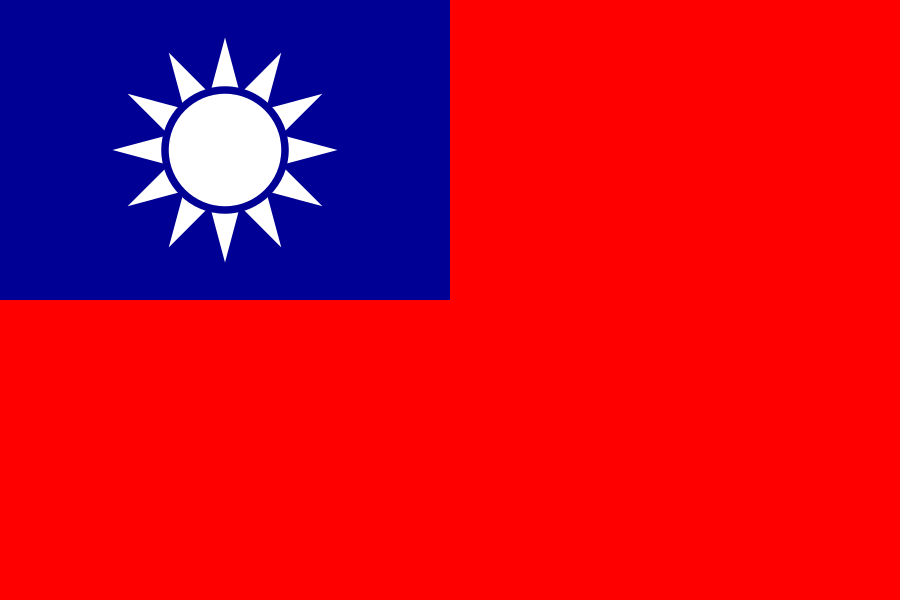
The PLA took Hangzhou on 3 May and Shanghai on 27 May; Lin Biao’s Fourth Field Army liberated the three Wuhan cities in mid-May, drove south, defeated Bai Chongxi’s main force in September–October and entered Guangzhou on 14 October. In the north, Taiyuan, which had held out for over six months, fell on 24 April, and Peng Dehuai and He Long’s First Field Army took Xi’an in May and Lanzhou in August. Hunan and Xinjiang passed over peacefully when their Nationalist commanders changed sides. Meanwhile, on 1 October, the People’s Republic of China was proclaimed in Beijing. The Nationalist government moved from Guangzhou to Chongqing and Chengdu and on 7 December to Taiwan, and with the siege and fall on 10 December of Chengdu, the last Nationalist city on the mainland, where Chiang and his son Chiang Ching-kuo had been directing the defence, organised resistance on the mainland effectively ended. At Chongqing on 6 September, Nationalist agents preparing to withdraw killed Yang Hucheng, held for twelve years, together with his children. 40 1 38 44 45
Chiang secretly moved gold, silver and foreign-exchange reserves to Taiwan, and institutions such as Academia Sinica and the Palace Museum went too. Between 900,000 and 1.1 million people are estimated to have moved from the mainland to Taiwan in 1945–1955; a figure of about two million including troops is also used. The PLA’s landing on Kinmen at Kuningtou on 25 October 1949 failed, checking plans to invade Taiwan, but it took Hainan in April 1950 and the Zhoushan islands in May. Truman declared on 5 January 1950 that the United States would not intervene in a dispute over the Taiwan Strait, but when the Korean War broke out in June he sent the Seventh Fleet into the strait. The two governments never signed a peace or armistice agreement and their standoff continued. 46 47 1 48
Assessment
On 5 August 1949 the State Department published the China White Paper. In his introduction Dean Acheson wrote that the ominous result of the civil war in China was beyond the control of the United States government, and that nothing it did or could have done within the reasonable limits of its capabilities could have changed the result. In “Farewell, Leighton Stuart!” of 18 August Mao called the White Paper a record of the bankruptcy of US imperialism and mocked: “Leighton Stuart has departed and the White Paper has arrived. Very good. Very good.” In the United States the debate over “who lost China” spread; in 1951 MacArthur called the Marshall Mission one of the greatest blunders in American diplomatic history, and McCarthy blamed Marshall for the “loss of China”. 49 50 9
Historians cite causes at several levels. Almost every study of the Nationalist collapse names hyperinflation as a major factor. Odd Arne Westad argues that the Communists made fewer military mistakes than Chiang, and that Chiang, seeking a powerful centralised government, antagonised too many interest groups; yet he stresses that the Kuomintang held real advantages in 1945 and that the outcome remained uncertain until the Huaihai campaign at the end of 1948. On the Communist side scholars point to peasant mobilisation through land reform, the leadership’s “extraordinary cohesion” and unity of command, the penetration of agents such as Guo Rugui and Xiong Xianghui, and political work among surrendered troops. Harold Tanner sees the Liaoshen campaign in Manchuria as the place where the war was decided, while Jay Taylor and others stress external factors such as the cut-off of American aid and consistent Soviet support for the Communists. 1 28
Chiang’s own retrospective accounts were contradictory. In speeches at the Revolutionary Practice Institute on Taiwan in the early 1950s he indicted his party, saying that never in China or abroad had there been a revolutionary party as decrepit and degenerate as theirs; but in his 1957 memoir Soviet Russia in China he made Soviet duplicity, the Yalta agreements, the removal of Manchurian industry and the transfer of Japanese weapons to the Communists, the primary cause. Lloyd Eastman and others judge that this account correctly identified Soviet interference but was self-serving, deflecting attention from Chiang’s own neglect of the economy, the corruption of his associates and his strategic errors in Manchuria. 1
The civil war involved mass violence on both sides: Nationalist political terror and repression, Communist land-reform violence and the blockade of Changchun among them; the total death toll has not been established by reliable statistics. In the history of the socialist movement the civil war became the model of a revolution that took the cities and the state with a peasant army and a land revolution. The bases and army built up during the war against Japan, peasants bound by land reform, a rear in the Soviet Union and North Korea, and a Nationalist state that collapsed from within came together to change the masters of the mainland in four years. The victory transformed the Cold War in East Asia and within a year led into the Korean War and the standoff across the Taiwan Strait. 1 24 51
Consequences
The Communists won by mobilising the peasantry through land reform and exploiting Nationalist inflation, corruption and military blunders. On 1 October the People’s Republic was proclaimed, and the confrontation of two governments across the Taiwan Strait and the Asian front of the Cold War began.
Timeline & Map
1945.08 Japan surrenders
- Nationalist government
- Communists
- Japanese occupation
- Soviet occupation
- Outside both (Tibet etc.)
Boundaries are approximate. 1945–1947 follow a 1947 US State Department map; 1948–1949 are drawn from the campaign record. Until 1948 the Nationalists mostly held cities and railways, the Communists the countryside. Map sources: US Department of State, Map Division, “China: Communist Controlled Areas, 1945–1947” (no. 10745, Aug. 1947), NARA via Wikimedia Commons; US Military Academy, Department of History, “China, 1900–1949: Situation at the End of World War II”


- 11945.08–
1946.04 The race for ManchuriaCommunist troops entered Soviet-occupied Manchuria first while US aircraft flew in Nationalist armies; the Soviets handed over Japanese weapons and withdrew in spring 1946.
- 21945.08.28–
10.10 The Chongqing talks and the Double Tenth AgreementMao flew to Chongqing under US ambassador Hurley’s guarantee to meet Chiang; the agreement promised a political consultative conference but left the army question unresolved.
- 31945.09.10–
10.12 Shangdang campaignEven during the Chongqing talks the two armies fought in southeast Shanxi; the battle ended on 12 October, after the Double Tenth Agreement was announced.
- 41946.01Marshall’s ceasefire
Truman’s envoy Marshall secured a ceasefire and the consultative conference, but fighting went on in Manchuria.
- 51946.01.10–
31 Political Consultative ConferenceMeeting at Chongqing, it adopted twelve resolutions including government reorganisation and revision of the draft constitution, but the agreement unravelled after the Jiaochangkou riot in February.
- 61946.05Battle of Siping
Lin Biao’s troops held Siping for a month before retreating north of the Songhua River.
- 71946.05.04The May Fourth Directive
The Central Committee abandoned rent and interest reduction and ordered land reform confiscating landlords’ land for the peasants.
- 81946.06Full-scale civil war
Nationalist forces attacked the Central Plains liberated area; Marshall declared his mission a failure and left in January 1947.
- 1946.07.20The Nationalist general offensive
Chiang attacked the Communist areas of north China with 113 brigades, 1.6 million men; the Communists gave up ground to preserve their forces.
- 91947.02.28The February 28 incident
The Nationalist government crushed a popular uprising in Taiwan with troops; 18,000 to 28,000 are estimated to have died.
- 101947.03Yan’an falls
Hu Zongnan’s Nationalists took Yan’an, but Mao stayed in northern Shaanxi directing the war.
- 111947.05Menglianggu campaign
Chen Yi and Su Yu’s East China Field Army surrounded and destroyed the elite Reorganised 74th Division.
- 121947.06The Liu–Deng thrust into the Dabie Mountains
Liu Bocheng and Deng Xiaoping crossed the Yellow River deep into Nationalist territory, opening the strategic counter-offensive.
- 131947.10Outline Land Law
Confiscation and equal division of landlord land was promulgated in the liberated areas, underpinning peasant mobilisation.
- 141948.05–
10 Siege of ChangchunThe Communists starved the city, stopping civilians from leaving; tens of thousands died before the garrison surrendered in October.
- 151948.08.19The gold yuan
The government exchanged three million fabi for one gold yuan and forced in gold and foreign currency; the new note collapsed within months and the urban middle class turned away.
- 161948.09–
11 Liaoshen campaignThe Northeast Field Army took Jinzhou, sealed Manchuria and destroyed 470,000 Nationalist troops at Changchun and Shenyang.
- 171948.11–
1949.01 Huaihai campaignAround Xuzhou 600,000 PLA troops destroyed 550,000 Nationalists; five million peasants carried supplies.
- 181948.11–
1949.01 Pingjin campaignTianjin fell and Fu Zuoyi surrendered Beiping without a fight on 31 January.
- 191949.01.15Fall of Tianjin
A 29-hour assault destroyed the garrison of 130,000 and captured its commander Chen Changjie.
- 201949.01.21Chiang steps down
After the Huaihai defeat Chiang stepped down as president and Li Zongren became acting president.
- 211949.04.20The Amethyst incident
A British warship on the Yangtze lost 22 men to PLA shelling; Mao saw it as the end of foreign imperialism in China.
- 221949.04.21Crossing the Yangtze
A million PLA troops crossed the Yangtze and took Nanjing on the 23rd; Shanghai fell in May and Guangzhou in October.
- 231949.05.27Liberation of Shanghai
The Third Field Army took China’s largest city.
- 1949.07–
08 Korean divisions go to North KoreaThe 164th and 166th Divisions, formed from the Korean Volunteer Army, entered North Korea and became the KPA’s 5th and 6th Divisions.
- 1949.08.05The China White Paper
The State Department published the White Paper holding the outcome beyond American control; Mao replied with “Farewell, Leighton Stuart!”.
- 241949.10.01The People’s Republic proclaimed
Mao proclaimed the Central People’s Government at Tiananmen; in December Chiang moved to Taipei.
- 251949.10.25Battle of Kuningtou
The PLA landing on Kinmen failed, checking plans to invade Taiwan.
- 261949.12.07The Nationalist government moves to Taiwan
Having moved through Guangzhou, Chongqing and Chengdu, the Nationalist government relocated to Taipei; Chengdu fell on 10 December.
- 1950.06The Seventh Fleet sent to the Taiwan Strait
With the outbreak of the Korean War Truman reversed his January statement of non-intervention and sent the Seventh Fleet into the Taiwan Strait.
Related people 43
Leadership2
Implementers & commanders14
Conquered Manchuria and took north China, the decisive phase of the victory.
Central Plains Field Army commander at HuaihaiLiu Bocheng1892–1986Led the 1947 Dabie thrust and the Huaihai campaign.
Secretary of the Huaihai front committeeDeng Xiaoping1904–1997Political head of the Huaihai campaign; took over the Southwest after the Yangtze crossing.
East China Field Army commanderChen Yi1901–1972Fought at Huaihai and took Shanghai.
Northwest Field Army commanderPeng Dehuai1898–1974Recovered northern Shaanxi and the Northwest after Yan’an fell.
East China Bureau secretaryRao Shushi1903–1975As East China Bureau secretary during the civil war, he ran the region with Chen Yi.
Deputy commander of the North China Military RegionXu Xiangqian1901–1990During the civil war, he took Taiyuan as deputy commander of the North China Military Region.
Deputy political commissar of the Tenth Army GroupWei Guoqing1913–1989He was deputy political commissar of the Third Field Army’s Tenth Army Group during the civil war.
Northeast Field Army column commanderDeng Hua1910–1980From 1947 to 1949, he commanded the Northeast Field Army’s 7th Column.
Commander of the Central Plains breakoutLi Xiannian1909–1992At the start of the Chinese Civil War, he led the breakout from the Central Plains.
De facto commander of the East China Field Army; planner of HuaihaiSu Yu1907–1984He led the seven victories of central Jiangsu, Menglianggu, Huaihai and the Yangtze crossing.
Political commissar of the Northeast Field ArmyLuo Ronghuan1902–1963With Lin Biao he led the Liaoshen and Pingjin campaigns and negotiated the peaceful surrender of Beiping.
North China commander; General Front Committee of PingjinNie Rongzhen1899–1992He attacked Zhangjiakou and with Lin Biao and Luo Ronghuan led the peaceful takeover of Beiping.
Commander in the First Field ArmyHe Long1896–1969With Peng Dehuai he liberated Xi’an and the northwest in 1949.
Participants17
Led the negotiations of 1945–1946.
In charge of land-reform policyLiu Shaoqi1898–1969Chaired the 1947 national land conference that adopted the Outline Land Law.
Corrected land-reform excessesRen Bishi1904–1950Redefined class categories and middle-peasant protection in January 1948.
US mediatorGeorge C. Marshall1880–1959Mediated for a coalition from December 1945 and declared failure in January 1947.
US president: aid without interventionHarry S. Truman1884–1972Sent Marshall and in the 1949 White Paper disclaimed responsibility for the Nationalist defeat.
Treaty with the Nationalists in 1945 and cautious adviceJoseph Stalin1878–1953Recognised Chiang, urged Mao to negotiate, and helped the Communists in Manchuria.
Officer involved in taking over BeipingYe Jianying1897–1986In 1949, he took part in the takeover of Beiping during the Chinese Civil War.
US ambassador who escorted Mao to ChongqingPatrick J. Hurley1883–1963He flew to Chongqing with Mao in August 1945 and guaranteed his safety, then resigned in November attacking the State Department.
Commander of the Soviet forces occupying ManchuriaRodion Malinovsky1898–1967He delayed the withdrawal, handed Japanese weapons to the Communists and let them move in behind the departing Soviet troops.
Last US ambassador to ChinaJohn Leighton Stuart1876–1962He mediated with Marshall from July 1946 and left China in August 1949.
Allied commander who ordered Japanese forces in China to surrender to ChiangDouglas MacArthur1880–1964In 1951 he denounced the Marshall Mission as one of the greatest blunders in American diplomatic history.
Northwest leader who criticised land-reform excessesXi Zhongxun1913–2002In early 1948 he criticised the violence of land reform together with Ren Bishi.
Korean Independence League chairman who led volunteers across the YaluKim Tu-bong1889–1958?In August 1945 he led part of the Volunteer Army across the Yalu, where the Soviet military government disarmed it.
Commander of the Korean Volunteer ArmyKim Mu-chong1904–1952In December 1945 he entered North Korea as a private individual with about a hundred commanders.
Shanxi warlord and Nationalist premierYan Xishan1883–1960Fought Communist forces in Shanxi and served as Nationalist premier in 1949.
Nationalist military leaderHe Yingqin1890–1987Served in the Nationalist military leadership and as premier in 1949.
Supervisor of Shanghai economic controlsChiang Ching-kuo1910–1988Oversaw economic controls in Shanghai during the currency and price crisis of 1948.
Opposition & resistance8
Retired in January 1949 and withdrew to Taiwan in December.
Nationalist foreign minister in the 1945 Sino-Soviet treatySoong Ziwen1894–1971Negotiated the treaty of friendship with Stalin in Moscow.
Victor of Siping; Nationalist commander at HuaihaiDu Yuming1904–1981He defeated Lin Biao at Siping in 1946 but was captured in the Huaihai campaign in January 1949.
Nationalist commander who took Yan’anHu Zongnan1896–1962He took Yan’an in March 1947 but was defeated again and again by Peng Dehuai.
Nationalist northeast commander in the Liaoshen campaignWei Lihuang1897–1960He clashed with Chiang by insisting on holding Shenyang, and lost Manchuria.
Nationalist commander who handed over Beiping without a fightFu Zuoyi1895–1974On 31 January 1949 he handed over Beiping with its garrison of 250,000, and later became PRC Minister of Hydraulics.
Acting president in 1949Li Zongren1890–1969After Chiang stepped down he negotiated for peace but would not sign the Agreement on Internal Peace.
Guangxi general commanding Nationalist forces in central ChinaBai Chongxi1893–1966He pressed Chiang to step down and lost his main force to the Fourth Field Army in autumn 1949.
Related terms
Sources: reference 1reference 2reference 3reference 4reference 5reference 6reference 7reference 8reference 9reference 10reference 11reference 12reference 13reference 14reference 15reference 16reference 17reference 18reference 19reference 20reference 21reference 22reference 23reference 24reference 25reference 26reference 27reference 28reference 29reference 30reference 31reference 32reference 33reference 34reference 35reference 36reference 37reference 38reference 39reference 40reference 41reference 42reference 43reference 44reference 45reference 46reference 47reference 48reference 49reference 50reference 51