The Lifting of Martial Law, Democratization and the Independent Labour Movement in Taiwan
After martial law was lifted in 1987, what did Taiwan's workers, students and dissidents win, and how did the KMT order change?
When 38 years of martial law ended on 15 July 1987, the independent labour movement set off a wave of strikes at bus companies, railways and synthetic-fibre plants, and the Workers' Party and the Labor Party were founded. In 1989 the government crushed the Far Eastern Chemical Fiber strike and prosecuted labour activists. Cheng Nan-jung's self-immolation in 1989, the Wild Lily student movement of 1990 and the Independent Taiwan Association case of 1991 were followed by the abolition of the Temporary Provisions, full elections of the parliament and the amendment of Article 100. In March 1996 the first direct presidential election was held amid a missile crisis in the Taiwan Strait.
What did the lifting of martial law change, and what did it leave in place?
From 20 May 1949 the island of Taiwan and Penghu had been under martial law, a state in which the government used military authority to restrict assembly, association, speech and publication. On 14 July 1987 President Chiang Ching-kuo proclaimed its end by presidential order, and martial law expired at midnight on 15 July. At over 38 years it was described at the time as the longest imposition of martial law anywhere in the world. Under it no new parties could be formed beyond the Kuomintang and two minor parties, and early in the period there were only 31 newspapers, 15 of them owned by the party, the government or the military. A report of the Executive Yuan estimates that around 140,000 people were arrested, tortured, imprisoned or executed for real or perceived opposition, and that 3,000 to 4,000 were executed. 1 2
The lifting came after the founding of the Democratic Progressive Party (DPP). The DPP was established illegally on 28 September 1986, while martial law was still in force, and on 7 October that year Chiang told the publisher of the Washington Post that martial law would be lifted. Afterwards the Government Information Office ended the ban on new newspapers from 1 January 1988, and in January 1989 the Legislative Yuan passed the Civil Associations Act, which allowed political parties to be formed freely. But the National Security Law, passed a few days before the lifting, kept tight restrictions on assembly, speech and the press, and the Temporary Provisions against the Communist Rebellion (the clauses that suspended parts of the constitution on account of the civil war), the legal basis of martial law, remained until 1991. Martial law on the frontline islands of Kinmen and Matsu was lifted only on 7 November 1992. 1 3 2
The lifting released social movements that had long been held down. On 20 May 1988 farmers from Yunlin County came to Taipei to protest the expanded import of American farm produce, clashed with the police, and more than 130 were arrested (the 520 farmers' movement); in 1989 the "shell-less snails" movement protested soaring house prices. Citing government figures, the Central News Agency notes that one post-martial-law year saw more than 2,000 street actions. Labour disputes, by the count of the Council of Labor Affairs, numbered 1,609 cases with 15,404 workers in 1987 and 1,314 cases with 23,449 workers in 1988. Democracy activists treated the lifting as a starting point, but by the early 1990s social activists were saying "political martial law lifted, social movements under martial law." 4 2 5 6
How did the independent labour movement arise?
Taiwan's unions inherited the Labour Union Law the Kuomintang had drawn up on the Chinese mainland in the 1920s. The government could dissolve unions or replace their officers, only one union was allowed per workplace, and membership was compulsory. Most unions were therefore directed by the KMT party-state, and during martial law the right to strike was in practice frozen. In 1984, under American criticism of Taiwan's trade surplus, the KMT government enacted the Labor Standards Law on working hours, overtime and retirement pay, but to appease business it did not enforce it. On 1 May the same year opposition intellectuals and lawyers founded the Taiwan Labor Legal Support Association (TLLSA) to give workers free legal counsel. 7 5 8 9
In the spring of 1988, the first lunar New Year after the lifting, strikes and work stoppages for a larger annual bonus spread spontaneously. On 14 February the union of the Taoyuan Bus Company stopped the buses for five days by taking leave en masse, paralysing the county's transport, and won a rise in the bonus from NT$8,000 to NT$10,000. The strike set off a wave of union organising and strikes at bus companies across the island. On 1 May about 1,400 engine drivers of the Taiwan Railway Administration stopped work under the guise of "collective leave," and on 15 July the newly independent Taiwan Petroleum Workers' Union led more than 2,000 members to petition the Ministry of Economic Affairs, which a newspaper headlined as "state-enterprise workers take to the streets for the first time." 10 5 8
This current is called the "independent labour movement" (zizhu gongyun). "Independent" meant autonomy from the unions sponsored by the KMT. Beyond money, workers set up new unions or won control of existing ones through elections. At Far Eastern Chemical Fiber in Xinpu, Hsinchu County, the workers' slate took every seat on the union board in 1986, and the union became the vanguard of the movement; on 5 August 1987 it voted, for the first time in Taiwan's labour history, to create a strike fund and to form "brother unions." The Taiwanese sociologist Ho Ming-sho sums up the period as "struggle according to the law," while noting that workers had to use extra-institutional methods to secure the rights the law already promised. 8 6
What did the Miaoli Bus and Far Eastern Chemical Fiber strikes show?
On 1 August 1988 the Miaoli Bus Company union held an extraordinary members' meeting that amounted to a strike. That same day the government set up a special committee chaired by the head of the Council of Labor Affairs, which ruled that a members' meeting without county approval was illegal and that workers absent for three days could be dismissed. The union voted to strike on 8 August, 220 of 224 in favour, but on 9 August the company dismissed 245 members, and bus companies from across the island, 32 in all, sent vehicles to break the stoppage. Some 30 independent unions threatened a solidarity strike for 28 August, and on 23 August an agreement reinstated all the dismissed workers, ending a stoppage of nearly a month. 5
Yet five union officers and activists who had stood on the picket line were prosecuted, the first time union officers had been taken to court on such a charge. On 12 November 1988 labour groups held the "two laws and one case" march, demanding revision of the Labour Union Law and the Labor Standards Law and support for the five accused. Tseng Mao-hsing (Taoyuan Bus), Chang Chun-ming (Miaoli Bus) and Wang Li-hsia were sentenced in 1989 to three months, suspended, for inciting a strike during mediation. Activists drew from the case the lesson that under the Labor Dispute Settlement Law a legal strike was all but impossible. 5 10
In March 1989 Far Eastern Chemical Fiber transferred the union officer Hsu Cheng-kun to Taipei, and the union called it an attempt to break the union. When the company dismissed Hsu and the standing directors Luo Mei-wen and Tseng Kuo-mei, the union won a strike vote on 14 May by 1,278 to 59 and at noon on 15 May set up the first strike picket line in postwar Taiwan. The government sent riot police and water cannon, and the company split the workforce with a "love the factory, return to work" petition. The strike ended with a full return to work on 25 May. Ho describes it as the first time the government prosecuted labour activists, with ten later found guilty. The Far Eastern strike is regarded as both the peak and the end of the 1987-89 strike wave. 6 8
Hau Pei-tsun, a career soldier who became premier in May 1990, proclaimed a "public safety cabinet" and called social activists "bullies." Over the Far Eastern strike nine people, among them Luo Mei-wen and Tseng Mao-hsing, were indicted under the martial-law-era Regulations on the Administration of Agriculture, Mining, Industry and Commerce in Extraordinary Times; Tseng waived his appeal in protest at the use of an obsolete law and was jailed in March 1992, the first labour activist imprisoned after the lifting of martial law. Figures for the purge differ. The Chinese Wikipedia, drawing on a study of the Far Eastern strike, puts the number of union officers and activists dismissed or indicted at over 400; an estimate cited by Ho counts more than 200 union leaders dismissed and more than 20 activists prosecuted from 1989 to 1993. 10 6 8 11
Why did the workers' parties split?
As the labour movement became politicised, parties appeared. On 1 November 1987 Wang Yi-hsiung, a DPP legislator who differed with the party over its labour policy and Taiwan independence, left the DPP and founded the Workers' Party (Gongdang). It was the fifth party registered after the lifting of martial law, after the KMT, the Chinese Youth Party, the China Democratic Socialist Party and the DPP. Wang was chairman, Luo Mei-wen of the Far Eastern union vice-chairman, and Su Ching-li, editor of the magazine China Tide (Xiachao), secretary-general. The China Tide intellectuals had helped found the TLLSA in 1984 but left it in 1987 to build the Workers' Party. 12 13 14 9
The Workers' Party split in May 1988. Unlike Wang, who wanted to confine the party to legal aid for unions, the China Tide faction, more strongly socialist and pro-unification, left under Luo Mei-wen and on 29 March 1989 founded the Labor Party (Laodongdang). The founders considered calling it the "Taiwanese Communist Party" but dropped the name because of the anti-communist climate. Its programme declared for "socialism" and against "bourgeois democracy," and called for "reconciliation across the Strait, an end to the state of civil war ... and gradual progress towards unification with a high degree of autonomy for Taiwan." Its members were mainly former political prisoners of the 1950s White Terror, labour organisers and workers. Sources differ on the date: Ho's article dates the Labor Party to 1988. 12 15 16 17 8
Neither party won much at the polls. The Workers' Party took a single Kaohsiung city council seat in 1989, and Wang retired from politics after losing in 1992. The Labor Party won its first seat, on the Hsinchu County council, only in 2009. Ho argues that chronic electoral failure kept both parties from contesting the DPP's hegemony in either the democratic or the labour movement during the 1990s. Meanwhile the TLLSA renamed itself the Taiwan Labour Front in 1992 and was seen as close to the DPP's New Tide faction. In 1993 its secretary-general Chien Hsi-chieh said "the DPP does not take the labour movement seriously," and in 1997 Tseng Mao-hsing and some fifty officers left the Front in a body, charging that it was controlled by New Tide. 12 13 15 8 9 11
Why did Cheng Nan-jung set himself on fire?
Even after the lifting, advocating Taiwan independence remained punishable. In March 1984 Cheng Nan-jung founded the opposition magazine Freedom Era Weekly under the slogan "100 percent freedom of speech"; anticipating bans, he registered 18 magazine licences in advance, and the weekly ran for five years and eight months, 302 issues in all. On Human Rights Day, 10 December 1988, he published in issue 254 the full text of the "Draft Constitution of the Republic of Taiwan" by Hsu Shih-kai, then in Japan. On 21 January 1989 the prosecutors of the High Court served him a summons on suspicion of sedition. 18 19
Cheng refused to appear, arguing that advocating independence was part of the freedom of speech the constitution guaranteed. Declaring that "the KMT cannot arrest me; they can only get my corpse," he shut himself in the magazine's office on Minquan East Road in Taipei from 27 January. Police watched the building for 71 days. On the morning of 7 April about 200 officers moved in to arrest him; as they broke through the doors he locked himself in the editor's office and set fire to the petrol he had prepared, dying at 41. On 19 May, when his funeral procession was stopped by barbed wire in front of the Presidential Office, Chan I-hua, a grassroots DPP worker, also burned himself to death. 18 19 20 21
Views of his death diverge. His friends Hsu Shih-kai and Yao Chia-wen called it "a watershed of Taiwan's political movement," and supporters honour him as a "martyr for freedom of speech." Former president Lee Teng-hui, on the other hand, said in 2013 that he did not know whether that method was really necessary, and a historian described resolving a problem through death as a form of violence. Right after the event many news outlets framed it as "rebellion," "petrol bombs" or "mental disorder." His widow Yeh Chu-lan was elected to the Legislative Yuan in 1989, and in December 2016 the Executive Yuan made 7 April, the day of his death, Freedom of Speech Day. 18
What did the Wild Lily student movement demand?
When Chiang Ching-kuo died on 13 January 1988, Vice President Lee Teng-hui succeeded him. Lee was a native Taiwanese (benshengren) born under Japanese rule, and inside the KMT a "mainstream faction" that backed him faced a "non-mainstream faction" that opposed him; their conflict broke into the open in February 1990 (the "February power struggle"). The non-mainstream faction tried to put up Lin Yang-kang and Chiang Wei-kuo for president and vice president, then gave up. At the time the president was elected by the National Assembly. Of its delegates, 612 had been elected on the Chinese mainland in 1947-48 and never faced re-election in 43 years, and 138 such members still sat in the Legislative Yuan. The opposition called them the "ten-thousand-year parliament." On 13 March 1990 the National Assembly passed for itself an amendment to the Temporary Provisions that sharply raised its attendance allowances and extended the terms of supplementary delegates to nine years, and public anger boiled over. 22 23 24 25
On 16 March a dozen or so National Taiwan University students sat down in the plaza of the Chiang Kai-shek Memorial Hall, where assemblies were banned, under a banner reading "Compatriots, how can we tolerate any longer the oppression of seven hundred emperors!" The sit-in spread from campus to campus, passing 5,000 on 20 March and approaching 6,000 at its height. On 18 March the inter-campus council issued four demands: dissolve the National Assembly, abolish the Temporary Provisions against the Communist Rebellion, convene a National Affairs Conference, and set a timetable for political and economic reform. On the night of 19 March the students chose the "Formosan lily," a native species they said stood for autonomy and grassroots strength, as the movement's symbol. Fan Yun, president of the NTU student union, was among those on the decision committee and later chief commander, and under the principles of "autonomy, separation, peace and order" the students declined to let politicians speak from their platform. 23 26 27
On 21 March Lee Teng-hui, elected eighth president by the National Assembly, received 53 student representatives at the Presidential Office that evening and accepted their reform demands. The inter-campus council voted 22 to 1 to withdraw, and on 22 March the students left the plaza with a statement titled "Pursue democracy and never slacken." On 21 June the Council of Grand Justices ruled in Interpretation No. 261 that first-term national representatives who had not been re-elected must end their service by 31 December 1991. On 28 June the National Affairs Conference, attended by the KMT, the DPP and others, opened at the Grand Hotel in Taipei and agreed to end the Period of Mobilization, abolish the Temporary Provisions and amend the constitution through Additional Articles. The DPP's proposal for direct presidential elections also won broad support there. 23 24 28
How did the "ten-thousand-year parliament" end?
In April 1991 the first National Assembly, at its second extraordinary session, voted to abolish the Temporary Provisions and adopted the Additional Articles of the Constitution of the Republic of China (amendment articles appended to the constitution); DPP delegates walked out in protest. Lee ended the Period of Mobilization by presidential order on 30 April, and on 1 May promulgated the abolition of the Temporary Provisions and the Additional Articles. With the Temporary Provisions, in force for 43 years since 1948, went the legal basis of the martial-law declarations made since 1949. The Additional Articles gave the legal basis for electing national representatives from the residents of the "free area," the territory the ROC government actually governs. 29 24 1 30
On 21 December 1991 the National Assembly was re-elected in full in the free area for the first time. Of the 325 seats in the second Assembly the KMT won 254 and the DPP 66, on a turnout of 68.32 percent. On 31 December all the first-term "senior representatives" retired. On 19 December 1992 the Legislative Yuan was re-elected in full for the first time since 1948: the KMT won 95 of 161 seats, and the DPP, passing 30 percent of the vote for the first time, won 51. Hau Pei-tsun's cabinet resigned in January 1993 after the KMT's poor showing. Ho notes that once the first fully elected Legislative Yuan sat in 1993, the KMT government withdrew its drafts to revise the labour laws in business's favour. 31 24 32 33 8
Why did Article 100 of the Criminal Code become an issue?
Article 100 of the Criminal Code of the Republic of China, the sedition clause, could punish the mere "intent" to overthrow the state or seize national territory. Speech and activity advocating Taiwan independence or sympathising with communism fell under it, and during martial law, combined with military trials, it became an instrument of the White Terror. Before dawn on 9 May 1991 agents of the Ministry of Justice Investigation Bureau entered National Tsing Hua University without informing it and took away the graduate student Liao Wei-cheng; the same day they arrested Chen Cheng-jan, Wang Hsiu-hui and the indigenous preacher Lin Yin-fu, and two days later An Cheng-kuang, on charges of helping the Independent Taiwan Association of Su Beng, an independence activist living in Japan (the Independent Taiwan Association case). The five had read Su Beng's book, visited him and produced leaflets, but had never used violence. 34 35
Students and academics reacted fiercely. Tsing Hua students staged a sit-in at the Investigation Bureau, and from 15 May students from across the island boycotted classes and staged a sit-in at Taipei Main Station. The Labor Party too issued a "Statement against the New White Terror" on 14 May demanding the detainees' release. On 17 May the Legislative Yuan repealed the Statute for the Punishment of Sedition, and on 20 May intellectuals, social movements and the DPP held the "520 march against political persecution." On 21 September the Academia Sinica member Lee Chen-yuan, the legal scholar Lin Shan-tien, Professor Chen Shih-meng and others founded the 100 Action Alliance to abolish Article 100. Calling it a "crime of thought" that confined even the freedom to think, they threatened to counter the National Day military parade on 10 October if the government did not respond. 35 34 15 36 37
On 8 October, after talks with the KMT, the alliance called off the anti-parade action and held a peaceful sit-in in front of the NTU College of Medicine instead. On 15 May 1992 the Legislative Yuan amended Article 100 so that only sedition by "violence or threat" was punishable. Once the amended article took effect the Independent Taiwan Association case ended in dismissal, and dissidents on the overseas "blacklist" who had been barred from returning could come home. Full abolition, which the alliance and the DPP demanded, did not pass because of the KMT caucus's opposition. Chen Shih-meng later claimed that in the negotiations Ma Ying-jeou had openly opposed abolition. 34 35
How did the first direct presidential election and the Taiwan Strait crisis intersect?
Direct presidential election, which had won support at the National Affairs Conference, was delayed because the KMT's non-mainstream faction insisted on indirect election through the National Assembly. On 28 July 1994 the National Assembly's third round of amendments wrote in that "the president and vice president shall be directly elected by the entire people of the free area of the Republic of China" and shortened the term to four years. In 1993 part of the non-mainstream faction left the KMT to found the New Party. On 9-10 June 1995 Lee Teng-hui visited his alma mater, Cornell University, and spoke on "Taiwan's Democratization Experience," after the US Congress had urged that he be admitted by votes of 396 to 0 in the House and 97 to 1 in the Senate. The People's Republic of China condemned the visit as an attempt to "split the motherland." 38 39 40
From 21 July 1995 the People's Liberation Army test-fired missiles and held exercises in the waters around Taiwan. Ahead of the election, from 8 to 15 March 1996 it fired ballistic missiles into areas 46 to 65 km off the ports of Keelung and Kaohsiung. The United States sent two carrier battle groups, built around the Independence and the Nimitz, to the vicinity of Taiwan. There was no direct armed clash during this "Third Taiwan Strait Crisis." Beijing branded Lee and the DPP candidate Peng Ming-min "absolutely identical in attempting to divide the motherland," while Lee urged voters to resist "state terrorism." 39 40 41
On 23 March 1996 the Republic of China held its first direct presidential election. The KMT's Lee Teng-hui and Lien Chan won with about 54 percent on a turnout of 76.04 percent. The DPP, after two rounds of voting and fifty public debates, nominated the 72-year-old Peng Ming-min, with Frank Hsieh as his running mate. Lin Yang-kang and Hau Pei-tsun, expelled from the KMT, ran as independents with the New Party's backing on the "One China" principle and came third with 14.9 percent. The English Wikipedia account holds that the missile intimidation backfired, and the United Daily News reported that 14 to 15 percentage points of Lee's vote came from DPP supporters. 38 41 42
Where did the labour movement go after democratisation?
After the crackdown the labour movement shifted its weight from shop-floor struggle to legislative struggle. When the government moved in 1990 to tighten the procedure for strikes and make union membership "voluntary," activists turned to the "struggle to revise the law." In June 1992 the Keelung Bus union struck in full compliance with the Labor Dispute Settlement Law, a strike the government recognised, yet still could not defend its members' interests; on 12 November labour groups formed the "three laws and one case" action committee and held a "workers' struggle day" march. The committee became the Committee for Action on Labour Legislation, which led an "autumn struggle" every year. 8 10
In April 1994 the Taipei County Confederation of Industrial Unions was formed, and local confederations followed one after another outside the government-aligned Chinese Federation of Labour. In 1994 labour groups blocked a government plan to shift more of the national health insurance premium onto workers, and in 1996-98 more than two million white-collar workers were brought under the Labor Standards Law. In 1995 the Chenta Nylon union struck for 228 days, the longest strike since the lifting of martial law. On 20 December 1996 Tseng Mao-hsing lay down on the railway tracks with women workers of Lien Fu Garment who had been denied their retirement pay when the factory closed. Ho concludes that in the 1990s institutional tactics such as parliamentary lobbying became the mainstream, periodically contested by a radical wing that spoke for workers outside the unions, such as foreign, laid-off and part-time workers. 10 8 11
Consequences
The Temporary Provisions were abolished, the National Assembly (1991) and the Legislative Yuan (1992) were elected in full, Article 100 was amended to punish only violent sedition, and direct presidential election came in 1996. After the repression of 1989-92 strikes largely disappeared from the labour movement, which turned to legislation and lobbying, and the workers' parties won almost no seats.
Timeline & Map
- 11987.07.15
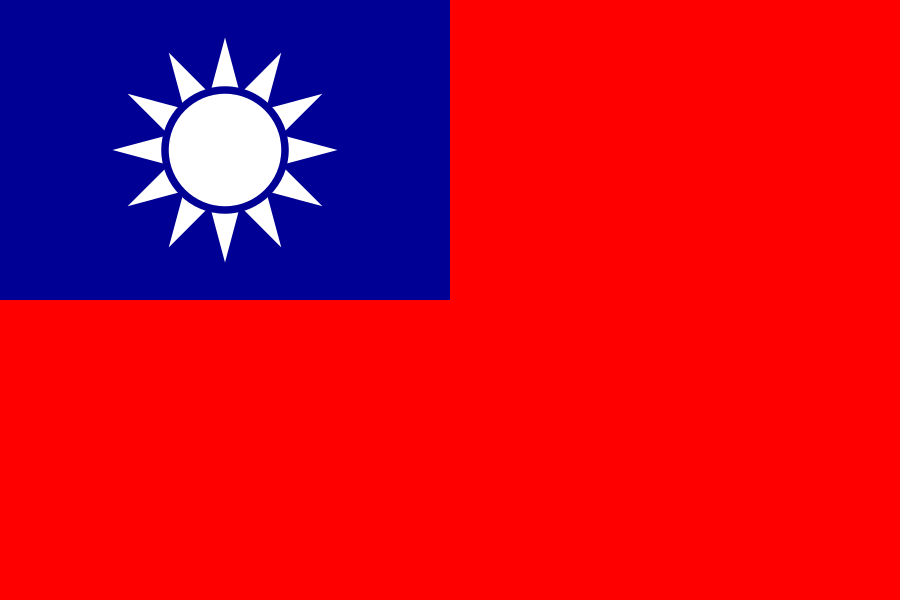 Martial law lifted
Martial law, in force since 1949, ended at midnight as President Chiang Ching-kuo had proclaimed the day before; the National Security Law took effect at the same time.
- 21987.11.01Workers' Party founded
Wang Yi-hsiung, a legislator who had left the DPP, founded the Workers' Party in Taipei, with Luo Mei-wen of the Far Eastern union as vice-chairman and Su Ching-li as secretary-general.
- 31988.01.13Chiang Ching-kuo dies; Lee Teng-hui succeeds
President Chiang Ching-kuo died and Vice President Lee Teng-hui succeeded him under the constitution.
- 41988.02.14Taoyuan Bus strike
The Taoyuan Bus union stopped the county's buses for five days over the annual bonus and days off, and won; union organising and strikes spread to bus companies across the island.
- 51988.08.01–
29 Miaoli Bus strikeThe Miaoli Bus union halted service through an extraordinary members' meeting; a government committee declared it illegal and the company dismissed 245 workers, but on 23 August all were reinstated.
- 61988.11.12"Two laws and one case" march
Labour groups held their first island-wide joint march, demanding labour-law revision and support for the five people indicted over the Miaoli strike.
- 71988.12.10Draft constitution of a Republic of Taiwan published
Cheng Nan-jung printed Hsu Shih-kai's "Draft Constitution of the Republic of Taiwan" in issue 254 of Freedom Era Weekly; it led to a sedition summons the following January.
- 81989.03.29Labor Party founded
The China Tide faction that had left the Workers' Party and members of the Far Eastern union founded the socialist Labor Party, with Luo Mei-wen as chairman.
- 91989.04.07Cheng Nan-jung's self-immolation
Cheng Nan-jung, who had shut himself in his magazine's office for 71 days, burned himself to death in the editor's office as police broke in to arrest him.
- 101989.05.15–
25 Far Eastern Chemical Fiber strikeThe Far Eastern Chemical Fiber union set up postwar Taiwan's first strike picket line over the dismissal of its officers; riot police moved in and the strike ended with a full return to work on 25 May.
- 111989.05.19Chan I-hua's self-immolation
When Cheng Nan-jung's funeral procession was stopped in front of the Presidential Office, the grassroots DPP worker Chan I-hua burned himself to death at the barbed wire.
- 121990.03.16–
22 Wild Lily student movementStudents sat in at the Chiang Kai-shek Memorial Hall plaza with four demands, including the dissolution of the National Assembly; Lee Teng-hui met 53 representatives on 21 March and the students withdrew on 22 March.
- 131990.05Hau Pei-tsun becomes premier
Former chief of the general staff Hau Pei-tsun became premier with a "public safety cabinet," calling labour, environmental and farmers' activists "bullies."
- 141990.06.28National Affairs Conference
At the Grand Hotel the KMT, the DPP and others agreed to end the Period of Mobilization, abolish the Temporary Provisions and amend the constitution through Additional Articles.
- 151991.05.01Temporary Provisions abolished
Having ended the Period of Mobilization the day before, Lee Teng-hui promulgated the abolition of the Temporary Provisions and the Additional Articles of the Constitution.
- 161991.05.09Independent Taiwan Association case
The Investigation Bureau arrested the Tsing Hua graduate student Liao Wei-cheng and three others over links to the Independent Taiwan Association; student strikes and sit-ins followed, and the Statute for the Punishment of Sedition was repealed on 17 May.
- 171991.12.21Full election of the National Assembly
For the first time the whole National Assembly was elected in the free area: KMT 254 seats, DPP 66. On 31 December all first-term delegates retired.
- 181992.05.15Article 100 amended
The Legislative Yuan amended Article 100 of the Criminal Code so that only sedition by violence or threat was punishable, opening the way home for blacklisted dissidents.
- 191992.12.19Full election of the Legislative Yuan
The whole Legislative Yuan was elected for the first time since 1948: KMT 95 seats, DPP 51.
- 201994.07.28Amendment for direct presidential election
In its third round of amendments the National Assembly provided for direct election of the president by the people of the free area and a four-year term.
- 211995.06.09–
10  Lee Teng-hui visits Cornell
Lee Teng-hui spoke on "Taiwan's Democratization Experience" at his alma mater, Cornell; the PRC condemned it as an attempt to split the motherland.
- 1995.07.21
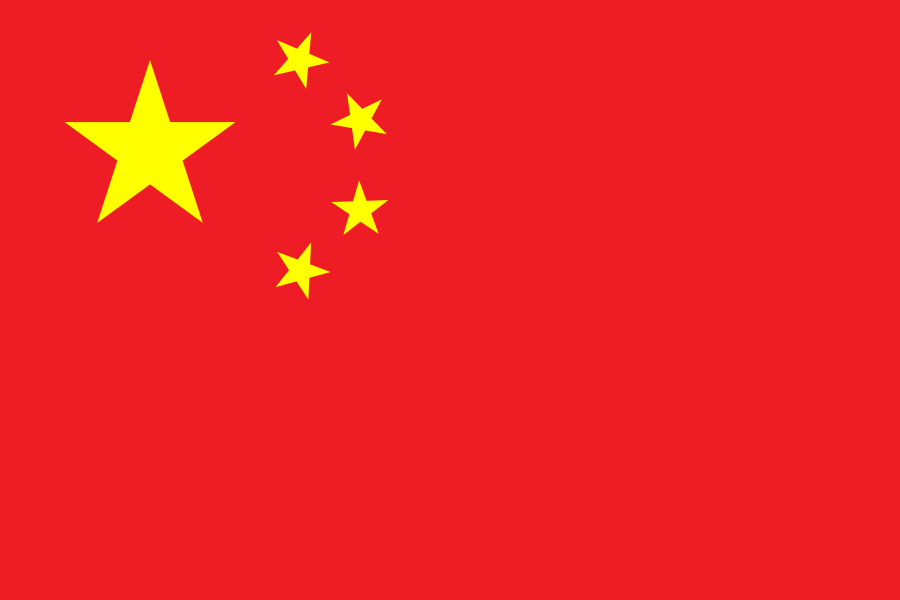 Missile tests in the Taiwan Strait
The People's Liberation Army began test-firing missiles and holding exercises off Taiwan, opening the Third Taiwan Strait Crisis.
- 221996.03.08–
15 Missiles fired before the electionThe PLA fired ballistic missiles off Keelung and Kaohsiung; the United States sent two carrier battle groups to the vicinity of Taiwan.
- 231996.03.23First direct presidential election
Lee Teng-hui and Lien Chan won with about 54 percent on a 76.04 percent turnout, ahead of the DPP's Peng Ming-min and the independent Lin Yang-kang and Hau Pei-tsun.
Related people 18
Democracy, labour and student movements11
Leadership5
Indicted for supporting the Miaoli and Far Eastern strikes; in 1992 became the first labour activist jailed after the lifting of martial law.
Far Eastern union standing director, Labor Party chairmanLuo Mei-wen1951–Led the Far Eastern union and was dismissed and indicted around the 1989 strike; vice-chairman of the Workers' Party, then led the founding of the Labor Party.
NTU student union president, chief commander of the Wild Lily movementFan Yun1968–As a member of the decision committee and chief commander she led the sit-in and reported the meeting with the president to the students.
Leader of the 100 Action AllianceLee Chen-yuan1915–2001An Academia Sinica member who founded the 100 Action Alliance in 1991 and led the campaign against Article 100.
Criminal-law scholar, 100 Action AllianceLin Shan-tien1937–2007Launched the 1991 campaign to abolish the Statute for the Punishment of Sedition and Article 100.
Participants4
Editor of China Tide, co-founder of the TLLSA, and secretary-general of both the Workers' Party and the Labor Party.
Grassroots DPP workerChan I-hua1957–1989Immolated himself in front of the Presidential Office on 19 May 1989 when Cheng Nan-jung's funeral procession was blocked.
DPP vice-presidential candidateHsieh Chang-ting1946–Ran as Peng Ming-min's running mate in the first direct presidential election of 1996.
DPP presidential candidate in 1996Peng Ming-min1923–2022Chosen as the DPP candidate after two rounds of voting and fifty debates; Beijing denounced him together with Lee Teng-hui as splittists.
ROC government and Kuomintang6
Leadership2
Succeeded as president in 1988, convened the National Affairs Conference, led the abolition of the Temporary Provisions, constitutional reform and the first direct presidential election, which he won in 1996.
PresidentChiang Ching-kuo1910–1988Proclaimed the lifting of martial law by presidential order on 14 July 1987; died in January 1988.
Implementers & commanders2
Premier during the Wild Lily movement, when hunger-striking students demanded an answer from him and the president.
PremierHau Pei-tsun1919–2020As premier in 1990-93 proclaimed a "public safety cabinet" and called activists "bullies"; ran as Lin Yang-kang's vice-presidential candidate in 1996.
Participants2
The non-mainstream faction tried to field him for president in 1990; in 1996 he ran as an independent with Hau Pei-tsun and won 14.9 percent.
Vice-presidential candidateLien Chan1936–Elected vice president in 1996 as Lee Teng-hui's running mate.
Related terms
Sources: reference 1reference 2reference 3reference 4reference 5reference 6reference 7reference 8reference 9reference 10reference 11reference 12reference 13reference 14reference 15reference 16reference 17reference 18reference 19reference 20reference 21reference 22reference 23reference 24reference 25reference 26reference 27reference 28reference 29reference 30reference 31reference 32reference 33reference 34reference 35reference 36reference 37reference 38reference 39reference 40reference 41reference 42