The 1990 Mongolian democratic revolution and transition (1989–1996)
How did nearly seventy years of one-party rule by the Mongolian People's Revolutionary Party end without bloodshed, and what did the market transition that followed bring to Mongolian society?
In December 1989 young intellectuals founded the Mongolian Democratic Union and demanded multiparty politics and a market economy in Sükhbaatar Square. After a hunger strike in March 1990 Batmönkh refused to use force and resigned with the Politburo, and the clause on the party's leading role was struck from the constitution. The MPRP won the first free elections that July, but after rapid privatisation set off by the end of Soviet aid and a new constitution in 1992, an opposition coalition took power for the first time in 1996.
Batmönkh's "restructuring" and the Soviet withdrawal (1984–1989)
Batmönkh, who succeeded Tsedenbal in 1984, was an economist from Uvs Aimag who had been rector of the Mongolian State University before becoming premier in 1974. When Gorbachev became Soviet leader in 1985 and launched perestroika and glasnost, Mongolia adopted the same policies under the names öörchlön baiguulalt (restructuring) and il tod (openness). In 1988 the party paper Ünen ("Truth") attacked the "dogmatic interpretation of socialism" and "authoritarianism and intellectual indolence," and in December it began a "Workers' Letters" column that criticised the Politburo and party leaders for the first time. 1 2 3
At the fifth plenum of the Central Committee on 21–22 December 1988 Batmönkh for the first time named Tsedenbal as responsible for the country's social, economic and political problems, charging that "democracy was restricted and the administrative-command method of management took the upper hand." The plenum adopted a seven-point resolution on democratising the political system; proposals followed for five-year terms for elected party bodies with only one further term, and for secret-ballot elections to the Politburo and Secretariat. In February 1989 a commission was set up to draft a new edition of the constitution, and in June the party rules, programme and procedures for rehabilitating victims of the personality cult were revised. The Library of Congress study judged that these reforms largely followed precedents set in Moscow. 1 4
Soviet reconciliation with China changed Mongolia's security. In his Vladivostok speech of July 1986 Gorbachev announced a plan to withdraw Soviet troops from Mongolia; in January 1987 Mongolia established relations with the United States, and the USSR announced the withdrawal of one division. In his address to the UN General Assembly on 7 December 1988 Gorbachev said most Soviet troops in Mongolia would be withdrawn, and the plans were finalised in March 1989. After the Sino-Soviet agreement of 4 February 1989 to reduce border troops, on 15 May the Soviet government announced the complete withdrawal of the 39th Army, with more than 50,000 soldiers and 1,816 tanks. The withdrawal took place between 1987 and 1992. 5 6 2
Relations with China thawed too. A consular agreement was signed in 1986 and a border-control treaty in November 1988, and in spring 1989 the first foreign ministers' meeting in twenty-seven years agreed to reopen a Mongolian consulate general in Inner Mongolia. On a state visit to Pyongyang in November 1986 Batmönkh told Kim Il Sung that "renewing the development of Sino-Mongolian relations is important for our two countries' people's common interest." At the same time the Library of Congress study foresaw that less Soviet protection would also mean less Soviet aid. 7 8 9
December 1989: how the Mongolian Democratic Union appeared
Young intellectuals who had encountered Eastern Europe as students moved first. In December 1988 Erdeniin Bat-Üül, son of the writer Sengiin Erdene, Sosorbaramyn Tsogtsaikhan, singer of the rock band Khonkh ("Bell"), the journalist Amarsanaa and others formed an underground youth group, "New Generation" (Shine Üe). Biographies of Sanjaasürengiin Zorig, who had studied philosophy at Moscow State University and taught scientific communism at the Mongolian State University, name him as its founder. The first public demonstrations took place outside the capital. On 6 December 1989 protesters in Erdenet, the second city, demanded the full withdrawal of Soviet troops, the full nationalisation of the jointly owned Erdenet Mining Corporation and the resignation of the Politburo; the next day teachers and students in Khovd demanded the resignation of the Politburo and the government. 3 10 11
On the morning of 10 December 1989, International Human Rights Day, the first open pro-democracy demonstration was held outside the Youth Cultural Center in Ulaanbaatar and the founding of the Mongolian Democratic Union was announced. Zorig was its general organiser, and around 300 protesters submitted thirteen demands to the government: a multi-party system, free elections with universal suffrage, a market economy and private property in place of central planning, reorganisation of the government, human rights including freedom of religion, and freedom of the press. Sources differ on place and size; Swarthmore College's Global Nonviolent Action Database records about 200 people in Sükhbaatar Square. The protesters used the traditional Mongolian script, which most Mongolians could not read, as a symbolic repudiation of the system that had imposed Cyrillic. Music by the rock band Khonkh accompanied the speeches. 3 12 11
Members known to belong to the union were dismissed from their jobs for "conduct inconsistent with communist and socialist ideology," so the work was cautious. Yet on 17 December 2,000 people gathered in Sükhbaatar Square, and the union petitioned the Politburo for free multi-party elections and a market economy. Erdenet miners, angry that Russian miners were paid more for the same work, joined, and an anti-Soviet mood grew in the movement. On 28 December social democratic intellectuals including the historian Baabar (Bat-Erdeniin Batbayar) founded the Democratic Socialist Movement. Around the same time news spread of an interview in which the chess player Garry Kasparov suggested that the Soviet Union might sell Mongolia to China to raise money, and protest letters poured into Soviet missions. 3 11
January–February 1990: the return of Genghis Khan and the first opposition parties
From 2 January the union distributed leaflets calling for a democratic revolution. On 14 January about 5,000 people gathered outside the Lenin Museum (the Swarthmore database describes a discussion meeting of 1,000), and the government banned unauthorised demonstrations. Yet on 21 January between 2,500 and 7,000 people gathered again in Sükhbaatar Square at minus 30 degrees. On a day communist states set aside to honour Lenin, the crowd sang folk songs praising Genghis Khan instead of party songs and carried a national flag without the star that stood for socialism; this flag became the official flag after the revolution. They also honoured Tömör-Ochir, purged over the 1962 Genghis Khan anniversary. Zorig demanded the removal of the constitutional clause that let the MPRP rule. 3 11 13
In late January the Mongolian Journalists' Union came over to the movement and renamed itself the Mongolian Democratic Journalists' Union. After the Soviet Communist Party gave up its leading role, on 11 February four to five thousand people gathered near the Lenin Museum to demand the same of the MPRP. On 18 February the union held its first congress, with 611 delegates from sixteen aimags and three cities, and founded the first opposition party, the Mongolian Democratic Party; the first independent newspaper, Shine Toli ("New Mirror"), appeared the same day, and the New Progressive Union announced its founding. On 22 February protesters pulled down the statue of Stalin in front of the National Library. On 2 March the Democratic Socialist Movement founded the Mongolian Social Democratic Party, the New Progressive Union founded the Mongolian National Progress Party, and conservationists formed a Green Party. 3 11 12
The March hunger strike and the resignation of the Politburo
On 4 March the Mongolian Democratic Union, the Democratic Socialist Movement, the New Progressive Union and the Mongolian Students' Union held a joint outdoor meeting and invited the government, which sent no one; over 100,000 people attended. On 7 March ten union members dressed in outlawed traditional clothing began a hunger strike in Sükhbaatar Square, demanding that the government resign. The hunger strike was new to Mongolia, and paired with the traditional dress it became a national symbol. Students stopped classes, Buddhist monks came to the square in support, and workers in Erdenet and other towns held short sympathy strikes. Thousands joined the strike, declaring they would not stop until the government resigned. 3 11
Inside the Politburo there was talk of crushing the protests, and a draft decree of repression awaited the signature of General Secretary Batmönkh. He opposed it, insisting that they must "under no circumstances resort to using violence." Those present later recalled that he said, "I will never sign this. We few Mongols have not yet come to the point that we will make each other's noses bleed," smacked the table and left the room. The Swarthmore database notes that the Politburo knew violent repression would be frowned upon by the USSR, especially after Tiananmen. Although the movement's leaders called for nonviolence, on the second day of the strike some in the crowd seized cars and buses and drove around the city shouting anti-Soviet and anti-MPRP slogans, and one person was killed in the unrest. 3 11 14
The Politburo turned to negotiation. On 8–9 March televised round-table talks were held between activists and government figures including Zorig, Premier Dumaagiin Sodnom and Deputy Premier Dashiin Byambasüren. Agreement was reached on 9 March, and that night Batmönkh announced in a broadcast the dissolution of the Politburo and his own resignation. When Elbegdorj announced the news to the hunger strikers and the crowd in the square at 10 pm, the strike ended and a planned general strike was called off. A special Central Committee plenum on 12–14 March relieved Batmönkh, elected Gombojavyn Ochirbat as the new general secretary and reshuffled the Politburo with reform-minded leaders. He is not the same person as Punsalmaagiin Ochirbat, the later president. 3 15 13
Giving up one-party rule: constitutional amendment and the July elections
An extraordinary session of the People's Great Khural on 21–23 March struck out, by 324 votes to 10, the 1960 constitutional clause that "the guiding force of the Mongolian People's Republic is the Mongolian People's Revolutionary Party." Nearly seventy years of one-party rule ended in law. The session relieved Batmönkh and Sodnom as head of state and head of government and appointed Punsalmaagiin Ochirbat chairman of the Presidium of the People's Great Khural and Sharavyn Gungaadorj chairman of the Council of Ministers; since the Khural was to meet again in May to change the constitution further, these appointments were temporary. The English Wikipedia article on the Mongolian People's Republic likewise groups the removal of the references to the party's "guiding" role and the creation of the presidency and a standing Little Khural under the amendments adopted in March and May. The leading-role clause was struck out first, at the March session, and the May session continued the amendments. 3 15 16 2 11
At the MPRP's extraordinary congress on 10–13 April, General Secretary Gombojavyn Ochirbat urged the party to deepen restructuring and renewal and to distance itself from Marxism-Leninism. Tension continued in the streets. On 13 April coal miners at Baganuur struck after Soviet managers laid off Mongolian workers, and on the 15th some 150 truck drivers in Darkhan joined. The only arrests of protesters in the whole campaign came that April. Demonstrations of 30,000 to 50,000 people in late April brought Ochirbat home early from a visit to China, and the army was deployed to keep order. On 27 April the government accused the Democratic Party of crimes against the state, but Zorig, perched on a friend's shoulders with a megaphone, calmed the crowd and averted a clash with the soldiers. The image became a symbol of the peaceful revolution. 3 11 10
Tension eased on 30 April when both sides agreed to discuss constitutional amendments, and in May free elections to the national, provincial and municipal legislatures were agreed (10 May according to the Swarthmore database, 14 May according to English Wikipedia). The People's Great Khural passed a new electoral law and a law on political parties and amended the constitution to create a standing legislature, the State Little Khural, and the Supreme Court registered six parties. In the first free elections, with primaries on 22 July and the main vote on 29 July (turnout 97.89 percent), the MPRP won 357 of the 430 seats in the People's Great Khural. The opposition could not even field enough candidates, and the MPRP was strong in the countryside. In the 50-seat State Little Khural, chosen by proportional representation, the MPRP took 31 seats and the opposition 19. 3 11 15
The People's Great Khural, which met on 3 September, elected Punsalmaagiin Ochirbat (MPRP) president, Radnaasümbereliin Gonchigdorj of the Social Democratic Party vice-president and Byambasüren (MPRP) prime minister. The State Little Khural held its first session on 13 September. Byambasüren's was a coalition government that gave cabinet posts to the Democratic Party and the National Progress Party. The Swarthmore database judges that although the MPRP won the election, its hardliners had been replaced by reformers and one-party dictatorship was over. 3 15 11
After Soviet aid ended: market transition and the dissolution of the negdels
In 1990 the USSR accounted for 83.9 percent of Mongolia's trade, and the debt on Soviet loans stood at about 10 billion transferable rubles. From 1 January 1991 the two countries agreed to trade in hard currency at world prices, and when the Soviet Union collapsed the aid and Comecon trade that had propped up the state budget vanished. Mongolia had depended on the USSR for fuel, medicine and spare parts for its factories and power plants. Between 1990 and 1993 it suffered triple-digit inflation, unemployment and shortages of basic goods, with food ration cards for a time, and economic output contracted by a third. Growth returned only in 1994–1995. 17 18 13
The market transition moved fast. A stock exchange and a Government Privatization Committee were created in 1991, privatisation of large state enterprises began that year, and the barter and official exchange rates were unified. Privatisation of small shops and enterprises was largely completed in the 1990s and most prices were freed. In the countryside the negdels were dismantled: in two phases of reform in 1991–1992 the herds were privatised again, all negdels dissolved, and some farms became private companies. 3 18 19
Rossabi calls the process "shock therapy." The International Monetary Fund, the Asian Development Bank, the World Bank and the US Agency for International Development, which replaced the USSR as sources of aid and trade, feared a return to communism, urged immediate privatisation and a market economy, and required the abolition of the negdels in return for loans and grants. As the herds were privatised within a year or two, a few well-connected officials and negdel leaders took a disproportionate share of animals, trucks and equipment. The transport of animals to market, hay, wells, basic health care and boarding schools that the negdels had provided disappeared with them. A few came to own thousands of animals, while most had barely enough to survive, and many herders abandoned herding for Ulaanbaatar. Herders who now stayed near markets overgrazed the surrounding pastures, accelerating desertification. 20
What the 1992 constitution established
In November 1991 the People's Great Khural began discussing a new constitution, and Elbegdorj was among its drafters. Adopted on 13 January 1992, it entered into force on 12 February. The country's name changed from "Mongolian People's Republic" to "Mongolia," ending the socialist republic. The preamble set "the supreme objective of building a humane, civil and democratic society," and Article 1 declared that "Mongolia is an independent, sovereign republic." The legislature became the unicameral State Great Khural (76 seats), and the president was to be elected directly by the people rather than by parliament. 3 21 22 2 13
The economic articles marked a break with socialist ownership. "Mongolia's economy is based on different forms of property following both universal trends of world economic development and national specifics," the constitution says, and the State recognises all forms of public and private property and legally protects the right to ownership. At the same time it provides that "the livestock of the country is national wealth and subject to state protection," and allows private ownership of land, other than pastures and land in public and special use, only to citizens of Mongolia. The experience of Soviet garrisons left its mark in a clause prohibiting the stationing of foreign troops on Mongolian territory or their passage across it "unless permitted by an appropriate law." 22
From the 1992 elections to the change of government in 1996
Under the new constitution the MPRP won 70 of 76 seats in the State Great Khural election of 30 June 1992, and the economist Puntsagiin Jasrai became prime minister. The Democratic Alliance of the Democratic Party, the National Progress Party and the United Party won only four seats, and the opposition merged that October into the Mongolian National Democratic Party. In the first direct presidential election on 6 June 1993 the MPRP passed over the incumbent Ochirbat for Lodongiin Tüdev, editor of Ünen, and the National Democrats and Social Democrats made Ochirbat their joint candidate; he won, the MPRP's first electoral defeat. The sources give different vote shares: 57.8 percent in the article on Ochirbat, 59.89 percent in the article on the democratic revolution, and "two-thirds" in another overview. 13 23 16 3
On 26 February 1996 the National Democrats, Social Democrats, Green Party and Democratic Renaissance Party formed the Democratic Union, with Elbegdorj as chairman. The International Republican Institute, close to the US Republican Party, the National Endowment for Democracy and Germany's Konrad Adenauer Foundation helped unite the opposition and train its campaigners, and the coalition ran on a "Contract with the Mongolian Voter" modelled on the Republicans' Contract with America, distributing 350,000 copies of a manifesto promising private property rights, a free press and foreign investment. In the election of 30 June it won 50 of the 76 seats, and the MPRP fell to 25 (turnout 92 percent). For the first time in the seventy-five years since the 1921 revolution, a government not led by the MPRP took office. 24 25 13
The new government's reforms drew mixed reactions. Under Prime Minister Mendsaikhany Enkhsaikhan unemployment and inflation rose, and in the 1997 presidential election the MPRP's Natsagiin Bagabandi defeated the coalition's candidate Ochirbat by a wide margin. In the crisis that followed Elbegdorj's ouster as prime minister in 1998, when nominee after nominee was rejected, Zorig, the symbol of the democratic movement, was assassinated at his home on 2 October. After this, from 3 October 1998, the Mongolian media began to call the events of 1989–1990, until then known as the "Democratic Movement", the "Democratic Revolution." The coalition was routed in the 2000 elections, and its forces merged into the Democratic Party. 13 3 10
Consequences
Amid the wave of 1989 revolutions Mongolia became one of the few Asian communist states to move to multiparty politics without bloodshed; the 1992 constitution renamed the country "Mongolia" and created a unicameral State Great Khural and a directly elected president. The MPRP, now led by reformers, held power until 1996. With Soviet aid and Comecon trade gone, 1990–1993 brought triple-digit inflation and rationing, and the dissolution of the negdels and privatisation of herds concentrated wealth in a few hands, driving inequality and migration to the capital. Foreign policy moved away from exclusive reliance on Moscow towards balance between the two neighbours and "third neighbours."
Timeline & Map
- 1988.12.21
 Fifth plenum and criticism of Tsedenbal
Batmönkh names Tsedenbal for the first time and the plenum resolves to democratise politics.
- 1989.05.15
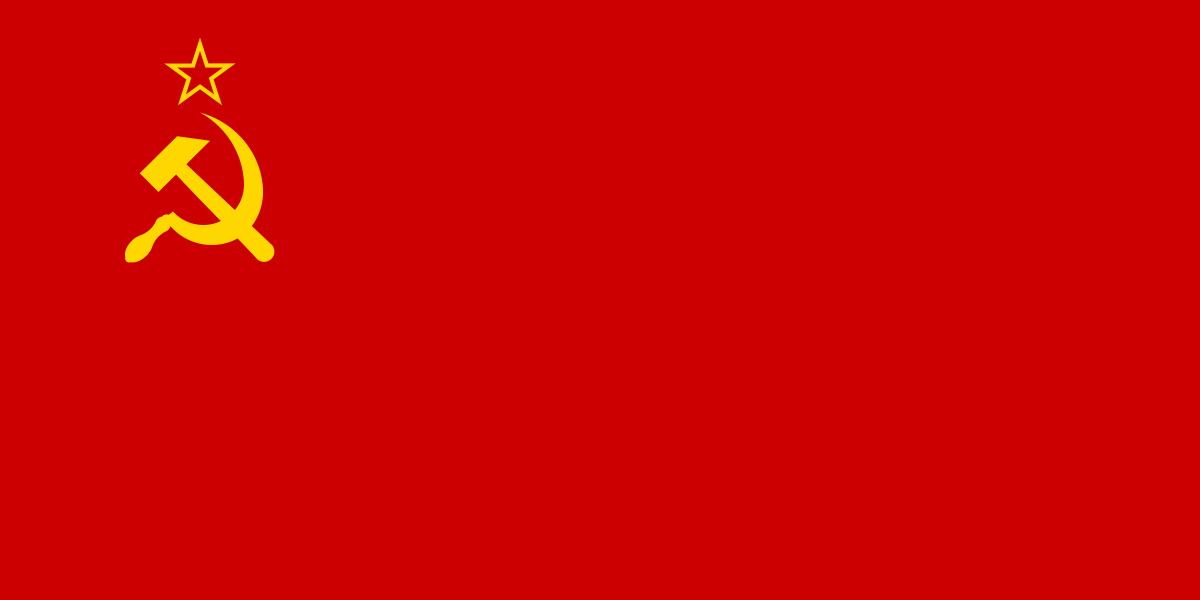 39th Army withdrawal announced
The Soviet government announces the full withdrawal of the 39th Army from Mongolia.
- 1989.12.06Erdenet demonstration
The first public protest demands Soviet withdrawal and the Politburo's resignation.
- 1989.12.10Mongolian Democratic Union founded
On Human Rights Day the union is founded in Ulaanbaatar with thirteen demands.
- 1990.01.21Rally at minus 30 degrees
Protesters honour Genghis Khan and carry a flag without the star.
- 1990.02.18Mongolian Democratic Party founded
The union's first congress founds the first opposition party and an independent paper.
- 1990.03.07Hunger strike begins
Ten union members begin a hunger strike in Sükhbaatar Square.
- 1990.03.09Politburo resigns
Batmönkh refuses to use force and announces the Politburo's dissolution and his resignation.
- 1990.03.21Leading-role clause struck out
The People's Great Khural removes the MPRP's leading role from the constitution.
- 1990.07.29First free elections
The MPRP wins 357 of 430 seats in the People's Great Khural.
- 1990.09.03Ochirbat elected president
The Khural elects the first president and a coalition government.
- 1991.01.01Switch to hard-currency trade
Trade with the USSR moves to hard currency at world prices.
- 1991Privatisation and negdel dissolution begin
A stock exchange and privatisation committee are set up and herds begin to be privatised.
- 1992.02.121992 constitution in force
The country becomes "Mongolia" with a unicameral State Great Khural.
- 1993.06.06First direct presidential election
Ochirbat, as joint opposition candidate, defeats the MPRP nominee.
- 1996.06.30
 Democratic Union victory
The Democratic Union wins 50 of 76 seats in the first change of government.
Related people 7
Leadership2
Led the first protest in December 1989 and calmed the crowd in April 1990; assassinated in 1998.
MDU leader, chairman of the Democratic Union in 1996Elbegdorj (president)1963–Announced the Politburo's resignation to the square on 9 March 1990 and helped draft the 1992 constitution.
Targets & victims2
Witnesses & chroniclers2
Related terms
Sources: reference 1reference 2reference 3reference 4reference 5reference 6reference 7reference 8reference 9reference 10reference 11reference 12reference 13reference 14reference 15reference 16reference 17reference 18reference 19reference 20reference 21reference 22reference 23reference 24reference 25