Sexual Reform in the Second Spanish Republic and the Francoist Reaction (1931–1941)
How did the Second Spanish Republic achieve women’s suffrage, divorce and, in Catalonia, legal abortion within a few years, and what did its sexual reform leave untouched? Why did Hildegart Rodríguez, raised as the “woman of the future”, die at her mother’s hands, and how did the Franco regime undo it all?
The Republic’s constitution of 1931 enshrined sexual equality and the right to divorce, and after the Campoamor–Kent debate the Cortes granted women the vote. 1932 brought a Divorce Law considered the most progressive in Europe and the Spanish League for Sexual Reform, with Marañón as president and the seventeen-year-old Hildegart Rodríguez as secretary; Hildegart was killed by her mother in 1933. That year the Cortes also passed the Law on Vagrants and Delinquents against a “dangerous state”. Amid civil war and revolution anarchist women founded Mujeres Libres, and in December 1936 the Generalitat of Catalonia legalised abortion by a decree drafted by Martí Ibáñez.
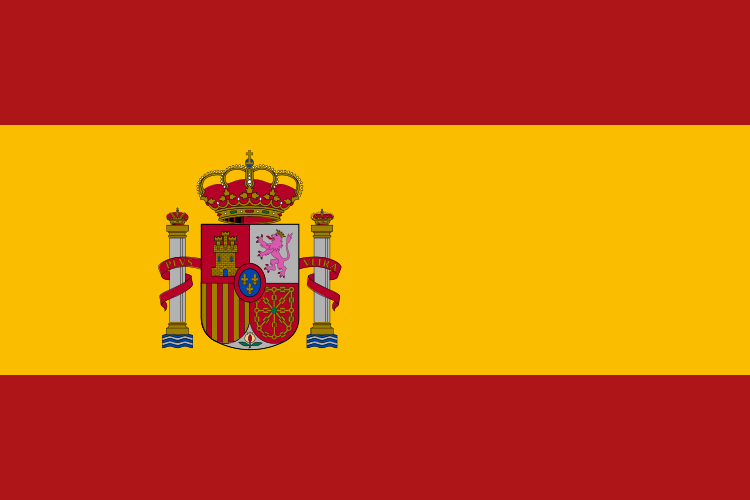 The 1931 constitution: sexual equality, women’s suffrage and the right to divorce
The constitution of the Second Spanish Republic, proclaimed in April 1931, was the first supreme law in Spain to enshrine the equality of men and women before the law. Article 25 declared that sex could not be a ground of legal privilege, Article 40 opened public offices to all citizens regardless of sex, and Article 46 obliged the state to regulate women’s work and protect motherhood. Among those who pressed these provisions in the constituent Cortes was the Radical deputy Clara Campoamor, who fought for non-discrimination by sex, the legal equality of children born in and out of wedlock, divorce and universal suffrage; she won everything except the vote, which had to be fought over separately. 1 2
Women’s suffrage divided the republicans. The radical republican parties opposed it, arguing that women were heavily influenced by the Church and would vote for the right, and the Radical Socialist Party set the deputy Victoria Kent, an opponent of the women’s vote, against Campoamor. The final debate on 1 October 1931 was an event in itself, and Campoamor was judged the winner: Article 36, granting women the vote, passed by 161 votes to 121, with the support of most of the Socialists, with notable exceptions such as Indalecio Prieto, and much of the right. Hildegart Rodríguez, later the prodigy of the sex-reform movement, did not support women’s suffrage either, holding like Kent that Spanish women were not yet ready. Campoamor founded the Unión Republicana Femenina that November, and women voted for the first time in the elections of 1933. 2 3
The constitution also wrote the right to divorce into law for the first time. Until then the Civil Code of 1889 had provided that marriage was dissolved only by the death of a spouse. In the constituent debates the Catholic right of the Agrarian and Basque-Navarrese minorities opposed a divorce clause, holding marriage an indissoluble sacrament, but Article 43 was adopted as follows. 4
Artículo 43. La familia está bajo la salvaguardia especial del Estado. El matrimonio se funda en la igualdad de derechos para uno y otro sexo, y podrá disolverse por mutuo disenso o a petición de cualquiera de los cónyuges con alegación en este caso de justa causa. 4
Artículo 43. La familia está bajo la salvaguardia especial del Estado. El matrimonio se funda en la igualdad de derechos para uno y otro sexo, y podrá disolverse por mutuo disenso o a petición de cualquiera de los cónyuges con alegación en este caso de justa causa. 4
The Divorce Law of 1932 and civil marriage
Spain’s first divorce law, implementing Article 43, was introduced by the Minister of Justice, Álvaro de Albornoz. Despite the opposition of the Catholic Church and the Catholic and conservative parties, the Divorce Law was passed on 25 February 1932 by 260 votes to 23, promulgated on 2 March and published in the Gaceta on 11 March; Campoamor was closely involved in drafting it. Allowing divorce both by mutual agreement and at the request of one spouse for just cause, and treating men and women as equals, it was considered in its day the most progressive law in Europe. In the same years the Republic also passed a civil marriage law, ending an order in which only church marriage had legal force. 5 4 2
In the corrected text reprinted in the Gaceta de Madrid of 12 March 1932, the opening articles read as follows. 6
Article 1. A divorce decreed by final judgment of the civil courts dissolves the marriage, whatever the form and date of its celebration.
Article 2. Divorce shall take place when both spouses request it by mutual agreement, or one of them on one of the grounds laid down in this Law, always subject to its provisions.
Article 3. The grounds for divorce are: 1. Adultery not consented to or facilitated by the spouse alleging it. (…) 12. De facto separation in different homes, freely consented to, for three years. 6
Artículo 1.° El divorcio decretado por sentencia firme por los Tribunales civiles disuelve el matrimonio, cualesquiera que hubieran sido la forma y la fecha de su celebración.
Artículo 2.° Habrá lugar al divorcio, cuando lo pidan ambos cónyuges de común acuerdo, o uno de ellos por alguna de las causas determinadas en esta Ley, siempre con sujeción a lo que en ella se dispone.
Artículo 3.° Son causas de divorcio: 1.ª El adulterio no consentido o no facilitado por el cónyuge que lo alegue. (…) 12.ª La separación de hecho y en distinto domicilio, libremente consentida durante tres años. 6
Sexual science in Spain and the Spanish League for Sexual Reform (1932)
In Spain birth control and sexual emancipation were first championed by the neo-Malthusianism of the anarchist labour movement. In 1900, at the Paris home of the Catalan anarchist Francisco Ferrer Guardia, Paul Robin, Charles Drysdale, Emma Goldman and others founded the international federation of the League for Human Regeneration, promoting “conscious and free motherhood”, and in 1904 its Spanish section was founded in Barcelona. Neo-Malthusianism sought to spread contraception as a way to relieve the misery of large poor families and to emancipate women, and it was closely bound up with eugenics. 7
Under the Republic sexual reform entered the institutions in the name of medicine. In 1932 the Spanish League for Sexual Reform on Scientific Bases was founded, belatedly, as the Spanish section of the World League for Sexual Reform, with the endocrinologist Gregorio Marañón as president and the seventeen-year-old Hildegart Rodríguez as secretary. But the Spanish section was socially the most conservative of all and one of the few that left homosexuality out of its programme; homosexuality remained taboo until the Civil War. 8 9
Marañón, who led the League, stood between Catholic values and sexual science. In “Notes for the Biology of Don Juan” (1924) and Three Essays on Sexual Life (1926) he demystified donjuanismo as an archetype of virility, yet under the Republic he opposed artificial contraception and sex education of children by the state, holding that it belonged to parents. Responding to the international eugenics current, he took part in the First Spanish Eugenics Conference of 1933; his eugenics started from high infant mortality and left the final decision, through education, to the individual conscience. The Socialist criminologist Luis Jiménez de Asúa had dealt with eugenics, euthanasia and endocrinology in The Freedom to Love and the Right to Die (1928), and in 1931 he chaired the committee that drafted the constitution. 10 11
Hildegart Rodríguez: the experiment of the “woman of the future”
Hildegart Rodríguez, secretary of the Spanish League for Sexual Reform, was a child planned by her mother, Aurora Rodríguez Carballeira, as a “model of the woman of the future”. Aurora grew up in a well-off liberal family in Ferrol, educating herself in place of schooling on the utopian socialists in her father’s library. At sixteen she raised her sister’s illegitimate son, Pepito Arriola, into a musical prodigy, until her sister took the boy back in 1899. When her father died in January 1914 she resolved to bear and raise a child of her own to embody her ideas and defend women’s rights. As a father who could never claim the child she chose a military chaplain from Lleida, Alberto Pallás, as her “physiological collaborator”; once sure of her pregnancy she moved to Madrid, where her daughter was born on 9 December 1914 at 3 calle de Juanelo. During the pregnancy she set an alarm clock every hour to change her sleeping position so that blood would flow evenly to the foetus. 12 13 3
Hildegart grew up under her mother’s strict control. Her atheist mother opposed birth registration but had her baptised on 23 March 1915 and registered only on 29 April. The child read at two, wrote her first letter at three and could type before four; at ten she spoke German, French and English, and at eleven she lectured on feminism and female sexuality. Her father, the priest, visited until she was four, when her mother, suspicious of his influence, stopped him. Entering the law faculty of the University of Madrid in June 1928 at thirteen, Hildegart graduated with distinction to become the youngest lawyer in Spain and went on to study philosophy and letters and medicine. 3 13
At fourteen Hildegart joined the PSOE and the UGT, as her mother had, and became vice-president of the Socialist Youth. She had wide support among the rank and file, but the leadership distrusted her. In 1932 she published a letter in La Libertad attacking the party for allying with a candidate she considered reactionary and was expelled; she moved to the Federal Republican Party and attacked the “socialenchufistas”, the Socialist place-seekers. She grew increasingly critical of Marxism and drew closer to anarchism. From the age of fourteen she wrote for papers and journals such as El Socialista, La Tierra, Estudios and Orto, and she was a member of the Lyceum Club Femenino and the Ateneo de Madrid. 13 3
Hildegart was the most active figure of the Spanish sex-reform movement of her time. Writing on contraception, prostitution and eugenics, she saw sexuality as central to personal and social liberation, argued that love and reproduction should be freed from legal and religious control, and called for scientific sex education in schools and women’s access to birth control. Havelock Ellis, whose work she translated, called her “the Red Virgin”, and she corresponded with Magnus Hirschfeld, Norman Haire, Jonathan Leunbach and Margaret Sanger. When the Spanish League for Sexual Reform was founded in 1932 she was elected secretary without opposition. She left sixteen books and more than 150 articles, among them The Eugenic Problem (1930), Limiting Offspring: A Duty of the Conscious Proletariat (1930) and The Sexual Rebellion of Youth (1931), and her Contraceptive Prophylaxis (1931) sold 8,000 copies in its first week in Madrid alone. She long accompanied H. G. Wells when he visited Madrid; Wells, who wanted her away from her mother, offered to take her to London as his secretary, but she declined. 3 13
Wells’s offer and her daughter’s attempts at independence fed Aurora’s paranoia. She complained that she had brought her daughter into the world to deal with the condition of women, “not with the affairs of socialists and communards”, and threatened suicide whenever Hildegart tried to leave. On the night of 9 June 1933 Aurora sent the maid out to walk the dog and shot her sleeping daughter four times, three times in the head and once in the heart. Rumours spread, among them a love affair with a young Socialist writer, Abel Velilla, but the deep breakdown of the relationship between the two is considered the likeliest reason. Aurora explained: “The sculptor, on discovering the slightest imperfection in his work, destroys it.” 3 13
At her trial in Madrid Aurora claimed that a Catalan lawyer, Antonio Villena, Wells and Ellis were agents of an international conspiracy to take her daughter out of Spain and put her to work for the intelligence services. Sentenced to twenty-six years, eight months and ten days, she rejoiced that she had won twenty-six years to live and had not been locked in an asylum; she never regretted the killing and said she would do it again. After the women’s prison of Ventas she was transferred in 1935, diagnosed with paranoia and schizophrenia, to the asylum of Ciempozuelos, and from 1941 she stopped speaking to her psychiatrists. Contrary to the belief that the Nationalists had executed her during the Civil War, her medical records, found in 1977, showed that she died there of cancer on 28 December 1955 and was buried in a common grave. The story of mother and daughter was retold in Eduardo de Guzmán’s Aurora de sangre (1972) and the films Mi hija Hildegart (1977) and La virgen roja (2024). 3 12 13
Anarchism and sexuality: Mujeres Libres and the “liberatories” of prostitution
The CNT had proclaimed sexual equality from its beginnings, but many women activists felt they needed an organisation of their own to develop their abilities and their struggle. In April 1936 the physician Amparo Poch y Gascón, the poet and trade unionist Lucía Sánchez Saornil and the lawyer Mercedes Comaposada founded the journal Mujeres Libres for the liberation of working women; its first issue appeared in May. Its first congress, held in Valencia on 20 August 1937, defined the Federation of Mujeres Libres as the “fourth branch” of the libertarian movement, on the principles of self-management and federalism, and by October 1938 it had more than 20,000 members. For Poch its aim was the emancipation of women from slavery, from ignorance and from sexual submission. 14 15
Mujeres Libres fought prostitution resolutely. In Barcelona it founded the Casa de la dona treballadora and launched a campaign to reintegrate prostitutes through “liberatories of prostitution”. Its aim was not to develop prostitution but to eradicate it by making women economically independent and carrying out a profound social and moral revolution, and its members deplored the sight of their male comrades visiting brothels. The anarchist physician Félix Martí Ibáñez, as director general of health and social assistance of the Generalitat of Catalonia, likewise planned liberatories for prostitutes, sexual information centres for young people and an Institute of Sexual Sciences. His revolutionary moralism shows in his Three Messages to Women (1937), which cried “Back!” at the women who tried to turn the front into a bed of pleasure for the militiamen. 14 1 16
Revolution and the Catalan abortion decree, 1936–1937
The Republican government kept abortion a crime, but the Generalitat of Catalonia, amid civil war and revolution, broke with the penal code. On 25 December 1936 it approved the decree on the “eugenic reform of abortion”, legalising it, and published it in its official journal on 9 January 1937. It was signed by the First Councillor, Josep Tarradellas, the Councillor for Health and Social Assistance, Pere Herrera of the CNT, and the Councillor for Justice, Rafael Vidiella of the UGT, and its author was Martí Ibáñez. With it Catalonia moved to the European vanguard of abortion legislation. Its preamble and first articles read as follows. 1 17
The eugenic reform, which represents one of the greatest revolutionary conquests in health, begins its plan of action by incorporating into health legislation an act hitherto performed far from all scientific control, in the shadows and by incompetent persons, which from this moment acquires biological and social standing: abortion. (…) Its primary purpose is to give the working people a safe and danger-free way of regulating births when there are powerful sentimental, eugenic or therapeutic reasons that require the artificial interruption of pregnancy.
Art. 1. The artificial interruption of pregnancy is authorised in the hospitals, clinics and health institutions of the Generalitat of Catalonia in which the special service for this purpose is organised.
Art. 2. Reasons of a therapeutic, eugenic or ethical order shall be considered justified grounds for abortion.
Art. 3. Requests for abortion that is neither therapeutic nor eugenic shall be carried out exclusively at the request of the woman concerned, and none of her relatives or intimates may afterwards lodge a complaint about the result of the intervention.
Art. 4. The interruption of pregnancy shall not be carried out beyond its third month, unless there is a therapeutic justification. 18
La reforma eugènica, que representa una de les majors conquistes revolucionàries en sanitat, comença el seu pla d'acció mitjançant la incorporació a la legislació sanitària d'un fet fins avui efectuat lluny de tot control científic, a l'ombra i per persones incompetents i que des d'aquest moment adquireix categoria biològica i social, com és l'avortament. (…) La finalitat primordial que es persegueix és la de facilitar al poble treballador una manera segura i exempta de perill de regular la natalitat, quan existeixin causes poderoses, sentimentals, eugèniques o terapèutiques que exigeixen la interrupció artificial de l'embaràs.
Art. 1. Queda autoritzada la interrupció artificial de l'embaràs, efectuada en els Hospitals, Clíniques i Institucions Sanitàries dependents de la Generalitat de Catalunya, en els quals estigui organitzat el servei especial per a tal finalitat.
Art. 2. Es consideraran motius justificats per a la pràctica de l'avortament les raons d'ordre terapèutic, eugènic o ètic.
Art. 3. Els casos de sol·licitud d'avortament no terapèutic ni eugènic s'efectuaran exclusivament a petició de la interessada sense que ningú dels seus familiars o propers puguin presentar després reclamació respecte al resultat de la intervenció.
Art. 4. No s'efectuarà la interrupció de l'embaràs en els casos que ultrapassin dels tres mesos d'aquell, a no ésser que existeixi justificació terapèutica. 18
By accepting therapeutic, eugenic and ethical grounds and, beyond them, abortion at the woman’s own request within three months, the decree in effect allowed abortion on demand in the first twelve weeks. In Barcelona it was authorised at the Casa de la Maternitat, the Hospital de Sant Pau, the Hospital Clínic and the Hospital Cardenal. As its wording shows, the Republic’s sexual reform freely used the eugenic language of “the interests of the race”. For the Republic as a whole, the CNT’s Federica Montseny was Minister of Health in Largo Caballero’s government from November 1936 to mid-May 1937; some sources state that abortion was decriminalised in the Republican zone at that time, but Martí Ibáñez’s biography says that Montseny wanted to extend the reform to the whole country but could not get it through against the opposition of the Republican government. Amparo Poch served as director of social assistance in Montseny’s ministry and led the project of Children’s Homes that replaced the old orphanages. 18 1 17 19 16 15
The Law on Vagrants and Delinquents of 1933: the Republic’s measures against “dangerousness”
The Republic’s reforms had a darker side. On 4 August 1933 the Cortes passed, by the consensus of every party, the Law on Vagrants and Delinquents, popularly “la Gandula”, to deal with vagabonds, nomads, pimps and others considered antisocial. Rather than punishing crimes, it imposed security measures on a “dangerous state” prior to any offence, and it was drafted by the Socialist criminologist Luis Jiménez de Asúa together with Mariano Ruiz-Funes. Asúa, who had long studied pre-criminal dangerousness, complained that the amendments added to win the right’s consent had made the law “harsher, less flexible, more casuistic, incongruous and much less elegant”. 20
Its regulations and enforcement distorted it entirely: camps called “reformatories for vagrants and delinquents” were set up, and under both the Republic and Francoism the law served to repress poor people deemed potential criminals. The Republic’s law did not target homosexuality, which remained a taboo, but on 15 July 1954 the Franco regime amended it to include homosexuals, interning them in places such as the agricultural penal colony of Tefía in Fuerteventura. In 1970 the Law on Social Dangerousness and Rehabilitation replaced it, and its provisions against homosexuality disappeared only with the reform of 1978, in force from 1979. 20 21
The Francoist reaction, 1938–1941: divorce abolished, the Women’s Section, “protection of women” and the “red gene”
The Francoist side began undoing the Republic’s sexual reforms during the war. On 2 March 1938 the cabinet chaired by Franco in Burgos suspended all court proceedings for separation and divorce under the 1932 law, and after victory a law of 23 September 1939 explicitly repealed the Divorce Law. Its preamble declared that “the new Spanish State announced from the outset the repeal of secular legislation, restoring to our laws their traditional sense, which is the Catholic one”, and that, the civil marriage law having been repealed, the divorce law could not remain merely suspended; its transitional provisions applied retroactively to those already divorced. The Catalan abortion decree was likewise repealed by the Franco regime, which with the Church’s support made abortion a crime again. 4 5 19 17
Women’s place was set by the Sección Femenina. Founded in Madrid in 1934, it was led until its dissolution by Pilar Primo de Rivera, sister of the Falange’s founder José Antonio Primo de Rivera, and took Queen Isabella the Catholic and Saint Teresa of Ávila as its models. The women’s sections, Pilar declared, owed their chiefs absolute obedience and subordination, “as is always woman’s role in life: submission to man”. A decree of 28 December 1939 gave the Sección Femenina exclusive control of women’s Social Service, a fascist counterpart of men’s military service, and by 1941 282,224 women had completed it. 22
Women deemed “fallen” were locked up and re-educated. A decree of 6 November 1941 revived, as the Patronato de Protección a la Mujer, a body founded in 1902 to combat trafficking in women, with Franco’s wife Carmen Polo as honorary president; the same decree created the Obra de Redención de Mujeres Caídas to “reform” repeat clandestine prostitutes. Its stated purpose was the moral dignity of women, especially the young, and their education in the teachings of the Catholic religion: girls of sixteen to twenty-one “fallen or at risk of falling” — rebellious girls, girls with mental illness, lesbians, dissenters from the National-Catholic model of womanhood — were confined in convent institutions after police raids or denunciations by relatives. It was abolished only in 1985. 23
The regime’s psychiatry pathologised the Republic’s sexuality and politics alike. Antonio Vallejo-Nájera, head of the army’s psychiatric services, called in Eugenics of Hispanidad and the Regeneration of the Race (1937) for a positive eugenics to “multiply the select and let the weak perish”, the weak being the Reds, “mentally inferior individuals dangerous in their intrinsic wickedness”. In 1938, looking for the defect that led to Marxism, the “red gene”, he studied International Brigades prisoners held at San Pedro de Cardeña and fifty Republican women prisoners in the women’s prison of Málaga, thirty of them awaiting execution. The study of the women explained revolutionary female criminality by the animal nature of the female psyche and by a “marked sadistic character” unleashed when political circumstances let women “satisfy their latent sexual appetites”. He even argued that the children of Marxists should be separated from their parents. 24

 Assessment: a short-lived reform, its limits and a long reaction
Sexual reform in the Spanish Republic came later than in the Soviet Union and Germany and ended soonest. Catalonia legalised abortion only in December 1936, after the Soviet Union had banned it again in June 1936 and revived its sodomy law in 1934, and after the German sexual reform movement had been destroyed under the National Socialist regime in 1933–1935; and its reform, too, vanished with Franco’s victory in 1939. The movements of three countries that had belonged to the same World League for Sexual Reform were thus all reversed between the mid- and late 1930s. 1 8
The reform had its limits from the start. The Spanish League for Sexual Reform, the most conservative section, did not deal with homosexuality, which remained taboo throughout the Republic, and the Law on Vagrants and Delinquents made by the Republican left later became the Franco regime’s tool for locking up homosexuals. The language of eugenics knew no left or right: on one side stood Hildegart’s The Eugenic Problem, the Catalan decree’s talk of “the interests of the race” and Marañón’s part in the eugenics conference; on the other Vallejo-Nájera’s “eugenics of Hispanidad”, which branded the Reds an inferior breed. 8 20 13 18 10 24
The reaction was long. Divorce was recognised again only in 1981, and abortion was decriminalised on three grounds in 1985 and within time limits in 2010. The Sección Femenina was abolished in 1977 and the Patronato de Protección a la Mujer in 1985. Measures against homosexuals ended with the 1978 reform of the social dangerousness law, though the offence of public scandal survived until 1989. Meanwhile Hildegart’s name came to stand for both the Republic’s dream and its tragedy. 4 17 22 23 21
Consequences
The Franco regime suspended divorce suits in 1938 and in 1939 repealed the Divorce and civil marriage laws to restore the “Catholic sense” of the law, abolishing the Catalan abortion decree as well. From 1939 the Sección Femenina ran women’s Social Service and taught submission to men, and the Patronato de Protección a la Mujer, revived in 1941, locked “fallen” young women in convent institutions. Vallejo-Nájera hunted for a “red gene” in Republican prisoners, and in 1954 the regime amended the vagrancy law to intern homosexuals. Divorce was recognised again only in 1981, and abortion in 1985.
Timeline & Map
- 11904Spanish neo-Malthusian section
The Spanish section of the League for Human Regeneration was founded in Barcelona.
- 21914.12.09Hildegart born
Hildegart, planned by Aurora Rodríguez as a “model of the woman of the future”, was born in Madrid.
- 31931.10.01Women’s suffrage voted
After the debate between Campoamor and Kent the constituent Cortes passed Article 36 on women’s suffrage by 161 to 121.
- 41932.03.02Divorce Law promulgated
Spain’s first divorce law, passed on 25 February by 260 to 23, was promulgated.
- 51932Spanish League for Sexual Reform
The Spanish section of the World League for Sexual Reform was founded with Marañón as president and Hildegart as secretary.
- 61933.06.09Hildegart killed
Her mother Aurora shot Hildegart dead in her sleep.
- 71933.08.04Law on Vagrants and Delinquents
The Cortes unanimously passed a law of security measures against a pre-criminal “dangerous state”.
- 81934Sección Femenina founded
The Falange’s women’s organisation, led by Pilar Primo de Rivera, was founded in Madrid.
- 91935Aurora moved to the asylum
Sentenced to twenty-six years, Aurora was diagnosed with paranoia and transferred to the Ciempozuelos asylum.
- 101936.04Mujeres Libres founded
Poch, Sánchez Saornil and Comaposada founded the anarchist women’s organisation and its journal.
- 111936.12.25Catalan abortion decree
The Generalitat of Catalonia approved the decree on the eugenic reform of abortion drafted by Martí Ibáñez.
- 121937.08.20First congress of Mujeres Libres
The Valencia congress defined the Federation of Mujeres Libres as the “fourth branch” of the libertarian movement.
- 131938.03.02Divorce suits suspended
Franco’s government in Burgos suspended all separation and divorce proceedings under the 1932 law.
- 141938The “red gene” study
Vallejo-Nájera studied International Brigades prisoners and Republican women prisoners in Málaga.
- 151939.09.23Divorce Law repealed
The Franco regime repealed the Divorce Law to restore the “Catholic sense” of the laws.
- 161939.12.28Women’s Social Service
A decree entrusted women’s compulsory Social Service to the Sección Femenina.
- 171941.11.06Patronato de Protección a la Mujer
The Patronato for the Protection of Women, which confined “fallen” young women in convent institutions, was revived.
Related people 18
Leadership5
Carried the equality clauses and women’s suffrage in the constituent Cortes of 1931 and was closely involved in the 1932 Divorce Law.
President of the Spanish League for Sexual ReformGregorio Marañón1887–1960An endocrinologist who led the League while opposing artificial contraception and state sex education, and took part in the 1933 eugenics conference.
Co-founder of Mujeres Libres, director of social assistanceAmparo Poch y Gascón1902–1968Co-founded Mujeres Libres to free women from sexual submission and led the Children’s Homes project in Montseny’s ministry.
Co-founder of Mujeres LibresLucía Sánchez Saornil1895–1970A poet and trade unionist who co-founded and led Mujeres Libres.
Co-founder of Mujeres LibresMercedes Comaposada1901–1994A lawyer who co-founded Mujeres Libres.
Implementers & commanders3
Chaired the committee that drafted the 1931 constitution and drafted the 1933 Law on Vagrants and Delinquents.
Director general of health of the GeneralitatFélix Martí Ibáñez1911–1972Drafted the 1936 Catalan abortion decree and planned liberatories for prostitutes and sexual information centres.
Minister of Health of the Republic (1936–1937)Federica Montseny1905–1994The CNT’s Minister of Health, who sought to extend the abortion reform to the whole Republic.
Participants2
A prodigy raised by her mother as the “woman of the future” and a sex reformer with sixteen books, she was killed by her mother on 9 June 1933.
Hildegart’s motherAurora Rodríguez Carballeira1879–1955Bore and raised her daughter as a eugenic project, shot her when she sought independence, and ended her life in an asylum.
Opposition & resistance2
Suspended divorce proceedings in 1938, repealed the Divorce Law in 1939 and in 1954 amended the vagrancy law to include homosexuals.
Head of Nationalist army psychiatryAntonio Vallejo-Nájera1888–1960Preached a “eugenics of Hispanidad” and in 1938 sought a “red gene” in Republican prisoners and women inmates.
Witnesses & chroniclers6
Corresponded with Hildegart and called her “the Red Virgin”; at her trial Aurora named him an agent of the conspiracy.
Founder of the World League for Sexual ReformMagnus Hirschfeld1868–1935Corresponded with Hildegart; the Spanish League was a section of his World League.
Leader of the World League for Sexual ReformNorman Haire1892–1952A figure of the European sex-reform movement who corresponded with Hildegart.
AnarchistEmma Goldman1869–1940Attended the founding meeting of the neo-Malthusian international federation at Ferrer Guardia’s Paris home in 1900.
Prime Minister of the RepublicFrancisco Largo Caballero1869–1946Headed the government in which Montseny was Minister of Health.
Founder of the FalangeJosé Antonio Primo de Rivera1903–1936His sister Pilar led the Falange’s Sección Femenina.
Related terms
Sources: reference 1reference 2reference 3reference 4reference 5reference 6reference 7reference 8reference 9reference 10reference 11reference 12reference 13reference 14reference 15reference 16reference 17reference 18reference 19reference 20reference 21reference 22reference 23reference 24