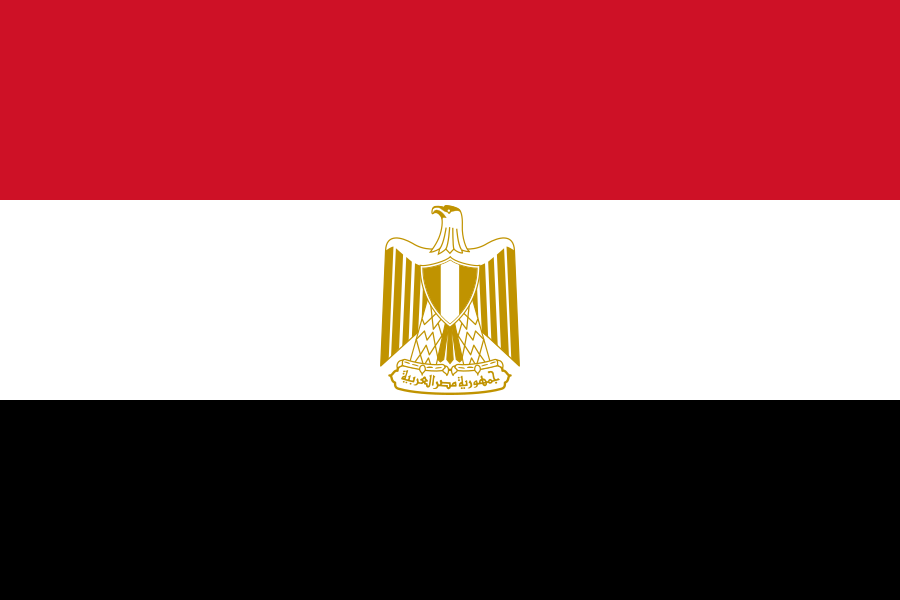
Founding leader of the Wafd whose deportation to Malta in 1919 set off the Egyptian Revolution
Born in a village in the Nile Delta, he studied at al-Azhar and at a law school in Cairo and became a lawyer. Under the British occupation he served as a judge, minister of education (1906–1908) and minister of justice (1910–1912), and in 1913 became vice-president of the Legislative Assembly. In November 1918 he led the Wafd in demanding the end of the protectorate and a seat at the peace negotiations. When the British deported him to Malta in March 1919, the Egyptian Revolution of 1919 broke out. Exiled again to the Seychelles, he was allowed to return in 1923. After the Wafd’s landslide in the 1924 elections he formed the first Wafdist government, but resigned in November after the assassination of Sir Lee Stack, Governor-General of the Sudan, and the British demands that followed. He died in Cairo in 1927.
Career timeline
- 1906–1908Minister of education
- 1910–1912Minister of justice
- 1913Vice-president of the Legislative Assembly
- 1918Founding leader of the Wafd
- 1919.03Deported to Malta; Egyptian Revolution of 1919
- 1924Prime Minister of Egypt
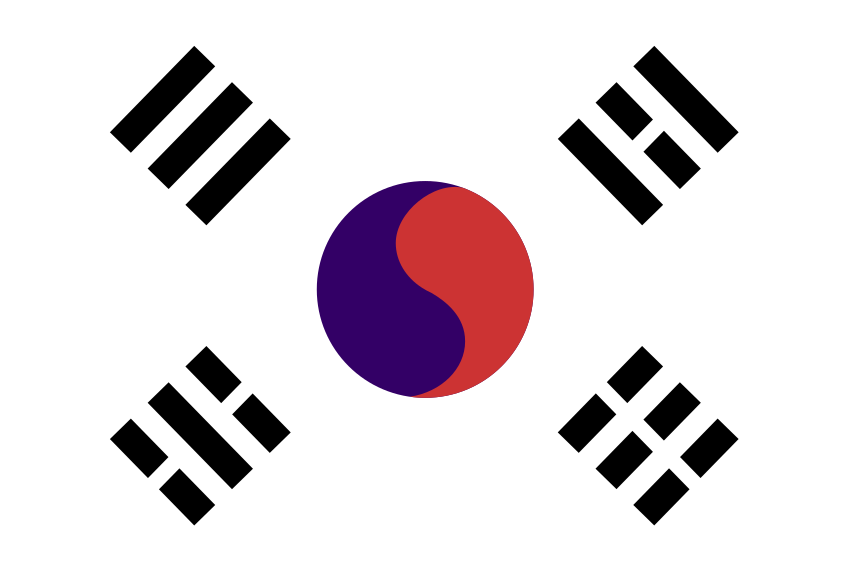
Pioneer of Korean communism who fused the Bolshevik revolution with national liberation against Japanese rule
On his deathbed he declared: 'I die without seeing the Korean revolution succeed. Comrades, you must establish a Korean Soviet Republic.'
A pioneer of Korean communism who transformed from a Korean Empire army officer into a socialist revolutionary, becoming the first to fuse Marxism with the Korean national liberation struggle. He founded the Korean Socialist Party in 1918, served as prime minister of the Korean Provisional Government where he championed armed resistance, and after breaking with Syngman Rhee led the Korean Communist Party (Shanghai faction) in pursuit of combining national liberation with class revolution.
Career timeline
- 1895–1902Graduated from Imperial Military Academy; army major and Ganghwa garrison commander
- 1906–1911Co-founded New People's Association; founded Bochang School; jailed in 105-Man Incident
- 1913–1917Exiled to Primorsky Krai and Manchuria; established military academy, trained independence forces
- 1918Founded Korean Socialist Party in Khabarovsk; chairman
- 1919–1921Prime Minister of the Korean Provisional Government in Shanghai
- 1921Founded Korean Communist Party (Shanghai faction)
- 1922–1935Comintern liaison; Far East Korean director of MOPR
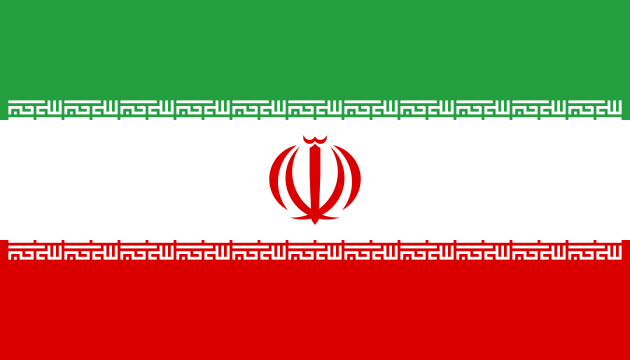
Iranian revolutionary who led the Jungle movement of Gilan and proclaimed the Soviet Republic of Gilan in 1920
Born in Rasht in 1880, the son of a Gilani merchant, he joined the Iranian Constitutional Revolution and in 1909 was a junior commander of the constitutionalist force that took Tehran. In 1914–1915 he launched the Jungle movement in the forests of Gilan, demanding provincial autonomy, an end to central government corruption and foreign interference, and land reform. When a Soviet flotilla entered Enzeli in 1920 he agreed to cooperate on condition of non-interference, proclaimed the Soviet Republic of Gilan on 5 June and became its head, but split with the communists over his refusal to redistribute land. He returned as head of government in May 1921, but after the Soviets withdrew their support he was defeated by Reza Khan’s government troops and died of frostbite while fleeing into the Talesh mountains. His severed head was displayed in Rasht.
Career timeline
- 1909Junior commander in the constitutionalist capture of Tehran
- 1914–1921Leader of the Jungle movement of Gilan
- 1920Head of the provisional government of the Soviet Republic of Gilan
- 1921Again head of the provisional government of the Gilan republic
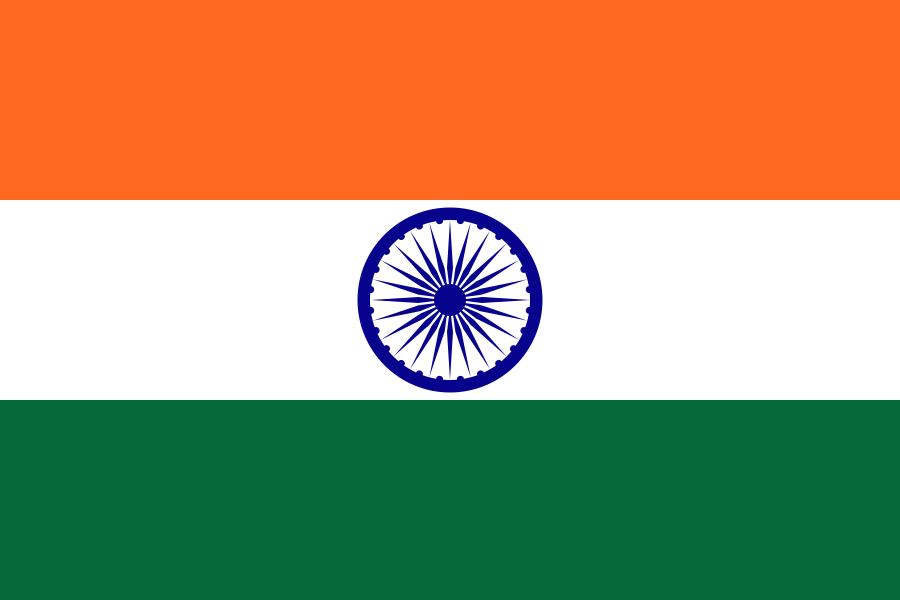
India's first prime minister and co-founder of the Non-Aligned Movement
'Long years ago we made a tryst with destiny, and now the time comes when we shall redeem our pledge… At the stroke of the midnight hour, when the world sleeps, India will awake to life and freedom.' (Independence eve address, 14 August 1947)
A towering leader of the Indian independence movement, he became independent India's first prime minister in 1947 and held the office until his death in 1964. He anchored the new republic in parliamentary democracy, secularism, and planned economic development, while charting a foreign policy of non-alignment that refused subordination to either Cold War bloc. With Tito he issued the 1954 joint statement that first defined 'non-alignment' as a positive, active policy, not passive neutrality, and went on to co-found the Non-Aligned Movement through the 1956 Brioni Declaration and the 1961 Belgrade summit. The Sino-Indian War of 1962 shook his domestic standing, yet he is remembered as the architect of the Indian republic.
Career timeline
- 1929President, Indian National Congress
- 1936–1937President, Indian National Congress
- 1946–1947Interim Prime Minister of India
- 1947–1964Prime Minister of India
- 1947–1964Minister of External Affairs (concurrent)
Independence activist, linguist, and Yan'an faction leader who served as the first head of state of the DPRK
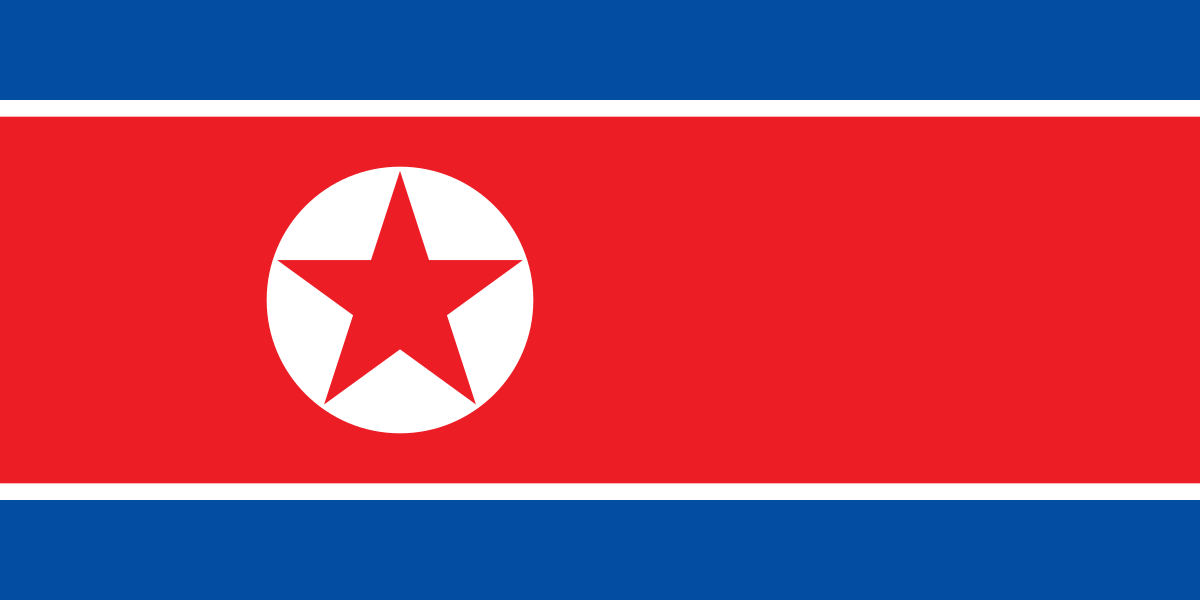
On the day the People's Assembly adopted the new DPRK flag in July 1948, Kim Tu-bong personally lowered the Taegeukgi and raised its replacement. Barely a year earlier, he had been the man passionately explaining the old flag's philosophical meaning to a skeptical Soviet general.
A Hangul linguist trained under Chu Sigyŏng who led the Korean Independence League in Yan'an. Became the DPRK's first head of state in 1948, though real power lay with Kim Il Sung. Purged and vanished in the 1958 August Faction Incident.
Career timeline
- 1908–1916Studied Hangul under Chu Sigyŏng; helped compile MalMoi dictionary
- 1919Joined March First Movement, then exiled to Shanghai provisional government
- 1920–1930sCombined communist activism with linguistic research in Shanghai
- 1942–1945Founded Korean Independence League in Yan'an; led the Yan'an faction
- 1946.02–08Chairman of the New People's Party of Korea
- 1946.08–1949.06Chairman of the Workers' Party of North Korea Central Committee
- 1948.09–1957.09Chairman of the SPA Standing Committee — first head of state of the DPRK
- 1957–1958Dismissed from all posts over August Faction Incident; disappeared
Architect of Pan-African Marxism who led sub-Saharan Africa's first independence
“We must unite now or perish.” — address to the Conference of African Heads of State, Addis Ababa, 1963
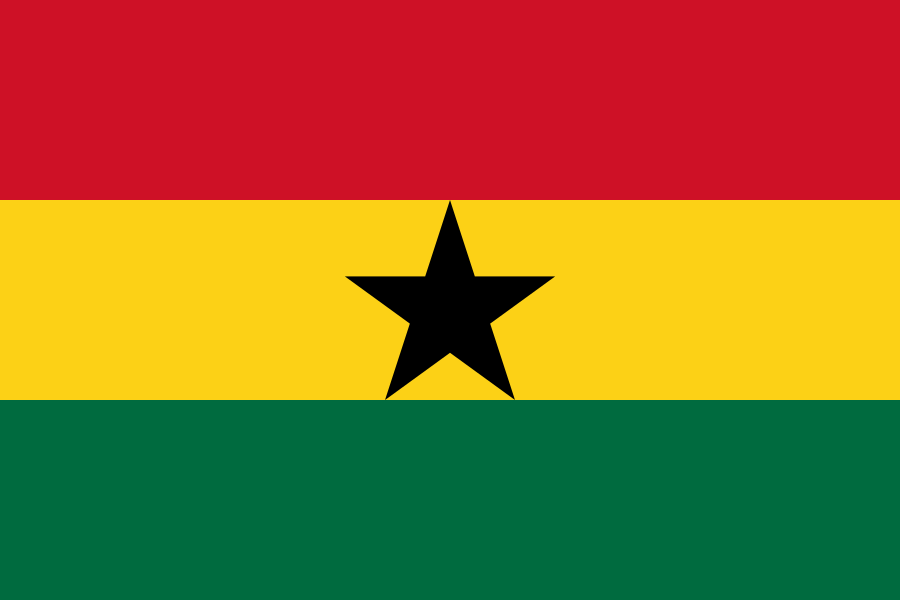
Ghana's independence leader, first prime minister and president. He secured sub-Saharan Africa's first independence in 1957. Through Nkrumaism, synthesizing scientific socialism with African tradition, he forged the intellectual foundation of the pan-African liberation movement.
Career timeline
- 1935–1945Studies in America — degrees in economics, theology, philosophy and education from Lincoln and Penn
- 1945Co-organizes the Fifth Pan-African Congress in Manchester
- 1947Returns to the Gold Coast as General Secretary of the UGCC
- 1949Founds the Convention People's Party; launches Positive Action campaign
- 1952–1957Prime Minister of the Gold Coast — negotiates independence
- 1957Ghana wins independence — sub-Saharan Africa's first; becomes first Prime Minister
- 1960–1966First President of Ghana — socialist construction and Pan-African diplomacy
- 1963Co-founds the Organization of African Unity
- 1962Awarded the Lenin Peace Prize
- 1965Publishes Neo-Colonialism: The Last Stage of Imperialism
- 1966.02Deposed by military coup while visiting Beijing
- 1966–1972Exile in Guinea — honorary co-president; continues theoretical writing
Physician-poet who led Angola's liberation struggle and became its first president
"Our land, our mother / we shall return." Lines from the poem "Havemos de voltar" in the 1974 collection Sacred Hope (Sagrada Esperança).
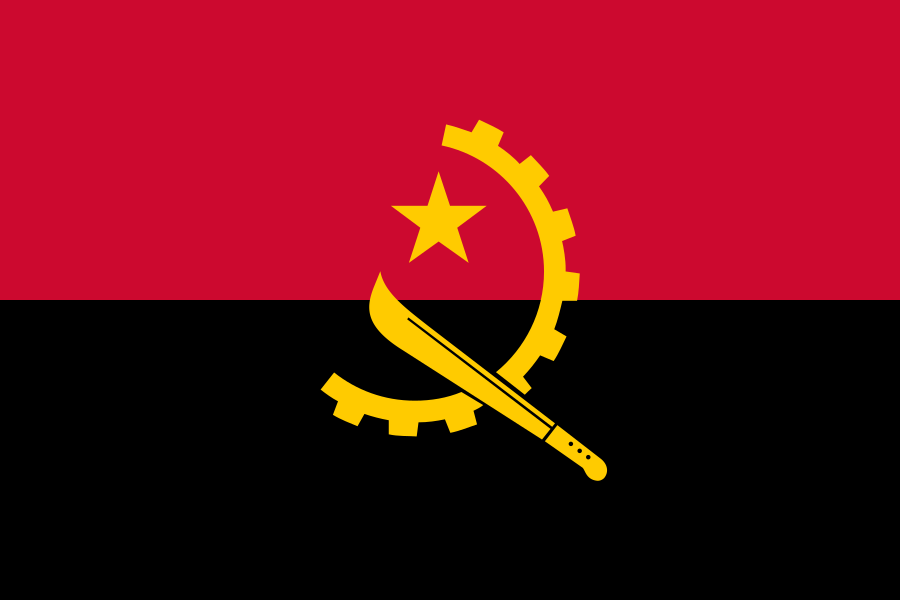
Physician and poet who led Angola's independence struggle. He was president of the MPLA at its founding in December 1956 and, after imprisonment and exile, was elected its effective chairman at the December 1962 conference, leading the independence war until 1974. He became the first president of the People's Republic of Angola on 11 November 1975, building a one-party socialist state in close alignment with the USSR and Cuba while crushing a 1977 coup attempt and carrying out mass purges.
Career timeline
- 1947Left for Portugal; studied medicine at Coimbra and Lisbon universities while joining anti-colonial student activism
- 1956Became the MPLA's president at its founding (Viriato da Cruz was secretary-general)
- 1960–1962Arrested by the PIDE, imprisoned in Lisbon; escaped in 1962 and went into exile in Congo-Léopoldville
- 1962–1974Elected effective chairman at the MPLA conference; led the independence war and built ties with the USSR, Cuba and Yugoslavia
- 1975Became first president of the People's Republic of Angola on 11 November; declared a socialist course
- 1975–1979Defended the state in civil war with Cuban troops and Soviet aid; suppressed Nito Alves's 1977 coup attempt
- 1977Reorganized the MPLA into the MPLA-Workers' Party, adopting Marxism-Leninism as official doctrine
Founding president who theorized Ujamaa and led non-aligned socialist Tanzania for 24 years
“We, in Africa, have no more need of being 'converted' to socialism than we have of being 'taught' democracy. Both are rooted in our past — in the traditional society which produced us.” — essay 'Ujamaa', 1962
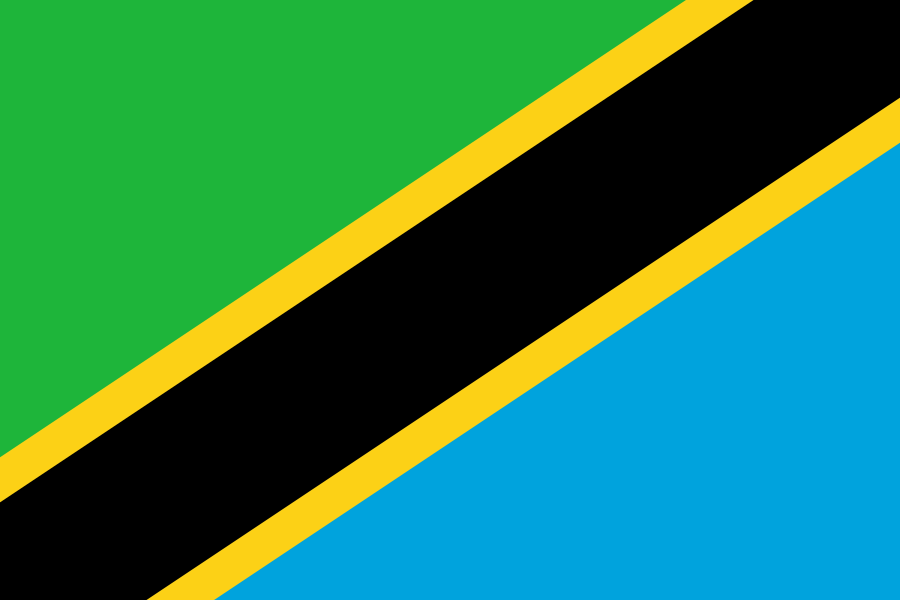
Founding president of Tanzania (1964–1985), anti-colonial leader, and the most influential theorist of African socialism. He founded TANU in 1954 and led Tanganyika to independence through non-violent struggle. The 1967 Arusha Declaration established Ujamaa, a homegrown development model fusing traditional communal life with modern socialism, nationalizing banks and industry while dramatically expanding education and healthcare. Throughout his presidency he backed southern African liberation movements and stood at the center of the Non-Aligned Movement. In 1985 he voluntarily stepped down, one of the few African leaders to orchestrate a peaceful transfer of power, and spent his final years mediating the Burundian Civil War.
Career timeline
- 1949–1952Studies at Edinburgh University — MA in education and politics
- 1954Founds the Tanganyika African National Union (TANU)
- 1960–1961Chief Minister then first Prime Minister of Tanganyika
- 1961.12Tanganyika wins independence
- 1962–1964First President of Tanganyika — republic proclaimed
- 1964Union with Zanzibar — United Republic of Tanzania
- 1967Arusha Declaration — Ujamaa socialism, nationalization of banks and major industries
- 1978–1979Tanzania–Uganda War — leads overthrow of Idi Amin
- 1985Voluntarily resigns the presidency — peaceful transition of power
- 1985–1990CCM party chair — criticizes successor's neoliberal turn
- 1996–1999UN-mandated mediator in the Burundian Civil War
Congo's first prime minister: one speech made him the empire's target
“History will one day have its say… Africa will write its own history.” — last letter to his wife from prison, 1960
Independence leader and first prime minister of the Congo. His unscheduled 1960 independence-day speech indicting colonial violence before King Baudouin made him a global symbol; within three months he was deposed and the following year killed with CIA and Belgian complicity.
Career timeline
- 1958Founds the Congolese National Movement
- 1960.05Wins the first elections; first prime minister
- 1960.06The unscheduled independence-day speech indicting colonial rule
- 1960.09Deposed and confined by Mobutu's coup
- 1961.01Flown to Katanga and killed, with CIA and Belgian complicity