Establishment of the People’s Republic of China
What kind of state did the Communists make of their civil-war victory in 1949, and what did that state promise and leave unresolved?
The Second Plenum at Xibaipo in March 1949 moved the centre of the party’s work to the cities and set the economic and political lines of a new-democratic state. In “On the People’s Democratic Dictatorship” Mao proclaimed leaning to the Soviet side and a people’s democratic dictatorship of four classes, and in September the Political Consultative Conference adopted the Common Program and elected the Central People’s Government. On 1 October Mao announced the government’s establishment at Tiananmen, and through the contest for recognition, the treaty talks in Moscow, the fight against inflation and the incorporation of Xinjiang and Tibet the new state took shape by the first half of 1950. The Nationalist government moved to Taiwan and survived as a rival government.
Spring 1949: the shape of victory and two governments
After Japan’s defeat in 1945 the Nationalists and the Communists could not agree on merging state and army. American mediation failed to prevent full civil war, and the war became a contest not only of armies but of the ability to mobilise the countryside and run the urban economy. The Nationalist government lost support through the strain of prolonged war, corruption and inflation, while the Communists expanded on the strength of base-area administration, land policy and military organisation. Once the Nationalist main forces collapsed in the Liaoshen, Huaihai and Pingjin campaigns between autumn 1948 and early 1949, the question shifted from who would win to what kind of state the winner would build. 1 2
On 31 January 1949 Beiping passed into Communist hands without a fight. The day before, Soviet Politburo member Anastas Mikoyan had arrived at the Communist headquarters at Xibaipo in Hebei. Sent secretly by Stalin, he held a series of multi-hour talks with Mao Zedong, and the visit laid the groundwork for Sino-Soviet relations after the civil-war victory. That same day the Nationalist government abandoned its capital Nanjing for Guangzhou. Ivan Kovalev, a Soviet railway specialist who had been in China since 1948 as chief adviser to the Communist Central Committee and head of the Soviet military specialists, served as a channel between the two sides. 3 4
The capture of cities rested on long control of the surrounding countryside and supply routes. On 21 April Mao and Zhu De issued the “Order to the Army for the Country-wide Advance”; the People’s Liberation Army crossed the Yangtze, took Nanjing on 23 April and Shanghai on 27 May, and Guangzhou, Chongqing and Chengdu fell in turn. Chiang Kai-shek and the Nationalist leadership moved to Taiwan on 7 December 1949 and kept the government of the Republic of China in being. So 1949 changed the structure of power on the mainland without ending the international dispute over who represented China and what its territory included. The new state was born together with an unfinished civil war. 1 5 6
The Second Plenum at Xibaipo: from village to city
From 5 to 13 March 1949 the Second Plenary Session of the Seventh Central Committee of the Chinese Communist Party met at Xibaipo in Jianping county (now Pingshan), Hebei. Thirty-four full and nineteen alternate members attended; twenty were absent, partly because of transport. Mao chaired and reported. The plenum endorsed the Politburo’s leadership since the First Plenum of 1945, raised Liao Chengzhi, Wang Jiaxiang, Chen Boda and Huang Kecheng to full membership, and approved the proposal that the party convene, with the democratic parties, people’s organisations and democratic personages, a new Political Consultative Conference without “reactionaries” and set up a democratic coalition government. 7
Mao’s report sketched the state that would follow victory. He declared that “the centre of gravity of the Party’s work has shifted from the village to the city”, and said bureaucrat-capital would be confiscated so that the state-owned economy would control the country’s economic lifelines. The new economy would be a new-democratic structure made up of a socialist state sector, a semi-socialist co-operative sector, private capitalism, the individual economy and state capitalism run jointly by the state and private capitalists. The report also set out the course of transforming the country from an agricultural into an industrial one and from a new-democratic into a socialist society. 8
The line on national capital was double-edged. Mao said that private capitalist industry was a force that must not be ignored, that it must not be restricted too much or too rigidly, and that it must be left room to exist and develop within the framework of the people’s republic’s economic policy and planning. At the same time he stated that capitalism would be restricted from several directions: in its scope of operation and by tax policy, market prices and labour conditions. He predicted that “restriction versus opposition to restriction will be the main form of class struggle in the new-democratic state”, condemning the view that no restriction was needed as Right opportunism and the view that private capital could be eliminated very quickly as “Left” adventurism. 8
The report ended with a warning to the party itself. Mao said that Communists who had never yielded to enemy guns might be defeated by the bourgeoisie’s “sugar-coated bullets”; “to win countrywide victory is only the first step in a long march of ten thousand li”, and the comrades must remain modest, prudent, free from arrogance and rashness, and preserve the style of plain living and hard struggle. On his proposal the plenum banned birthday celebrations for party leaders and the naming of places after them, and it adopted a resolution on the army flag. Mao’s concluding remarks were summed up as the twelve points of “Methods of Work of Party Committees”. In late March the central organs left Xibaipo for Beiping. 8 7 9
 Summer in Beiping: leaning to one side and “On the People’s Democratic Dictatorship”
From 1 April the Communist delegation led by Zhou Enlai negotiated in Beiping with a delegation under Zhang Zhizhong sent by Acting President Li Zongren. When the Nanjing government refused on 20 April to sign the Agreement on Internal Peace, the PLA crossed the Yangtze the next day. Yet Zhang Zhizhong and the other members of the Nationalist delegation did not go back south; they stayed in Beiping and joined the new regime, Zhou’s underground network having helped persuade Zhang by escorting his family to Beiping. Absorbing such Nationalist figures was part of giving the “coalition government” its shape. 10 5
From June to August Liu Shaoqi led a secret delegation, with Gao Gang and Wang Jiaxiang, to the Soviet Union. Stalin agreed to lend China $300 million and to send Soviet experts. Liu explained how the new government would treat the foreign treaties concluded by the Nationalists, and described how the party had defended Soviet positions at home on Port Arthur, Mongolian independence and the removal of machinery from the Northeast. Stalin, however, deferred the question of replacing the 1945 Sino-Soviet treaty until Mao’s visit. The new state’s foreign course was being set in negotiations with Moscow before it was founded. 11 12
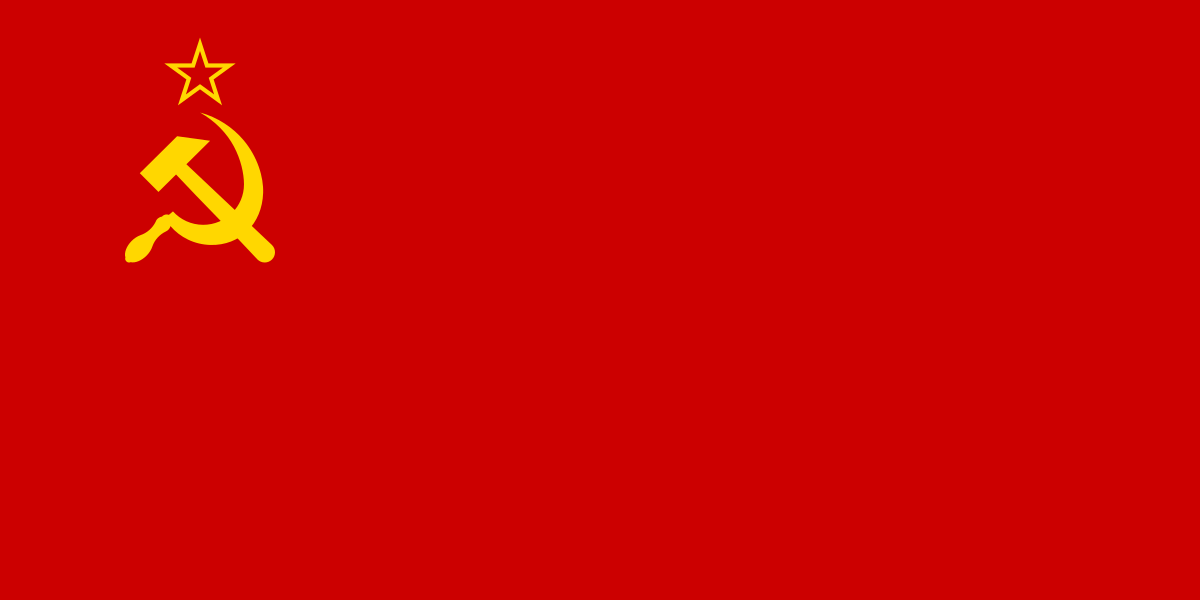
“On the People’s Democratic Dictatorship”, published on 30 June 1949 for the party’s twenty-eighth anniversary, was the theoretical blueprint of the new state. Mao wrote that the forty years’ experience of Sun Yat-sen and the twenty-eight years of the Communist Party had taught them to lean to one side; all Chinese without exception must lean either to the side of imperialism or to the side of socialism, and “sitting on the fence will not do, nor is there a third road”. An “international united front” with the Soviet Union, the People’s Democracies and the proletariat of all countries became the foreign line, and this “leaning to one side” was fixed half a year later in the Moscow treaty. 13 14
The essay’s other axis was the form of the state. Mao defined the people at the present stage as the working class, the peasantry, the urban petty bourgeoisie and the national bourgeoisie; within the people, freedom of speech, assembly and association and the vote would be guaranteed, while the reactionaries would be deprived of the right to speak. “The combination of these two aspects, democracy for the people and dictatorship over the reactionaries, is the people’s democratic dictatorship.” The national bourgeoisie was an ally, but because of the weakness of its economic position it could not be the leader of the revolution and should not have the chief role in state power. Asked whether they did not want to abolish state power, he answered: “Yes, we do, but not right now.” 13
Relations with the United States closed further over the summer. In August the State Department issued the China White Paper, which held that the outcome of the civil war had been beyond American control, and from “Cast Away Illusions, Prepare for Struggle” of 14 August Mao wrote a series of rebuttals. The Truman administration could not escape domestic charges of having “lost” China, and the survival of the Nationalist government on Taiwan gave American anti-communists the hope that the outcome could be reversed. The room for the new government to establish equal relations with the West had narrowed before it was founded. 15 16
The new Political Consultative Conference and the Common Program
The new Political Consultative Conference had been proposed to the whole country by the Communist Party on 1 May 1948; it was called “new” to distinguish it from the conference that met at Chongqing in January 1946. Its Preparatory Meeting opened in Beiping on 15 June 1949, and in his inaugural address Mao said its task was to form a democratic coalition government that would eliminate the remnants of Kuomintang reaction, unify the country as swiftly as possible and carry out construction in the political, economic and cultural fields and in national defence step by step. The meeting elected a Standing Committee headed by Mao. When the country’s name was discussed on 21 June, Zhang Xiruo proposed “People’s Republic of China”, and the overseas Chinese entrepreneur Tan Kah Kee strongly objected to keeping the old name “Republic of China”, urging a clean break with the former regime. 17 18 19
The First Plenary Session of the Chinese People’s Political Consultative Conference met in Huairen Hall in Zhongnanhai from 21 to 30 September. It had 662 delegates: 165 from parties, 116 from regions, 71 from the People’s Liberation Army, 235 from organisations and 75 specially invited. From outside the Communist Party came figures such as Soong Ching-ling, Li Jishen of the Revolutionary Committee of the Kuomintang, Zhang Lan of the China Democratic League, Huang Yanpei and Shen Junru. In his opening address on 21 September Mao said that the Chinese people, one quarter of humanity, “have now stood up”, and that “ours will no longer be a nation subject to insult and humiliation”. Often quoted as words spoken at Tiananmen on 1 October, the line in fact belongs to this opening address. 20 21 22 23 24 25
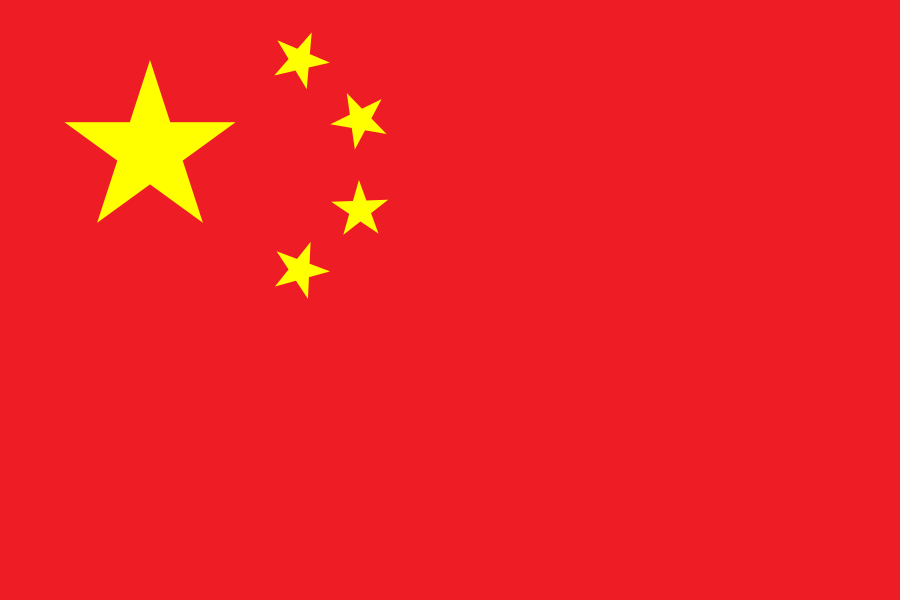
On 27 September the conference passed the Organic Law of the CPPCC and the Organic Law of the Central People’s Government, and resolved to make Beiping the capital under the name Beijing, to adopt the Gregorian calendar era, to take the “March of the Volunteers” as the provisional national anthem and the Five-star Red Flag as the national flag. The “March of the Volunteers” was an anti-Japanese film song with lyrics written by Tian Han in 1934 and music by Nie Er. In the flag designed by Zeng Liansong, a Wenzhou man working in Shanghai, the large star stood for the Communist Party and the four small stars for the four classes named in “On the People’s Democratic Dictatorship”. On 30 September the conference laid the foundation stone of the Monument to the People’s Heroes. 20 26 27 28 29
The Common Program adopted on 29 September served as a provisional constitution until the constitution of 1954. Article 1 defined the People’s Republic as “a new-democratic, that is, a people’s democratic state”, practising a people’s democratic dictatorship led by the working class, based on the alliance of workers and peasants and uniting all democratic classes and all the nationalities in China. Article 3 ordered the abolition of imperialist privileges, the confiscation of bureaucrat-capital and the step-by-step transformation of feudal landownership into peasant ownership, while promising to protect the private property of workers, peasants, the petty bourgeoisie and the national bourgeoisie. Articles 26 to 31 described a mixed economy in which state, co-operative, individual, private capitalist and state capitalist sectors would divide work and co-operate under the leadership of the state sector. A Chinese researcher has compared this design to Soviet Russia’s New Economic Policy. 30 31 32
The Program made clear that this was not a plan but an order of government to operate from that day. Article 5 promised freedom of thought, speech, publication, assembly, association and belief, and Article 6 equality of the sexes and freedom of marriage, but Article 7 spelled out the suppression of all counter-revolutionary activity and the deprivation of reactionaries’ political rights. Article 13 had the plenary session of the CPPCC exercise the functions of a National People’s Congress until one was elected by universal suffrage; Article 11 committed the country to alliance with the Soviet Union and the People’s Democracies, and Article 51 to regional autonomy in minority areas. The coalition the new state proclaimed included not only workers and peasants but the petty and national bourgeoisie, yet its leadership lay with the Communist Party and it did not presuppose alternation in power between competing parties. 31 32 25
1 October: the Central People’s Government takes office
On 30 September the conference elected the Central People’s Government Council. Mao Zedong became chairman, and Zhu De, Liu Shaoqi, Soong Ching-ling, Li Jishen, Zhang Lan and Gao Gang vice-chairmen; the fifty-six members included Communist leaders such as Zhou Enlai, Peng Dehuai and Deng Xiaoping alongside non-Communists such as Tan Kah Kee, Huang Yanpei, Shen Junru, Fu Zuoyi, Zhang Zhizhong and Long Yun. Three of the six vice-chairmen were not Communists. The council, which represented the state abroad and held state power at home, existed for a single term until the system of people’s congresses began under the constitution of September 1954. 19 33 34
At 3 p.m. on 1 October 1949 Mao announced from the Tiananmen gate tower: “Fellow countrymen, the Central People’s Government of the People’s Republic of China was established today!” As the “March of the Volunteers” played, the Five-star Red Flag was raised for the first time and a salute was fired. Mao read the proclamation of the Central People’s Government, which recounted the Kuomintang government’s betrayal and counter-revolutionary war, the victory of the People’s Liberation Army, the composition of the CPPCC and the results of its elections. Lin Boqu presided. There followed the first parade, of some 16,000 troops commanded by Nie Rongzhen, commander of the North China Military Region, and reviewed by Commander-in-Chief Zhu De; Liu Bocheng had proposed a Soviet-style format from having watched a Red Square parade. 19 35
The first meeting of the Central People’s Government Council, held the same day, adopted the Common Program as the government’s policy and appointed Lin Boqu secretary-general, Zhou Enlai premier of the Government Administration Council and concurrently foreign minister, Mao chairman of the People’s Revolutionary Military Commission, Zhu De commander-in-chief of the PLA, Shen Junru president of the Supreme People’s Court and Luo Ronghuan procurator-general of the Supreme People’s Procuratorate. It declared to all governments that this was the sole legal government representing all the people of the People’s Republic and that it was willing to establish diplomatic relations with any foreign government that observed equality, mutual benefit and mutual respect for territorial integrity and sovereignty. On 19 October the third meeting appointed Dong Biwu, Chen Yun, Guo Moruo and Huang Yanpei vice-premiers of the Government Administration Council. 19 36 37
It was the party that ran the new state. The Communist Party then had 4.5 million members, nearly 90 per cent of peasant origin. Ministries and commissions for foreign affairs, internal affairs, finance, industry and other fields were set up under the Government Administration Council, but decisions came from the party centre chaired by Mao. A disciplined leadership with more than a decade of base-area administration could begin integration and reform without, for the first time in decades, massive armed opposition within its territory, and the moderate social and economic policies of the first year won wide support. In his National Day message Chiang Kai-shek called the new regime a “puppet regime of the Soviet Union”. 25 36 19

 Recognition and isolation: the new state’s place in the world
The Soviet Union was the first to recognise the People’s Republic, on 2 October. Bulgaria, Romania, Hungary, North Korea, Czechoslovakia, Poland, Mongolia, East Germany and Albania soon followed, and in January 1950 China and the Soviet Union recognised the Democratic Republic of Vietnam, turning party-to-party relations into relations between states. Zhou Enlai notified all governments that any country wishing diplomatic contact with the People’s Republic must end its relationship with the former ROC leaders on Taiwan and support the PRC’s claim to China’s seat in the United Nations. Recognition was not diplomatic ritual but a question of legitimacy in the civil war. 19 38 10
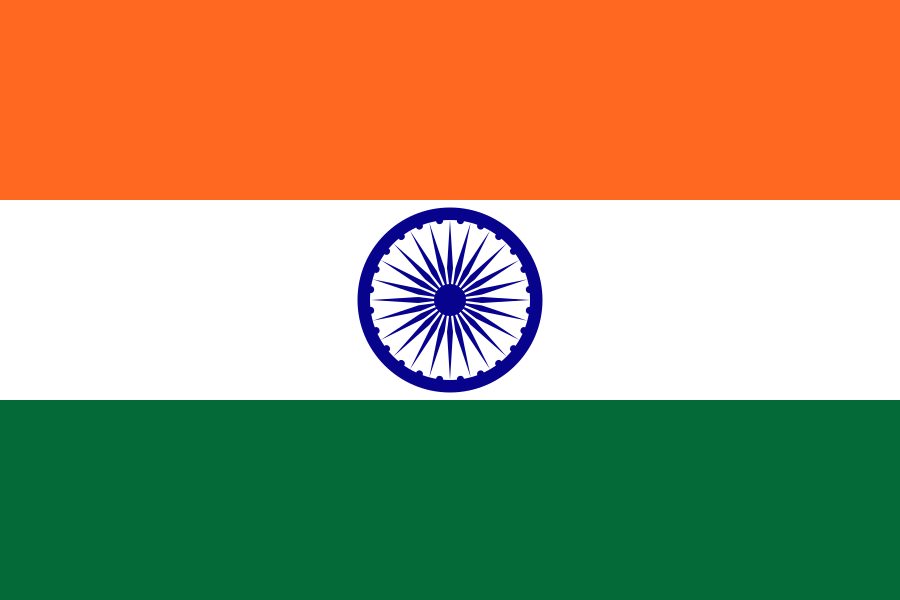
Among non-Communist states Burma came first. On 16 December 1949 its foreign minister informed Zhou of its decision to recognise the People’s Republic, and Mao had Burma asked whether it was willing to break relations with the Kuomintang. India too ended formal relations with the Republic of China and recognised the PRC, establishing diplomatic relations on 1 April 1950 as the first non-Communist country in Asia to do so. Britain withdrew its recognition of the Republic of China on 6 January 1950 and posted a chargé d’affaires in Beijing in expectation of a swift exchange of ambassadors, but relations at ambassadorial level were long in coming. Britain and India also mediated in 1950 between Tibet and Beijing. 39 40 41 42
The United States did not recognise it. China’s UN seat was kept by the delegates of the Republic of China on Taiwan, and the Soviet representatives boycotted the UN from January to August 1950 in protest at the exclusion of the People’s Republic; as a result the Soviet Union could not veto the June resolution sending UN forces to Korea. After the People’s Volunteers crossed the Yalu in October 1950, the UN in 1951 declared China an aggressor and voted an embargo on arms and war materiel. The People’s Republic’s path to seats in the UN and the Security Council was blocked until General Assembly Resolution 2758 of 1971, and the United States recognised the government on Taiwan as China’s until the 1970s. 43 25 15
Two months in Moscow: the Treaty of Friendship, Alliance and Mutual Assistance
Mao left Beijing by train on 6 December with Chen Boda, his security chief Wang Dongxing and the interpreter Shi Zhe, among others; it was the first of only two journeys abroad in his life. At his first meeting with Stalin in the Kremlin on the night of 16 December, Mao said China needed three to five years of peace to restore its economy to pre-war levels and stabilise the country; Stalin replied that there was no direct threat to China, since Germany and Japan were still recovering and the West was reluctant to fight another war, and that if the two countries worked together they could guarantee peace for twenty to twenty-five years. Mao’s chief aim was to replace the treaty the Nationalist government had signed with the Soviet Union in 1945 with a new one. 14 44
Stalin at first wanted the 1945 treaty kept in force. It sat within the framework of the Yalta agreement on the Kurils, southern Sakhalin and Port Arthur, he argued, so changing any point would give the United States and Britain leverage to reopen the Soviet Union’s Yalta gains. He also refused Soviet air support for an attack on Taiwan, saying it would give the United States an excuse to intervene. The refusals continued after the celebration of Stalin’s seventieth birthday on 21 December; when Mao tried to reach him, the Kremlin said Stalin was not at home and offered his associates instead. As rumours spread that Mao was being held at his dacha, the two sides agreed to an interview with the TASS agency to quiet them, and this became the turning point. On 2 January 1950 Stalin agreed to take up the treaty. 14
A negotiating team under Zhou Enlai arrived in Moscow on 20 January, and on the evening of the 22nd Stalin, Molotov, Malenkov, Mikoyan and Vyshinsky sat down with Mao, Zhou, Li Fuchun, Wang Jiaxiang and Chen Boda. They agreed to replace the 1945 treaty with a new one and that Soviet troops would leave Port Arthur, but Stalin would not yield on handing management of the Changchun Railway to China or enlarging China’s share. When the Soviet draft arrived on 23 January Zhou answered with a Chinese draft that evening. The treaty, agreements and notes were signed in the Kremlin on 14 February. Each side would give the other military assistance if attacked by Japan or any state allied with it, neither would join an alliance directed against the other, and the term was thirty years. 14 25
In the accompanying agreements the Soviet Union undertook to hand over all its rights and property in the Changchun Railway free of charge after a peace treaty with Japan and no later than the end of 1952, to withdraw from the Port Arthur naval base and to return its property in Dalian. It would lend $300 million at 1 per cent interest, $60 million a year from 1950, and send specialists. In return China accepted the independence of Outer Mongolia recognised in the 1945 treaty, and the loan had to be repaid in strategic resources: between 1954 and 1959 China supplied the Soviet Union with 160,000 tons of tungsten ore, 110,000 tons of copper, 30,000 tons of antimony and 90,000 tons of rubber. Mao sensed Soviet paternalism and distrust in the creation of joint companies, and Stalin feared that Mao would become a second Tito. 14
The treaty set China’s place in the Cold War. Soviet aid underpinned the new regime’s survival, laid the foundations of the planned economy and state enterprises, and offset the Western blockade and embargo on some four hundred kinds of goods. Yet its terms were stricter than those of the Soviet treaties with the East European states: “all possible economic assistance” took the place of “immediately giving all available military and other assistance”. Mao later said that only after the Korean War did China win Soviet trust, followed by more aid and the 156 projects. The experience of being kept waiting in Moscow and Mao’s resentment of Stalin’s treatment later became a personal background to the Sino-Soviet split. 14 44
To the frontiers: Hainan, Xinjiang and Tibet
Article 2 of the Common Program charged the Central People’s Government with carrying the war of liberation through to the end, liberating all Chinese territory and completing unification. In September 1949 the party made the incorporation of Tibet, Taiwan, Hainan and the Penghu Islands, peacefully or by force, a top priority. The failed landing on Kinmen in October 1949 postponed an attack on Taiwan until a navy and air force could be built. Instead, on 16 April 1950 the PLA landed on Hainan Island, assisted by the Hainan Communist guerrillas who held much of the interior, drove the Nationalists south and declared victory on 1 May. Two months later the Korean War broke out and the US Seventh Fleet entered the Taiwan Strait, freezing the Taiwan question into a long confrontation. 31 42 45 14 46
Xinjiang was divided in two. The Nationalist government ruled seven districts as Xinjiang Province, while the three districts of Ili, Tarbagatay and Altay were held by the “Three Districts” leadership of the Soviet-backed Second East Turkestan Republic. The Soviet Union urged the Three Districts leaders to accede to the Communists. In August 1949, the Soviets announced, Ehmetjan Qasimi and four other Three Districts leaders were all killed in a plane crash on their way to the Political Consultative Conference; after the Soviet collapse some former KGB officers claimed they had been executed in Moscow, and the cause of their deaths is still disputed. On 25 September Tao Zhiyue, garrison commander of Xinjiang, took 70,000 Nationalist troops over to the Communists, and on the 26th the provincial chairman Burhan Shahidi followed. 47 48 49 50 51
Ordered in by Peng Dehuai, Wang Zhen’s First Army Group of the First Field Army entered Xinjiang in October. PLA forces entered Dihua (now Urumqi) unopposed on 17 October and the army group’s headquarters arrived in November, and the Xinjiang Provincial People’s Government was set up on 17 December. The Three Districts’ national army became the PLA Fifth Army on 20 December and the surrendered Nationalist troops the 22nd Army Group, most of whom later became part of the Xinjiang Production and Construction Corps. Because the incorporation was achieved by political means it met little armed resistance; only Yulbars Khan and Osman Batur fought and were defeated. The PLA controlled most of Xinjiang by spring 1950. Seypidin Azizi, the remaining Three Districts leader, went to Moscow to join Mao’s delegation during the treaty negotiations. 48 47 52 50
After the fall of the Qing, Tibet was a de facto independent polity. Its government expelled the Nationalist mission in Lhasa in July 1949 and in November wrote to the United States, Britain and Mao that it would defend itself “by all possible means” against PRC incursions. In December 1949 Mao ordered preparations to march on Chamdo. From March 1950 a Tibetan delegation sought talks in Kalimpong and Delhi, and in September Ambassador Yuan Zhongxian presented three points: that Tibet be regarded as part of China and that China be responsible for its defence and foreign relations. While the Tibetans hesitated, proposing to keep a “priest-patron” relationship, the PLA’s 18th Army crossed the Jinsha River at five places on 6–7 October. 42 53
The PLA took the border town of Chamdo on 19 October, and Ngapoi Ngawang Jigme, governor-general of Kham and commander of the Tibetan forces, surrendered with 2,700 men. Casualty figures differ greatly by source. One count gives 114 PLA and 180 Tibetan soldiers killed or wounded by the fall of Chamdo; Zhang Guohua wrote in 1962 that 5,738 enemy troops had been “liquidated”; the Peace Research Institute Oslo estimates about 2,000 dead on each side, including non-combatants. It came almost at the same time as the People’s Volunteers crossed the Yalu. El Salvador sponsored a Tibetan complaint at the UN, but India and Britain prevented a debate. The Seventeen Point Agreement, a finished text signed by Tibetan delegates in Beijing on 23 May 1951, was accepted on the Dalai Lama’s behalf on 24 October. 53 42 54 55 25
The war on prices and the first year of state-building
In 1949 China’s economy bore the wounds of decades of war. Many mines and factories had been damaged or destroyed, and in 1945 Soviet troops had dismantled about half the machinery in the major industrial areas of the Northeast. Transport, communications and power networks were destroyed or run down, food production was some 30 per cent below its pre-war peak, and on top of this came one of the most virulent inflations in world history. The currency was a unified note issued by the People’s Bank of China from December 1948 and called “renminbi” from June 1949. In May 1949 Chen Yun became head of the new Central Finance and Economic Commission and led this fight. 2 56 57
The first battle was over silver in Shanghai. At the end of May the Shanghai Military Control Commission set an exchange of one renminbi for 100,000 gold yuan and banned the gold yuan from 5 June, but citizens and merchants who distrusted paper money rushed to silver dollars. A silver dollar rose from 100 renminbi on 27 May to 1,100 on 4 June and 1,800 on the 7th, and in the thirteen days after the Shanghai campaign the general price level rose more than 2.7 times. When the city’s sales of silver were simply absorbed by the market, Mayor Chen Yi reported to the centre and with Mao’s approval plain-clothes police sealed the largest silver exchange, the Shanghai Securities Building on Hankou Road, on 10 June and arrested 250 speculators. Mao judged the significance of this “silver dollar battle” to be no less than that of the Huaihai campaign. 58
Speculation moved to rice, cotton yarn and coal, the “two whites and one black”. Renminbi issue grew fivefold between July and October 1949, and when the Nationalist navy mined the mouth of the Yangtze to blockade Shanghai the price of rice quadrupled within a month. Chen Yun held that the amount of rice and yarn the state commanded was the measure of its power over the market; on 13 November he drafted twelve measures to stop the price surge and gathered supplies from across the country. On 25 November Shanghai, Tianjin, Beijing, Shenyang, Wuhan and Xi’an released grain and cloth all at once; in Shanghai the price of yarn halved in a day and many speculators and private native banks went bankrupt. Shanghai businessmen marvelled that in June the Communists had used political force, but this time economic power alone. 59
The government went on to unify the management of national finance and the economy, nationalise and centralise banking under the People’s Bank of China, tighten credit, put budgets at all levels under central control and guarantee the value of the currency. By March 1950 revenue and expenditure were roughly in balance, and the hyperinflation that had raged since the last years of Nationalist rule was checked. Ownership changed slowly. The roughly one-third of enterprises and much of the modern transport sector that the state had already owned under the Nationalists became state enterprises at once, but private industry and commerce kept trading in competition with state trading companies, and in 1952 17 per cent of industrial units were still wholly outside the state system. The recovery policy of the first years was far more gradual than the sweeping socialist transformation of ownership in the mid-1950s. 59 2
The Third Plenum of the Seventh Central Committee, meeting in Beijing on 6–9 June 1950, adopted Mao’s written report “Fight for a Fundamental Turn for the Better in the Nation’s Financial and Economic Situation”, setting the central task of achieving that turn in about three years. In his speech “Don’t Hit Out in All Directions” at the same meeting Mao said land reform had been completed in the north among 160 million people and would begin in the autumn in areas with some 310 million to topple the landlord class. With the imperialists, the reactionaries in Taiwan and Tibet, the Kuomintang remnants, agents and bandits and the landlord class arrayed as enemies, he said, the party must not also turn into enemies the disgruntled national bourgeoisie, the unemployed intellectuals and workers, the handicraftsmen and the peasants who had to deliver grain, but win them over as supporters. Liu Shaoqi gave the land-reform report, and on 28 June the Central People’s Government Council passed the Land Reform Law, which preserved the rich-peasant economy, protected middle peasants and confiscated landlords’ land. Earlier, on 1 May, a Marriage Law had been promulgated that banned forced marriage and concubinage and gave women the right to divorce. 60 61 62 12 25 63
Land reform dismantled landlord ownership and rent collection and distributed land to the peasants. It changed the peasants’ standing and the social base of the regime, but it came with coercion and violence. Smallholders farming their distributed land, mutual-aid organisations, and the later co-operatives and people’s communes were different stages; describing land reform as if it led straight to the communes erases the sequence of policy and the experience of the villagers. The new government passed a run of laws reforming marriage, labour, education and the judicial system, and redefining rights and duties within state, family and employment mattered as much as the change in ownership. But the suppression of counter-revolutionaries and thought reform that began with entry into the Korean War in October 1950, and later the Three-anti and Five-anti campaigns, bore down hard on people classed as political enemies and on intellectuals and businessmen. Changes that widened the chance to take part in building the state went on side by side with changes that suppressed criticism and independent organisation. 25 2 32 64
Assessment: what was settled and what was not
What the proclamation of 1 October 1949 settled is clear. The Communist Party held state power on the mainland, and the Common Program fixed that power in the form of a provisional constitution. The party’s 1981 “Resolution on History” sums up the first three years as clearing the mainland of bandits and Kuomintang remnants, “peacefully liberating” Tibet, establishing people’s governments at all levels, confiscating bureaucrat-capitalist enterprises, unifying financial and economic work and stabilising prices, carrying out land reform, suppressing counter-revolutionaries and conducting the Three-anti and Five-anti movements. That after more than half a century of division and war a single central government unified currency, finance and army is an achievement that critical scholars also broadly accept. 65 25
What was left open was just as clear. The civil war merely stopped, with no armistice or peace treaty, and after the Nationalist government moved to Taiwan in December 1949 both governments claimed to be the legitimate government of all China. For the Chinese government the incorporation of Xinjiang and Tibet was “peaceful liberation”; for the Tibetan government in exile and many Uyghurs it was “invasion” and “annexation”. After the Tibetan uprising of 1959 the Dalai Lama repudiated the Seventeen Point Agreement as signed under duress, and the questions over the deaths of the Three Districts leaders remain unresolved. Figures and names for these regions still depend on whose account one follows. 19 42 47
Another point historians still dispute is the clock of transition. The Second Plenum report and “On the People’s Democratic Dictatorship” already spoke of the road from New Democracy to socialism, but the Common Program promised protection of private capital and a mixed economy, and as late as February 1951 the party’s slogan was “three years for preparation and ten years for planned economic construction”. Then in 1953 Mao set out the general line for the transition period, to complete industrialisation and the socialist transformation of agriculture, handicrafts and capitalist industry and commerce in ten to fifteen years, and at a Politburo meeting on 15 June he condemned “firmly establish the new-democratic social order”, a formula put forward by Liu Shaoqi and others, as harmful. The present revolution, he said, was even more profound than the armed struggle of the past: a revolution that would bury the capitalist system. 8 13 66 67
The distance within the party over pace was large. Liu Shaoqi stressed unity with the national bourgeoisie and did not want to hurry co-operativisation, and the preservation of the rich-peasant economy in the 1950 Land Reform Law was also his line. Gao Gang of the Northeast, by contrast, pushed from 1952 for rapid collectivisation, arguing that if the peasants’ “spontaneous tendency towards capitalism” went unchecked China would have a capitalist future; with Mao’s discreet encouragement he tried to displace Liu, fell in 1954 and killed himself that August. Mao’s pace prevailed. By 1956 67.5 per cent of modern industrial enterprises were state-owned and 32.5 per cent joint state-private, with no purely private firms left, and 91.7 per cent of handicraft workers were in co-operatives. Even the 1981 “Resolution on History” conceded that from the summer of 1955 the transformation was “over-hasty” and “the changes were too fast”. 12 67 68 69 65
The figures also vary by source. The degree of co-operativisation ranges, according to the measure, from “preliminary collectivisation” 90 per cent complete by the end of 1956 to 93.5 per cent in advanced co-operatives in 1957; industrial growth under the First Five-Year Plan is calculated both as 18.7 per cent a year for 1953–1957 and as 19 per cent for 1952–1957. The urban population grew by 30 per cent between 1952 and 1957. Growth was financed not by free aid but by Soviet loans and the rural surplus, and the tension between priority for heavy industry and lagging agriculture was already building at this stage. Estimates of executions in the suppression of counter-revolutionaries also range widely, from the official 712,000 to researchers’ estimates of 500,000 to two million. 70 69 71 64 14
Views divide on how to read that sharp turn. One side sees New Democracy as a strategy the party really meant to sustain for a long time, and the 1953 shift as ending it too early. The other holds that, as the Second Plenum report had already said, New Democracy was from the start a transitional stage on the road to socialism, and the turn the completion of its inner logic. The term New Democracy faded from official discourse after 1953. In the history of the socialist movement 1949 was the first large-scale case of a Communist party taking power in a semi-colonial agrarian country through a worker-peasant alliance and a united front of several classes, and it became a model and patron for Asian revolutions, Vietnam first among them. But at what pace and towards what the state was to move remains a question the sources have not yet closed. 8 72 38
Consequences
With the founding of the People’s Republic the Communist Party held state power on the mainland and, after half a century, unified currency, finance and army under a single central government. The mixed economy and multi-class coalition of the Common Program gave way to socialist transformation after the general line for the transition period of 1953. The Sino-Soviet alliance brought aid and fixed China’s Cold War camp, while the confrontation of two governments across the Taiwan Strait, conflicting accounts of the incorporation of Tibet and Xinjiang, and political repression such as the suppression of counter-revolutionaries carried forward the conditions and limits the founding left behind.
Timeline & Map
- 11945–
1946 Failed negotiations and renewed civil warNo durable compromise over state and military integration emerged.
- 1948–
1949 Major campaigns and urban controlCommunist forces secured military predominance on the mainland.
- 21949.01.30Mikoyan at Xibaipo
Stalin’s secret envoy Mikoyan reached the Communist headquarters and held a series of talks with Mao.
- 31949.03.05–
13 Second Plenum of the Seventh Central CommitteeIt shifted the centre of the party’s work from village to city and set the new-democratic economic structure, the policy of restricting capital and the convening of a new Political Consultative Conference.
- 41949.04.21Order for the country-wide advance
After the Nanjing government rejected the Agreement on Internal Peace the PLA crossed the Yangtze; Nanjing fell on 23 April.
- 51949.06–
08 Liu Shaoqi’s secret visit to MoscowStalin agreed to a $300 million loan and Soviet experts but put off the treaty question until Mao’s visit.
- 61949.06.10The silver dollar battle in Shanghai
With silver speculation driving prices up more than 2.7 times, the authorities sealed the Securities Building and arrested 250 speculators.
- 71949.06.15Preparatory Meeting of the new PCC
It elected a Standing Committee headed by Mao and prepared a democratic coalition government; the name “People’s Republic of China” was proposed on the 21st.
- 1949.06.30“On the People’s Democratic Dictatorship”
Mao set out “leaning to one side” and a people’s democratic dictatorship of four classes as the design of the new state.
- 81949.09Common Program adopted
The consultative conference established a provisional constitutional framework.
- 91949.09.21–
30 First Plenary Session of the CPPCCIts 662 delegates set the organic laws, flag, anthem and capital, adopted the Common Program and elected the Central People’s Government Council.
- 101949.09.25Xinjiang goes over
Tao Zhiyue took 70,000 Nationalist troops, and the next day Burhan Shahidi the provincial government, over to the Communists.
- 111949.10.01PRC proclaimed
The Central People’s Government was proclaimed in Beijing.
- 1949.10.02Soviet recognition
The Soviet Union became the first state to recognise the People’s Republic; the Communist states of Eastern Europe and Asia followed.
- 121949.11.25The rice and cotton battle
Six major cities released grain and cloth at once and broke the speculators; yarn prices in Shanghai halved in a day.
- 131949.12.16Mao’s first meeting with Stalin
On his first trip abroad Mao met Stalin in the Kremlin and pressed for the replacement of the 1945 treaty.
- 1949.12.16Burma’s recognition
Burma announced it would recognise the People’s Republic, the first non-Communist state to do so.
- 1950–
1952 Recovery, land and social reformEconomic restoration accompanied new social institutions.
- 1950.01.06British recognition
Britain withdrew recognition from the Republic of China and posted a chargé d’affaires in Beijing.
- 141950.02.14The Sino-Soviet treaty signed
A thirty-year alliance treaty and agreements on returning the Changchun Railway, Port Arthur and Dalian and on a $300 million loan were signed in the Kremlin.
- 151950.04.16–
05.01 Landing on HainanWith the Communist guerrillas of the interior the PLA took Hainan and declared victory on 1 May.
- 1950.05.01Marriage Law promulgated
It banned forced marriage and concubinage and set civil registration and women’s right to divorce.
- 161950.06.06–
09 Third Plenum of the Seventh Central CommitteeIt set the task of a fundamental turn in finance and the economy within about three years and adopted “Don’t hit out in all directions”.
- 171950.06.28The Land Reform Law
The Central People’s Government Council passed a law confiscating landlords’ land while preserving the rich-peasant economy and protecting middle peasants.
- 181950.10.07–
19 Battle of ChamdoThe PLA crossed the Jinsha River and took Chamdo; Ngapoi Ngawang Jigme surrendered with 2,700 men.
- 191951.05.23The Seventeen Point Agreement
Tibetan delegates signed a finished text in Beijing accepting the PLA’s presence and the central government’s rule.
- 1953Planning and socialist transformation intensify
The First Five-Year Plan marked a distinct post-founding stage.
Related people 34
Leadership2
Implementers & commanders4
He led the silver dollar and rice-and-cotton battles and checked inflation by spring 1950.
Mayor of ShanghaiChen Yi1901–1972He reported the crackdown on silver speculation to the centre and won its approval.
Commander of the founding paradeNie Rongzhen1899–1992As North China commander he led the parade of some 16,000 troops on 1 October.
Commander of the First Army Group that entered XinjiangWang Zhen1908–1993He entered Xinjiang in October 1949 and reached Dihua in November.
Participants25
Appointed chairman of the State Planning Commission in 1952, he drafted and directed the First Five-Year Plan launched in 1953 before his fall in the 1954 power struggle.
Vice-chairman of the Central People's Government; carried the slower-transition position in the pace debateLiu Shaoqi1898–1969Stood on the other side of the transition debate, stressing 'unity' with the national bourgeoisie, and argued at the 8th Congress in 1956 that the principal contradiction lay between the advanced socialist system and backward productive forces.
Soviet representative during the PRC's foundingIvan Kovalev1901–1993During the PRC's founding, he served as a confidential channel between Mao and Stalin.
Vice-chairman of the Central People’s Government; PLA commander-in-chiefZhu De1886–1976He issued the order for the country-wide advance with Mao and reviewed the first parade on 1 October.
Non-Communist vice-chairman of the Central People’s GovernmentSoong Ching-ling1893–1981She took part in the CPPCC and became one of the six vice-chairmen.
RCCK chairman; vice-chairman of the Central People’s GovernmentLi Jishen1885–1959He left Hong Kong for Beiping in 1949 and took part in preparing the founding.
China Democratic League chairman; vice-chairman of the Central People’s GovernmentZhang Lan1872–1955He led the Democratic League delegation to the CPPCC.
Vice-premier of the Government Administration CouncilGuo Moruo1892–1978He was appointed vice-premier on 19 October 1949 with Dong Biwu, Chen Yun and Huang Yanpei.
Vice-premier of the Government Administration CouncilDong Biwu1886–1975He was appointed vice-premier just after the founding.
Stalin’s secret envoy to XibaipoAnastas Mikoyan1895–1978His talks with Mao in early 1949 laid the groundwork for post-revolutionary Sino-Soviet relations; he also sat in the 1950 treaty talks.
Soviet party to the 1950 treatyJoseph Stalin1878–1953He first wanted the 1945 treaty kept, then agreed in January 1950 to negotiate a new one.
Soviet negotiator of the treatyVyacheslav Molotov1890–1986He took part in the talks of 22 January 1950.
Soviet negotiator of the treatyGeorgy Malenkov1901–1988He took part in the talks of 22 January 1950.
Soviet negotiator of the treatyAndrey Vyshinsky1883–1954As Soviet foreign minister he took part in the 1950 talks.
Member of the Moscow delegationsWang Jiaxiang1906–1974He accompanied Liu Shaoqi’s secret mission in 1949 and sat in the 1950 talks.
Mao’s political secretary on the Moscow tripChen Boda1904–1989Made a full Central Committee member at the Second Plenum, he went with Mao to Moscow and sat in the treaty talks.
Mao’s security chief on the Moscow tripWang Dongxing1916–2015He guarded Mao’s train journey in December 1949.
Former Nationalist general on the Central People’s Government CouncilFu Zuoyi1895–1974Having handed over Beiping, he was elected to the new government council.
Proposed a Soviet-style paradeLiu Bocheng1892–1986Having watched a Red Square parade, he proposed the format of the founding parade.
Procurator-general of the Supreme People’s ProcuratorateLuo Ronghuan1902–1963He was appointed at the first meeting of the Central People’s Government Council on 1 October.
Member of the Central People’s Government CouncilDeng Xiaoping1904–1997He was elected to the council by the CPPCC in September 1949.
Northwest commander who ordered the march into XinjiangPeng Dehuai1898–1974He assigned Wang Zhen to take Xinjiang.
Nationalist garrison commander of Xinjiang who led its defectionTao Zhiyue1892–1988On 25 September 1949 he took 70,000 Nationalist troops over to the Communists.
Xinjiang provincial chairman who declared its defectionBurhan Shahidi1894–1989He declared the provincial government’s defection on 26 September 1949 and became chairman of the new provincial people’s government.
Tibetan commander who surrendered at Chamdo; signatory of the Seventeen Point AgreementNgapoi Ngawang Jigme1910–2009After surrendering at Chamdo in October 1950 he led the Tibetan delegation in Beijing.
Opposition & resistance3
As head of the Nationalist government, he retreated to Taiwan in 1949 and maintained a rival government whose claim to represent all of China left the civil war legally unresolved, with no armistice or peace treaty ever signed.
Acting president on the Nationalist side of the peace talksLi Zongren1890–1969When his government rejected the Agreement on Internal Peace in April 1949 the PLA crossed the Yangtze.
US president who withheld recognitionHarry S. Truman1884–1972Under charges of having “lost China” he withheld recognition, and after the Korean War began he protected Taiwan.
Related terms
Sources: reference 1reference 2reference 3reference 4reference 5reference 6reference 7reference 8reference 9reference 10reference 11reference 12reference 13reference 14reference 15reference 16reference 17reference 18reference 19reference 20reference 21reference 22reference 23reference 24reference 25reference 26reference 27reference 28reference 29reference 30reference 31reference 32reference 33reference 34reference 35reference 36reference 37reference 38reference 39reference 40reference 41reference 42reference 43reference 44reference 45reference 46reference 47reference 48reference 49reference 50reference 51reference 52reference 53reference 54reference 55reference 56reference 57reference 58reference 59reference 60reference 61reference 62reference 63reference 64reference 65reference 66reference 67reference 68reference 69reference 70reference 71reference 72