The Arduous March and military-first politics (1990–1998)
Why did the collapse of the socialist bloc lead in the DPRK to mass famine and rule centred on the army?
As Soviet aid and preferential trade ended and the first nuclear crisis, Kim Il Sung's death and the 1995 floods followed one another, the DPRK's rationing system collapsed and hundreds of thousands to millions starved. People turned to markets and to the border for survival, while Kim Jong Il rebuilt the system around the army with military-first politics and the 1998 constitution.
What the collapse of the socialist bloc cut off (1990–1993)
The crisis of the Democratic People's Republic of Korea in the 1990s began outside its borders. After the 1988 Seoul Olympics, Soviet contacts with South Korea multiplied, and Gorbachev chose to accept Kim Il Sung's anger for the sake of trade and investment from the South. When Gorbachev met Roh Tae-woo in San Francisco in June 1990 and the Soviet Union established relations with Seoul on 30 September, Pyongyang accused Gorbachev and Shevardnadze of breaking their repeated promises that economic ties with the South would not become political ones. Kim Il Sung refused to receive Shevardnadze when he came to Pyongyang in September 1990 to save the relationship. Foreign Minister Kim Yong-nam told him instead that since Moscow had breached its commitments under the 1961 treaty, the DPRK would concentrate on acquiring a nuclear deterrent, which would lead it out of the Nuclear Non-Proliferation Treaty. Radchenko, working from Soviet records, treats this conversation as one of the starting points of the first nuclear crisis. 1 2
The economic shock was more direct. During perestroika the Soviet Union began to demand repayment for past aid, and from 1991 trade between the two countries moved from barter at friendship prices to world prices settled in hard currency. With the dissolution of the Soviet Union at the end of 1991, aid and trade concessions, cheap oil above all, ended. Energy imports fell by 75 percent; flooded coal mines could not run their pumps without electricity, so the coal shortage deepened the power shortage in a vicious circle. Agriculture, which depended on electric pump irrigation, chemical fertiliser and pesticides, was hit hardest. Lankov writes that the dissolution of the socialist camp stopped at once both direct Soviet assistance and the indirect assistance of subsidised trade. The Bank of Korea estimates that North Korean GDP contracted by a third between 1990 and 1998, and in 1997 the DPRK itself told the IMF that GDP had halved between 1993 and 1996. Growth was -5.2 percent in 1991 and -7.6 percent in 1992. 3 4 5
China filled the gap for a while: in 1993 it supplied 77 percent of North Korea's fuel imports and 68 percent of its food imports. But China too had established relations with Seoul in August 1992, which Pyongyang took as a betrayal of its claim to be the sole legitimate government on the peninsula, and in 1993, facing its own grain shortfall and need for hard currency, China cut its aid sharply. The leadership tried to cut demand with the 1991 "let's eat two meals a day" campaign and to earn foreign exchange through the Rajin-Sonbong free trade zone opened in 1991, without effect. In December 1993 the 21st plenum of the Sixth Central Committee formally admitted that the Third Seven-Year Plan (1987–1993) had failed because of "the collapse of the socialist market and the strengthening of defence," and set a buffer period of two to three years with priority for agriculture, light industry and foreign trade. 6 3 5
How the first nuclear crisis went from the edge of war to the Agreed Framework (1993–1994)
The DPRK joined the NPT in December 1985 but signed its safeguards agreement with the International Atomic Energy Agency only in January 1992. After it submitted its initial report on nuclear material in May 1992, inspections raised suspicions that the report was incomplete, and Pyongyang barred some sites as military secrets. The United States withdrew its tactical nuclear weapons from South Korea in 1991 and cancelled the 1992 Team Spirit exercise, but when Team Spirit resumed in February 1993 and the IAEA demanded a special inspection, the DPRK announced on 12 March 1993 that it would leave the NPT. Russia imposed the minor economic sanctions it had threatened since 1991. A US–DPRK joint statement in New York on 11 June suspended the withdrawal, but the dispute over the scope of inspections ran on into 1994. In November 1993 Pyongyang proposed a "package solution" to all outstanding issues. 7 5 8
The crisis peaked in spring 1994. When IAEA inspectors were refused access to the reprocessing plant, Washington cancelled talks and sent Patriot missiles to South Korea, and the DPRK negotiator Park Yong-su threatened at a Panmunjom meeting to turn Seoul into a "sea of flames." After Pyongyang unloaded the fuel rods of the 5 MW reactor in May without IAEA monitoring, the United States weighed OPLAN 5027, a reinforcement of some 10,000 troops and strikes on the Yongbyon nuclear centre. The strike plans were dropped when former President Jimmy Carter met Kim Il Sung in Pyongyang in June and they agreed on a freeze of nuclear activity and an inter-Korean summit. The summit was set for 25 July, but Kim Il Sung died of a heart attack on 8 July. Kim Young-sam later claimed that the United States had been ready to strike and that he had opposed it. 7 9 10
Negotiations continued after Kim Il Sung's death: an agreed statement of 12 August was followed on 21 October in Geneva by the Agreed Framework, signed by Robert Gallucci for the United States and Kang Sok-ju for the DPRK. Pyongyang would freeze its graphite-moderated reactors and related facilities within a month and dismantle them when the light-water reactor project was complete. The United States would organise an international consortium to provide light-water reactors of about 2,000 MW(e) by a target date of 2003 and, until the first one was finished, supply 500,000 tons of heavy oil a year to offset the energy forgone. The two sides also agreed to move toward normal political and economic relations, open liaison offices and give assurances against the threat or use of nuclear weapons. In March 1995 the United States, South Korea and Japan founded the Korean Peninsula Energy Development Organization (KEDO) to carry out the project, with South Korea and Japan bearing most of the reactor cost. 11 12 13 14
Three years after Kim Il Sung: what became the axis of power (1994–1997)
Kim Il Sung died on 8 July 1994 at his villa at Myohyang. A three-year mourning period was declared, and Kim Jong Il ruled by his father's "instructions" without at once taking the posts of president and party general secretary. What he actually leaned on in those years was the army. He had become supreme commander of the Korean People's Army in 1991 and chairman of the National Defence Commission in 1993; after his father's death he promoted military men in the order of rank and multiplied his visits to units and military events. In 1996 the army's founding day (25 April) and "Victory Day" of the Fatherland Liberation War (27 July) were made state holidays, and the high command publicly vowed to become "rifles and bombs" for Kim Jong Il. 10 15 5
Official DPRK history dates military-first politics to 1 January 1995, when Kim Jong Il visited the Tabaksol guard post of an army unit, and calls it "the historic day when the first gun of military-first politics was fired." Reliance on the army was mixed with anxiety, however. Citing refugee testimony, Natsios writes that a coup plot by military officers was uncovered in Hamhung in 1995. Only after the three-year mourning, on 8 October 1997, did Kim Jong Il become General Secretary of the Workers' Party of Korea, proclaimed by the Central Committee and the Central Military Commission. 16 17 5 18
How the famine happened and how many died (1994–1998)
If economic decline and failed policy laid the ground, the immediate trigger was the great flood of July–August 1995. Between 30 July and 18 August torrential rain fell, 877 mm in seven hours in Pyongsan county, North Hwanghae, and some 30 percent of the country was affected. By DPRK figures, 1.5 million tons of grain were lost, the topsoil of 330,000 hectares washed away and 5.4 million people made homeless; the emergency grain reserves stored underground were flooded as well. Another major flood came in 1996 and a drought in 1997. By one estimate the country lost 85 percent of its generating capacity when hydropower plants, coal mines and transport were wrecked. The government made its first official request for humanitarian aid only in August 1995. 3 19 18
What multiplied the damage was the collapse of the public distribution system. Rationing, introduced in 1957 and made universal by the late 1960s, was the lifeline of the 62 percent of the population who relied on it entirely. According to Lankov, rations came late and short from 1991–1992, first in remote areas and by 1994–1995 in the big cities too; by 1997 the system fed only 6 percent of the population. Natsios argues that from 1994 the central authorities in effect triaged the northeast (the Hamgyong provinces) by shutting down distribution there, and that from 1996 they fed selectively the population of Pyongyang, workers in critical industries and party cadres, leaving everyone else to fend for themselves in the markets. The urban workers of the eastern cities therefore suffered most. The army was a priority recipient too, but ordinary soldiers and their families often went hungry. 3 18 4 19
Estimates of the dead vary widely between sources. The DPRK authorities once announced 220,000 deaths for 1995–1998. Statistics Korea estimated 268,000 in 1999. Goodkind and West, applying the mortality pattern of China's Great Leap famine (1958–1961) to UNICEF's 1998 nutrition survey, arrived at 600,000 to 1 million for 1996–2000, while the US Census Bureau, comparing the DPRK censuses of 1993 and 2008, lowered its estimate in 2011 to 500,000–600,000 excess deaths for 1993–2000. A South Korean government report comparing the same censuses put excess deaths at 480,000 for 1994–2005, 340,000 of them in 1996–2000. At the other end, Natsios estimated 2–3 million for 1994–1998, and Hwang Jang-yop, citing reports from local party committees to the centre, claimed 3 million in all: 500,000 in 1995, 1 million in 1996 and 1.5 million in 1997. US congressional staffers gave 900,000 to 2.4 million for 1995–1998. The lower, census-based figures depend on how far North Korean statistics can be trusted, which researchers such as Noland still doubt, and Lankov considers both extremes inaccurate. With no basis to choose one figure, the death toll can be stated only as a range. 3 20 21 5 18
The phrase "Arduous March" and the politics of the crisis
The authorities never used the word famine. The 1996 New Year joint editorial declared that "all party members, soldiers and people must live and fight in the spirit of the Arduous March created in the Paektu forests, strengthening the three positions of socialism." The Arduous March originally referred to the hundred-odd days between December 1938 and March 1939 when Kim Il Sung's anti-Japanese guerrillas marched through Manchuria in bitter cold and hunger, evading Japanese punitive operations. The DPRK speaks of three Arduous Marches: the guerrilla years, the period around the "August faction incident" of 1956, and 1996–1997. According to an analysis by the Korea Institute for National Unification, the DPRK designated 1996–1997 as the period of the Arduous March, spoke from 1998 of a "socialist forced march," and declared the march over at the party's 55th anniversary in October 2000. English Wikipedia dates the slogan to a propaganda campaign of 1993, while the KINU study of Rodong Sinmun editorials finds it emphasised from the 1996 joint editorial. 22 23 3
Words such as hunger and famine were banned because they implied government failure, and people who blamed deaths on the famine could be punished. A group called Simhwajo was set up to hunt down those responsible. In 1997 So Kwan-hui, the official in charge of agriculture, was publicly executed on charges of having spied for the United States and sabotaged agriculture to cause the famine. The "red flag" idea was emphasised in 1995 and the "spirit of the Arduous March" in 1996; KINU reads them as mobilisation slogans telling people not to abandon socialism even in the worst food crisis. From 1991 "our style of socialism" was stressed and "non-socialist groups" were formed to root out deviation; regular troops were sent to guard the border and public executions increased. 3 23 22
Markets and flight: how people lived once rations stopped
When rations stopped, people went to the markets, the jangmadang. According to Lankov, the farmers' market of Hoeryong under Kim Il Sung was held on the far outskirts once every ten days; around 1990 it began to open daily, and in 1995 it was officially moved near the city centre. By 1995–2000 almost all markets in the country operated daily, and unofficial "grasshopper markets" sprang up that scattered when the police came. By the late 1990s sedentary vendors and wandering traders who carried goods between regions had emerged. One Pyongyang telephone operator began in 1996 to sell Chinese cigarettes smuggled across the border; each trip earned her about 20,000 won, against an official monthly salary of 80. Start-up capital often came from relatives across the border in China, who also became partners. 4 24 3
The leadership vacillated. Local officials had an interest in keeping markets going, while the centre regarded vendors as a politically suspect group but knew that people could not survive without markets. The official novel Kanggye Spirit, celebrating Kim Jong Il's deeds, sides with the official who opposes a border market because "the corrupt capitalist way of life" would creep in through it. KINU estimates that in the late 1990s most people obtained over 70 percent of their necessities through the black market and illegal means. Trade fell mostly to women, because men were expected to report to their workplaces even when the factories stood idle. Lankov called the process "the natural death of North Korean Stalinism." 4 22 3
Hunger also drove people across the border. By one estimate up to 250,000 North Koreans crossed the Tumen and Yalu rivers into China. China treated them as illegal border-crossers rather than refugees and sent back those it caught; the ethnic Korean community of northeast China was their first refuge. The number of defectors reaching South Korea rose steeply from the end of the famine and peaked in 2009. KINU sums up how the economic crisis set people moving in search of food, widened the black market and private economic activity, and led to declining state authority, spreading information and mass flight. Homeless wandering children, the kotjebi, also appeared in these years. 3 25 26 5
Hwang Jang-yop's defection: the architect of Juche leaves (1997)
On 12 February 1997, returning from a Juche seminar in Tokyo, Hwang Jang-yop, the Workers' Party secretary for international affairs, walked into the consular section of the South Korean embassy in Beijing with his aide Kim Dok-hong and asked for asylum. Hwang had been president of Kim Il Sung University and chairman of the Standing Committee of the Supreme People's Assembly, and from the late 1950s did more than anyone to shape Juche into a doctrine; after 1983 Kim Jong Il rebuked him for taking too close an interest in China's reforms. Chinese police sealed off the embassy and Pyongyang threatened retaliation. Days later Yi Han-yong, a nephew of Kim Jong Il's partner Song Hye-rim living in the South, was shot dead outside his home in Bundang, and South Korean Prime Minister Lee Soo-sung called it retaliation for the defection. Soon Radio Pyongyang quoted Kim Jong Il: "Cowards, leave if you want to. We will defend the red flag of revolution to the end." 27 28 29
Weighing its relations with Pyongyang, China did not send Hwang straight to Seoul; after 34 days in the consulate he left on 18 March via the Philippines and reached Seoul on 20 April. The defection of a man from the core of the system was read as a sign of cracks within the leadership, and the Washington Post wrote that it was "as if Joseph Goebbels had defected from Nazi Germany." The family he left behind paid dearly: his wife killed herself and a daughter died in a mysterious accident. In Seoul he published book after book accusing Kim Jong Il of "betraying Juche and building feudalism instead of socialism," and testified to three million famine deaths. Under Kim Dae-jung's Sunshine Policy from 1998, however, he was increasingly sidelined and in November 2000 lost the chairmanship of the Unification Policy Research Institute. 27 29 20 30
Military-first politics and the 1998 constitution: the army ahead of the party
According to the Encyclopedia of Korean Culture, the term "military-first politics" (songun jongchi) has been in official use since the Rodong Sinmun of 12 December 1997. KINU studies treat 1998 as the year the term was formalised, and English Wikipedia writes that from 1998 it appeared alongside "military-first revolutionary idea" and "military-first revolutionary leadership," and was first given prominence in the 1999 New Year joint editorial. The sources differ on its first appearance, but agree that the army-first policies of 1995–1997 had settled by about 1998 under the name of military-first politics. The DPRK defined it as "a mode of politics that solves every problem of revolution and construction on the principle of giving precedence to military affairs and pushes forward the whole socialist cause by putting forward the army as the pillar of the revolution." It argued that the socialist countries of Eastern Europe had collapsed because they valued only the working class as the leading class of revolution, and that putting forward an army embodying the working class's revolutionary spirit was the way to defend the system. 17 31 22 5
On 5 September 1998 the first session of the Tenth Supreme People's Assembly amended the Socialist Constitution. Its new preamble enshrined Kim Il Sung as "eternal President" and named the text the "Kim Il Sung Constitution." The presidency and the Central People's Committee were abolished: the head of state's powers passed to the Presidium of the Supreme People's Assembly, with Kim Yong-nam elected its president, and powers of state administration to the Cabinet. The National Defence Commission's authority was widened to the general guidance of defence. At the same session Kim Jong Il was re-elected chairman of the commission, a post presented as "the highest office of the state," and Jo Myong-rok, director of the army's General Political Bureau, became its first vice-chairman, second in rank only to Kim. The amendment also reduced the objects of state ownership, widened cooperative and private property, recognised income from lawful economic activity and cost, price and profit in economic management, and provided for special economic zones. As a military body rose to the top of power, the law belatedly accepted part of the reality the markets had made. 32 15 33 34 17
China, South Korea, Japan and the United States: how the crisis crossed borders
After establishing relations with Seoul in 1992, China switched its trade with the DPRK to hard currency, but to prevent a flood of refugees into its northeast it increased subsidised trade and aid again. In 1994–1995 it sent around 500,000 tons of grain, 1.3 million tons of oil and 23 million tons of coal, nearly half of it free of charge. Russia sent Deputy Foreign Minister Panov as Yeltsin's special envoy in September 1994 to discuss the 1961 Treaty of Friendship, Cooperation and Mutual Assistance, due to expire in 1996; it was replaced in 2000 by a new treaty without the automatic military assistance clause. That was how the alliance structure of the socialist bloc disappeared. 6 22 5
In Japan, a Liberal Democratic and Socialist delegation led by former Deputy Prime Minister Kanemaru Shin visited Pyongyang in September 1990 and issued a three-party joint declaration with the Workers' Party of Korea, and normalisation talks began in January 1991. They stalled over the nuclear suspicions and suspected abductions of Japanese citizens, then revived in 1995: the two sides agreed in March to resume talks, and on 30 June Japan agreed to provide 500,000 tons of rice, ending more than two years of chill. Prime Minister Murayama Tomiichi had sent condolences on Kim Il Sung's death in his name as Socialist Party chairman. Joint ventures and remittances through the General Association of Korean Residents in Japan (Chongryon) were an important channel of foreign currency; in the early 1990s about 70 percent of joint-venture partners were Chongryon-affiliated. When a rocket the DPRK said carried the satellite Kwangmyongsong-1 flew over the Japanese archipelago on 31 August 1998, Japan protested strongly and for a time held back its KEDO contribution. 22 5 3
Inter-Korean relations began the decade with simultaneous UN membership in 1991, the Basic Agreement and the Joint Declaration on the Denuclearisation of the Korean Peninsula, but froze with the nuclear crisis. A dispute over condolences on Kim Il Sung's death deepened the rift; at rice talks in Beijing in June 1995 South Korea agreed to give 150,000 tons of rice free of charge (announced on 21 June), and South Korean ships sailed the inter-Korean route for the first time since the division to carry it. In August, however, the DPRK detained a rice ship, accusing its crew of taking photographs in Chongjin, and postponed the third round of talks indefinitely; by then only half the promised rice, 75,000 tons, had been delivered. The third round, finally held in Beijing at the end of September, ended without even a date for a fourth, and official dialogue between the two governments broke off again. 36 37 38 When the DPRK declared in April 1996 that it would abandon its duties in the Demilitarised Zone and staged shows of force, Seoul and Washington proposed four-party talks among the two Koreas, the United States and China, and the DPRK joined the first plenary session in December 1997. In September 1996 a North Korean submarine ran aground near Gangneung. Kim Dae-jung, inaugurated in February 1998, launched the Sunshine Policy and opened civilian exchanges by separating economics from politics; Chung Ju-yung of Hyundai drove herds of cattle north in June, and tours to Mount Kumgang began in November. With the United States, suspicions in August 1998 about an underground site at Kumchang-ri shook the Agreed Framework again. 5 30 35 8
Outcome and later influence
The crisis of the 1990s changed North Korean society at its roots. In most regions the system in which the state fed people through rations and tied them to their workplaces collapsed, and markets and private economic activity took its place. The economic management improvement measures of 1 July 2002 raised prices and wages sharply, phased down rationing and widened enterprise autonomy, partly institutionalising the market reality that already existed. Yet the leadership kept treating markets as a necessary evil and swung between tolerance and crackdown. Agricultural output recovered from about 2.7 million tons in 1997 to 4.2 million in 2004, but self-sufficiency in food never returned and dependence on outside aid continued. 3 4 5 31
In politics, military-first politics became the governing principle of the Kim Jong Il era. The 2003 New Year joint editorial put forward "military-first ideology," and from 2004 the slogan of making the whole society military-first was raised. This logic of making the army the main force of the revolution broke with the communist tradition of assigning that role to the working class (or, in China, to the peasantry). The Agreed Framework held on amid delays in reactor construction and fights in the US Congress over heavy-oil funding, then collapsed in 2002 over suspicions of a highly enriched uranium programme. Pyongyang resumed its nuclear weapons programme, and military-first politics and nuclear arms became mutually justifying lines of state policy. The Arduous March of the 1990s remains the reference point the leadership invokes whenever it speaks of crisis. 31 17 8 7
Consequences
The Agreed Framework calmed the first nuclear crisis for a time but collapsed in 2002. Markets grew where rationing had failed and were partly institutionalised by the 2002 economic management measures. The 1998 constitution abolished the presidency and put the National Defence Commission at the summit of power, and military-first politics became the governing principle of the Kim Jong Il era and a line justifying nuclear development. Estimates of famine deaths range from 220,000 (DPRK authorities) to 3 million (Hwang Jang-yop, Natsios).
Timeline & Map
- 11990.09

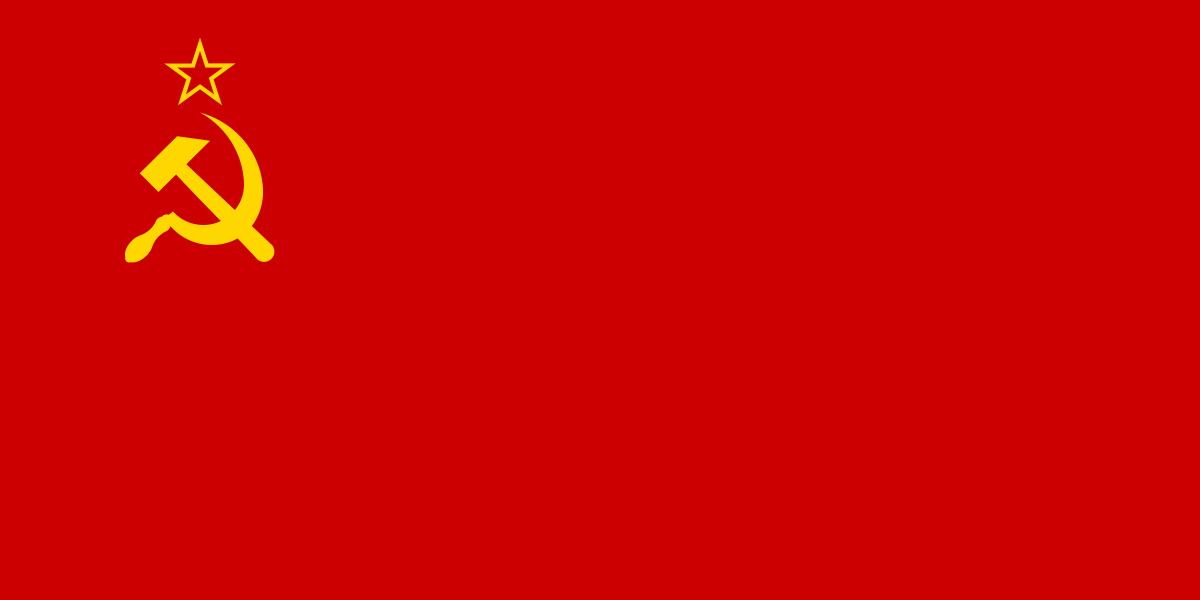
 Shevardnadze in Pyongyang
Shevardnadze came to Pyongyang but Kim Il Sung refused to see him; Kim Yong-nam warned that if Moscow recognised Seoul, the DPRK would seek a nuclear deterrent and leave the NPT. The Soviet Union and South Korea established relations on 30 September.
- 1991.12.26Dissolution of the Soviet Union
The Soviet Union dissolved, ending aid and preferential trade; trade had already moved to hard-currency settlement from 1991.
- 21992.08.24
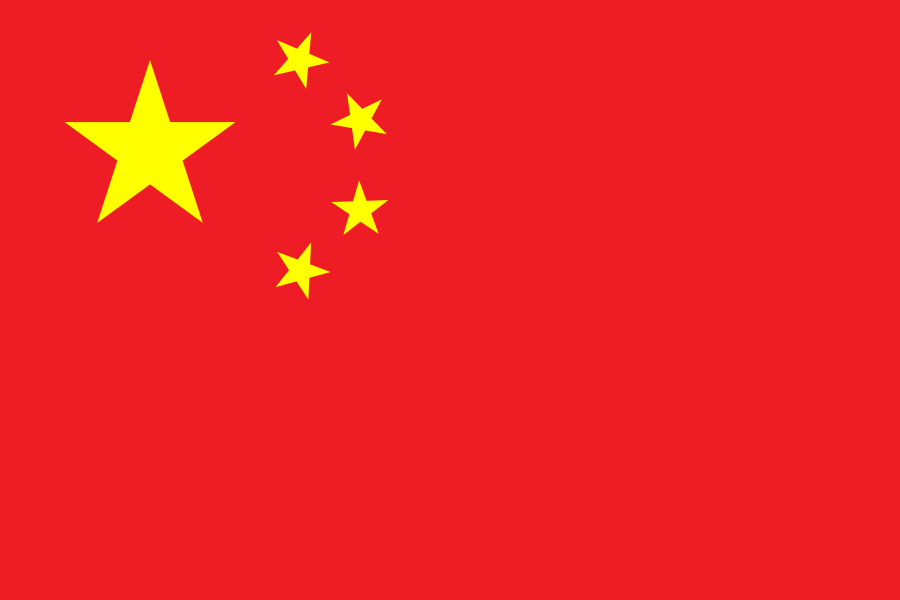 China–South Korea relations
China established relations with South Korea; Pyongyang saw it as betrayal, and China cut aid sharply in 1993.
- 31993.03.12
 NPT withdrawal announced
The DPRK announced its withdrawal from the NPT in response to the IAEA's special inspection demand and the resumption of Team Spirit; a US–DPRK joint statement of 11 June suspended it.
- 41993.12Failure of the Seven-Year Plan admitted
The 21st plenum of the Sixth Central Committee admitted the failure of the Third Seven-Year Plan and set a buffer period.
- 51994.06.15Carter in Pyongyang
Jimmy Carter met Kim Il Sung in Pyongyang and agreed on a nuclear freeze and an inter-Korean summit; US consideration of strikes on Yongbyon halted.
- 61994.07.08Death of Kim Il Sung
Kim Il Sung died of a heart attack; three years of mourning and rule by his "instructions" began.
- 71994.10.21Agreed Framework signed
Gallucci and Kang Sok-ju signed the Agreed Framework in Geneva: a freeze of the graphite reactors in exchange for light-water reactors and heavy oil.
- 1995.01.01Visit to the Tabaksol post
Kim Jong Il visited the Tabaksol guard post, the day official history treats as the start of military-first politics.
- 1995.06.30
 Japanese and South Korean rice aid
Japan confirmed with the DPRK a rice aid package of 300,000 tons (150,000 on deferred payment and 150,000 as a grant through the Red Cross); 200,000 more tons on deferred payment were added in October, making 500,000 tons that year. On 21 June South Korea had agreed to give 150,000 tons free of charge.
- 81995.07.30The great flood
Torrential rain and floods lasting to 18 August destroyed grain, reserves and power plants; in August the DPRK officially asked for international aid.
- 1996.01.01The "Arduous March" slogan
The New Year joint editorial called for the "spirit of the Arduous March."
- 1996.09.18Gangneung submarine incident
A North Korean submarine ran aground off Gangneung and its armed crew landed.
- 91997.02.12Hwang Jang-yop defects
Hwang Jang-yop sought asylum at the South Korean consulate in Beijing; he left for the Philippines on 18 March and reached Seoul on 20 April.
- 101997.10.08Kim Jong Il becomes general secretary
Kim Jong Il was proclaimed General Secretary of the Workers' Party of Korea.
- 111997.12.09Four-party talks open
The first plenary of the four-party talks among the two Koreas, the United States and China opened in Geneva.
- 1998.02.25The Sunshine Policy
Kim Dae-jung took office and launched the Sunshine Policy; tours to Mount Kumgang began in November.
- 1998.08.31Kwangmyongsong-1 launch
A rocket said to carry Kwangmyongsong-1 flew over the Japanese archipelago.
- 121998.09.05The 1998 constitution
The Supreme People's Assembly amended the constitution, abolishing the presidency and widening the National Defence Commission's powers; Kim Jong Il was re-elected its chairman.
Related people 14
Leadership2
Ruled through the army during the three years of mourning and built the NDC-centred system with the 1998 constitution.
President (died July 1994)Kim Il Sung1912–1994Agreed with Carter in June 1994 on a nuclear freeze and an inter-Korean summit, then died on 8 July.
Participants11
Led the nuclear talks with Washington in 1993–1994 and signed the Agreed Framework on 21 October 1994.
US assistant secretary of state; US signatory of the Agreed FrameworkRobert Gallucci1946–Negotiated with the DPRK for the United States and signed the Agreed Framework on 21 October 1994.
President of the United StatesBill Clinton1946–Weighed strikes on Yongbyon in 1994, turned to negotiation after Carter's visit and sent the letter of assurance on the reactors.
Former US president; visited Pyongyang in 1994Jimmy Carter1924–2024Met Kim Il Sung in Pyongyang in June 1994 and turned the war crisis into negotiation.
Foreign minister; president of the SPA Presidium from 1998Kim Yong-nam1928–2025Warned Shevardnadze in 1990 of a possible NPT withdrawal and took over the head-of-state functions under the 1998 constitution.
Director of the KPA General Political Bureau; NDC first vice-chairman from 1998Jo Myong-rok1928–2010Became the military leader ranked second only to Kim Jong Il under military-first politics.
President of South KoreaKim Young-sam1927–2015Was due to meet Kim Il Sung, and later claimed to have opposed a US strike in 1994.
President of South Korea (from 1998)Kim Dae-jung1924–2009Opened civilian exchanges and Mount Kumgang tours with the Sunshine Policy in 1998.
Soviet foreign ministerEduard Shevardnadze1928–2014Came to Pyongyang in September 1990 to save the relationship before recognition of Seoul, but was not received by Kim Il Sung.
Soviet leaderMikhail Gorbachev1931–2022Chose recognition of South Korea in 1990, gravely damaging relations with Pyongyang.
Prime Minister of JapanTomiichi Murayama1924–2025His government decided on 500,000 tons of rice aid in 1995.
Related terms
Sources: reference 1reference 2reference 3reference 4reference 5reference 6reference 7reference 8reference 9reference 10reference 11reference 12reference 13reference 14reference 15reference 16reference 17reference 18reference 19reference 20reference 21reference 22reference 23reference 24reference 25reference 26reference 27reference 28reference 29reference 30reference 31reference 32reference 33reference 34reference 35reference 36reference 37reference 38reference 39