The Great Depression
How did the Wall Street crash of 1929 become a worldwide depression lasting a decade? What part did bank failures and deflation, the gold standard and the tariff wars each play? By which roads did the United States, Britain, Germany and Japan try to get out, and how did the planned economy of the Soviet Union and the Comintern read the crisis? How do economists' explanations of its causes differ?
After the New York stock market crash of October 1929, four banking panics in 1930–33 brought down some 9,000 American banks, the money supply and prices collapsed, and unemployment reached 25 percent. The gold standard carried the slump around the world: the Austrian and German banking crises of 1931 were followed by Britain's exit from gold, and the Smoot–Hawley Tariff, retaliation and currency blocs cut world trade by two thirds. The earlier a country left gold, the sooner it recovered. The United States remade its banking, labour and social insurance through the New Deal; Japan cut unemployment through Takahashi's fiscal policy, and Nazi Germany through the destruction of the unions and rearmament. The Soviet Union set the rapid industrialisation of its planned economy against the slump, and the Comintern read it as the "Third Period" of capitalist collapse.
 What happened on Wall Street in October 1929?
In the 1920s the United States enjoyed a boom, the "Roaring Twenties", as cars, telephones and electricity spread. Much of the profit went into stock speculation. Buyers commonly paid 10 percent of a share's price and borrowed the rest from brokers, with the shares themselves as collateral. While prices rose, borrowing to buy more paid off, so borrowed money poured into the market. The Dow Jones Industrial Average rose sixfold, from 63 in August 1921 to 381 on 3 September 1929. The Federal Reserve, the American central bank, believed speculation was draining credit from productive uses, and in August 1929 the New York Fed raised its discount rate to 6 percent. Because the gold standard tied interest rates across countries, the rise forced foreign central banks to raise theirs too and slowed the world economy. 1 2
On "Black Thursday", 24 October 1929, the market fell 11 percent at the opening bell. Leading bankers bought blocks of shares in public to restore calm, but failed; on "Black Monday", the 28th, the Dow fell almost 13 percent, and on "Black Tuesday" almost 12 percent more. Investors who had bought on credit could not meet their brokers' calls for more collateral and dumped their shares, and their selling pushed prices lower still. The slide went on until the Dow closed at 41.22 on 8 July 1932, 89 percent below its peak. It did not regain its 1929 level until November 1954. 2 1
The crash itself was not the Depression. A recession had begun in August 1929, and the crash deepened it by making people who had lost their savings stop buying big-ticket goods such as cars on credit. Right after the crash the New York Fed bought government securities and widened its lending, supplying banks with the reserves they needed, so the New York banks at the centre of the storm stayed open. The Federal Reserve's own history notes that by the autumn of 1930 recovery seemed imminent, and that problems in another part of the financial system turned what might have been a short, sharp recession into the nation's longest and deepest depression. Those problems were in the banks. 1 3
Why did the banks fall one after another, and why were falling prices a disaster?
A bank keeps only part of its deposits as cash and lends out the rest, so if depositors all come for their money at once even a sound bank runs out of cash. When rumour that a neighbouring bank has failed sends depositors rushing to withdraw, that is a bank run. In 1930 about 8,000 American banks belonged to the Federal Reserve System and nearly 16,000 did not, and the non-members had no way to borrow from the central bank in a crisis. When the Nashville financial conglomerate Caldwell and Company collapsed in November 1930, its correspondent banks closed in a chain, and on 11 December the Bank of United States, the fourth-largest bank in New York City, was shut after a rush of depositors. In November and December 1930 alone 608 banks closed. 4 2
The Federal Reserve's response differed by district. The Atlanta Fed rushed loans to banks in trouble and the downturn in its district eased, while the St. Louis Fed refused to help non-member banks and hundreds failed there. The central bank had been created to act as lender of last resort, the place that lends when no one else will, and it did not do so. Its leaders were split between the "real bills" doctrine, which held that the central bank should supply less money when business was slack, and the view that it should lend freely in a panic. From the autumn of 1930 to the winter of 1933 the money supply fell by nearly 30 percent. 4 3
When the money supply shrinks, prices fall: deflation. Falling prices look good to a consumer but are a disaster for anyone in debt. The debt stays the same in dollars while incomes and prices fall, so its real weight grows. The economist Irving Fisher called this "debt deflation": debtors sell goods and assets cheaply to pay what they owe, which pushes prices down further and makes the debt heavier still. In Fisher's words, the more the debtors paid, the more they owed. As prices and incomes fell by 20 to 50 percent, firms and farmers went under, and the surviving banks cut lending, which drove the spiral on. Some 9,000 American banks failed in the 1930s; by 1933 unemployment had reached 25 percent and about a third of farmers had lost their land. 2 3
The last crisis came from late 1932. After Britain left the gold standard in the autumn of 1931, foreigners expected the United States to follow and turned their dollars into gold, and the Fed raised interest rates to stop the outflow. In January 1932 Congress set up the Reconstruction Finance Corporation (RFC) to lend to banks, but a national panic broke out again early in 1933. State after state declared bank holidays, Nevada first on 31 October 1932; after Michigan's holiday of 14 February, when troubled Detroit banks could not get RFC loans, the gold drain accelerated. On 4 March even the twelve Federal Reserve Banks locked their doors. The collapse stopped when President Roosevelt, inaugurated that day, declared a national bank holiday from 6 March. 5 6
 How did the gold standard spread the Depression around the world? {austria} {germany}
Under the gold standard each country promised to exchange its currency for a fixed quantity of gold. Mostly suspended during the First World War, it was restored in the 1920s; Britain returned in 1925 at the pre-war rate of $4.86 to the pound. A country losing gold had to raise interest rates and shrink its money supply to keep that promise, even while prices fell and unemployment rose, and one country's tightening pulled gold away from the others and forced them to tighten too. Economic historians therefore call the gold standard the primary transmission mechanism of the Depression. 7 2
In the 1920s Germany paid its war reparations with money borrowed in the United States. When American banks stopped new lending after the crash, the chain broke. On 11 May 1931 the Creditanstalt, Austria's largest bank, holding 27 percent of the country's banking assets, announced that it could not publish its 1930 accounts. The panic spread to Germany, where the Reichsbank lost 150 million marks in the first week of June alone. On 20 June President Hoover proposed a one-year moratorium on reparations and war debts, but while France, which depended on reparations, resisted, the Danat-Bank, Germany's second-largest, collapsed, and on 13 July the government declared a bank holiday and imposed exchange controls. The Lausanne Conference of 1932 cut reparations by about 90 percent. 8 2 9 10 11
The crisis moved on to Britain. In July 1931 the May Report urged deep spending cuts, including cuts in unemployment benefit, and gold left London at £2.5 million a day. When the bankers demanded a balanced budget, Ramsay MacDonald's Labour cabinet split over the benefit cut, and on 24 August MacDonald formed a National Government with the Conservatives and Liberals; Labour denounced him as a traitor and expelled him. The emergency budget of 10 September cut public pay and unemployment benefit by 10 percent, but the gold drain went on, and on 21 September Britain suspended the gold standard. That year Montagu Norman, Governor of the Bank of England, remarked that "unless dramatic measures are taken to save it, the capitalist system throughout the civilized world will be wrecked within a year". 12 2 5 13
After Britain the Scandinavian countries and Japan (December 1931) left gold; the United States followed in 1933, while the "gold bloc" led by France held on until 1935–36. Leaving gold let a currency fall, which helped exports, and freed the central bank to cut rates and supply the banks without worrying about its gold. Later research across dozens of countries found that the earlier a country left, the shallower its slump and the sooner its recovery: Britain and Scandinavia, which left in 1931, recovered well before France and Belgium, and China, on a silver standard, almost escaped the Depression. 2 7 14
How did tariff wars and currency blocs break up world trade?
On 17 June 1930 President Hoover signed the Smoot–Hawley Tariff Act, raising duties on more than 20,000 imported goods. A bill that began as a campaign promise to help farmers swelled as it took in every industry's demands; 1,028 economists petitioned Hoover to veto it. Canada and other trading partners answered with retaliatory tariffs. US imports from Europe fell from $1,334 million in 1929 to $390 million in 1932 and exports to Europe from $2,341 million to $784 million, and world trade shrank by some 66 percent between 1929 and 1934. Most of the fall came from the collapse of output, and how much the tariff added is still debated, but in the words of the State Department's historians the act became a symbol of the "beggar-thy-neighbor" policies of the 1930s. 15 16
After the gold standard fell, the world economy split into blocs. At the 1932 Ottawa conference Britain, its Dominions and colonies agreed Imperial Preference on the principle of "home producers first, empire producers second, and foreign producers last", and Britain put a 10 percent tariff on imports from outside the Empire. Countries that traded heavily with Britain pegged their currencies to sterling instead of gold, forming the sterling bloc. The gold bloc, France, Belgium, the Netherlands, Switzerland, Italy, Poland and others, kept gold by raising tariffs and import quotas and enduring deflation. Germany, under exchange control, signed bilateral clearing agreements close to barter with the countries of south-eastern Europe and drew the region into its own economic sphere. 17 12 18 14 19
The last attempt at cooperation was the London Economic Conference of 66 nations from 12 June to 27 July 1933. The Europeans wanted exchange-rate stability, but Roosevelt, who had just left gold and was letting the dollar fall, sent the conference a message on 3 July condemning the stabilisation effort and declaring that a nation's domestic economy mattered more than the exchange rate of its currency. The conference ended without agreement. In September 1936 the United States, Britain and France signed the Tripartite Agreement to refrain from competitive devaluation; France devalued, and the remaining gold-bloc countries abandoned gold. The currency war that began in 1931 paused there, but an international order to govern trade and money together was built only after the Second World War. 20 21 14
 How did Germany move from deflation to a rearmament boom?
Heinrich Brüning of the Centre Party, Chancellor from March 1930, made escape from reparations his first aim and met the Depression with austerity. When the Reichstag rejected his measures he imposed them by President Hindenburg's emergency decrees. Public salaries were cut by 25 percent and unemployment and welfare benefits sharply reduced; a government that had lived through the hyperinflation of 1923 feared that spending would bring it back. Unemployment rose from 1.4 million in September 1929 to 5 million at the end of 1930 and 6.12 million in February 1932, and Brüning became the "Hunger Chancellor". In the September 1930 election the Nazi Party, until then a fringe party, won 18.3 percent, and the Communists gained too. 22 23 2
Hitler became Chancellor in January 1933. At first the Nazi government carried on public works prepared by the Schleicher government in 1932, and in March it made Hjalmar Schacht President of the Reichsbank. The Reinhardt Program of June combined tax cuts with investment in waterways, railways and roads, and construction employment rose from 666,000 in 1933 to over 2 million in 1936. What set the Nazi government apart, though, was rearmament. In June 1933 Schacht approved a plan to spend 35 billion Reichsmarks on the military over eight years, when Germany's whole national income in 1933 was 43 billion. The money came from bills drawn on a shell company, "Mefo": firms passed them to one another like money and could discount them through the banks at the Reichsbank, and because they did not appear in the budget they hid a rearmament that broke the Treaty of Versailles. 19 24 25
Unemployment fell faster than in any other country of the Depression and had practically vanished by 1938. Underneath lay the defeat of the working class. In 1933 the Nazis dissolved every trade union, replaced them with the party-controlled German Labour Front and banned strikes. Real weekly earnings rose 19 percent from 1933 to 1939, but mainly because hours grew longer; hourly wages stayed near their lowest. Banks and steel giants nationalised during the slump were privatised again. Schacht's "New Plan" of September 1934 rationed imports through foreign-exchange permits and widened bilateral clearing trade. By 1936 military spending reached 10 percent of GNP and exceeded civilian investment, and when foreign exchange and food imports ran short Hitler passed over Schacht, who wanted less arms spending, and gave Göring a Four-Year Plan to make the economy "fit for war within four years". The historian Ian Kershaw judged that this course could be only partly achieved without territorial expansion, that is, without war. 19 25 2
 Why did Japan get out of the Depression first, and at what price?
Japan met the world crisis having already been through the financial panic of 1927, in which 37 banks failed and the banks of the five great zaibatsu took their place. The last major country not yet back on gold, it now adopted a strict austerity budget under Finance Minister Inoue Junnosuke of the Hamaguchi cabinet and on 11 January 1930 lifted the gold embargo at the old pre-war parity, planning to push prices down, make Japanese goods competitive and rationalise industry. In December 1929 the Osaka Mainichi welcomed the deflation with the headline "Prices falling and falling: salaried men smile at the prospect of a good New Year", but the Wall Street crash had already happened. In March 1930 commodity markets collapsed, the prices of raw silk, steel and farm produce plunged, and 823 companies went bankrupt that year alone. 26 27 28
The heaviest blow fell on the countryside. Raw-silk exports to America collapsed, and the deflation policy, the good harvest of 1930 and rice flowing in from Korea and Taiwan broke the price of rice. In September 1931 the Kwantung Army launched the Manchurian Incident, and Manchukuo was set up the next year. On 13 December 1931 Takahashi Korekiyo became Finance Minister in the Inukai cabinet and on his first day re-imposed the gold embargo, taking Japan off gold. By November 1932 the yen had fallen 60 percent against the dollar, and from 25 November 1932 the Bank of Japan underwrote government long-term bonds directly. It took 82 percent of the bonds issued in 1932–35 and sold about 90 percent of them back to the market so that money did not run too loose. The government spent the proceeds on rural relief public works, flood control, roads and harbours, and on the war in Manchuria. 27 29 30
Japan's industrial output and wholesale prices were already rising in 1932, a recovery faster than that of the countries that kept gold or imposed exchange controls. Real growth averaged 7.2 percent a year in 1932–35. The cheap yen let Japanese textiles begin to displace British textiles in export markets. What drove the recovery is still debated: some studies put bond-financed spending at the centre while others stress other policy channels, and opinion is split on whether the demand came from military spending or from rural relief works, so that no assessment treats either one alone as the source of demand. From 1934 Takahashi, worried about overheating, tried to hold down military spending and clashed with the army; rebel officers killed him on 26 February 1936. After that the Bank of Japan's underwriting became a means of financing armaments, and inflation lasted until the end of the war. In 1982 the Bank of Japan called its bond underwriting of these years "the bank's biggest mistake in its 100-year history". 29 2 30
What did the New Deal change, and what did it leave unchanged?
Inaugurated on 4 March 1933, Franklin D. Roosevelt told the nation that "the only thing we have to fear is fear itself". Two days later he declared a national bank holiday, and on 9 March Congress passed the Emergency Banking Act so that only sound banks reopened. On 5 April Executive Order 6102 banned private holding of gold, and on 20 April he formally suspended the gold standard. The Gold Reserve Act of 30 January 1934 raised the price of gold from $20.67 to $35 an ounce, cutting the dollar's gold value to 59 percent. The Banking Act of 1933 created the Federal Deposit Insurance Corporation (FDIC) to guarantee deposits and separated commercial from investment banking. Once depositors believed their money was safe, the runs stopped. 31 6 32 33 34
In the "first hundred days" Congress passed everything Roosevelt asked. The National Industrial Recovery Act set price and wage floors through industry "codes of fair competition" to halt deflation, and the Agricultural Adjustment Act raised farm prices by paying farmers to cut production. The Civilian Conservation Corps put young men to work on public land, and the Tennessee Valley Authority built dams and power plants. The Federal Reserve index of industrial production jumped from 54.3 in March 1933 to 85.5 in July, a rebound of 57 percent in four months. After the Supreme Court struck down the NIRA in 1935, the "Second New Deal" employed 8.5 million people through the Works Progress Administration (WPA) building roads, schools and hospitals, guaranteed workers the right to organise and bargain collectively in the Wagner Act, and created pensions and unemployment insurance in the Social Security Act of 14 August 1935. Union membership soared, the more radical Congress of Industrial Organizations (CIO) arose, and labour became a major component of the New Deal coalition. 34
Yet the New Deal did not end unemployment. In 1937 the Federal Reserve doubled banks' reserve requirements, the Treasury sterilised incoming gold instead of letting it add to the money supply, and the new Social Security payroll tax was collected for the first time, and the economy slumped again. From May 1937 to June 1938 real GDP fell 10 percent and industrial production 32 percent, and unemployment returned to 20 percent. Reversing these measures and spending more restarted the recovery, but unemployment was still about 15 percent in 1940. Keynes wrote that "it is, it seems, politically impossible for a capitalistic democracy to organize expenditure on the scale necessary to make the grand experiments which would prove my case, except in war conditions". The benefits were also uneven: large numbers of African Americans worked in segregated CCC units, and the AAA helped landowners, mostly white, while pushing out Black tenant farmers and sharecroppers. 35 2 34
Judgements of what the New Deal was also differ. Sympathetic accounts hold that Roosevelt gave hope to tens of millions, built up labour unions and saved capitalism in his first term, when he could easily have nationalised the banks and the railways, and that the New Deal preserved American democracy in an age when many countries fell to dictatorship. Conservatives charge that it swelled the federal government and debt and prolonged the Depression, while New Left historians fault it for rescuing capitalism when the chance to nationalise banking and basic industry was at hand. Historians generally agree that apart from building up labour unions the New Deal did not substantially alter the distribution of power within American capitalism. 34
What did Keynes and Kalecki read in the Depression?
When the Depression began, most economists believed in Say's law, that supply creates its own demand: left alone, wages and prices would fall until full employment returned. Leave-it-alone liquidationism, which held that the slump should be allowed to clear out unsound firms and investments, was a common position: US Treasury Secretary Andrew Mellon was a strong liquidationist, and Austrian School economists held the view universally. Friedman later recalled Hayek and Lionel Robbins in London saying "you just have to let the bottom drop out of the world. You've just got to let it cure itself." When Chancellor Churchill returned Britain to gold at the old parity in 1925, Keynes attacked its deflationary effect in The Economic Consequences of Mr. Churchill, and in February 1936 he published The General Theory of Employment, Interest and Money. 2 36 37
Keynes's central claim was that the level of employment is set not by the wage but by total spending in the economy, consumption plus investment. He called the aggregate demand that firms expect to meet "effective demand". Because people do not spend all of a rise in income and firms' investment depends on unstable expectations of future profit, the economy can settle into an equilibrium with mass unemployment. From this followed the prescription that government should spend to fill the gap. At the end of the General Theory he wrote that "a somewhat comprehensive socialisation of investment will prove the only means of securing an approximation to full employment", while adding that it was not the ownership of the instruments of production that the state needed to assume. The theory and its later course are treated in the entry on Keynesianism. 37 38 39 40
Others reached the same ideas by other roads, and earlier. The Polish Marxist economist Michał Kalecki laid the foundations of a theory of effective demand in his 1933 Polish essay "An Attempt at the Theory of the Business Cycle", and the Stockholm school in Sweden developed similar concepts independently in the 1930s. Takahashi Korekiyo's policies are cited as carrying out the same prescription a few years before the General Theory. Kalecki added class analysis: he predicted that Keynesian policy would not endure, because full employment would make the working class more assertive and provoke the capitalists' resistance. 41 40 30
 How did the Soviet Union and the Comintern see the Depression?
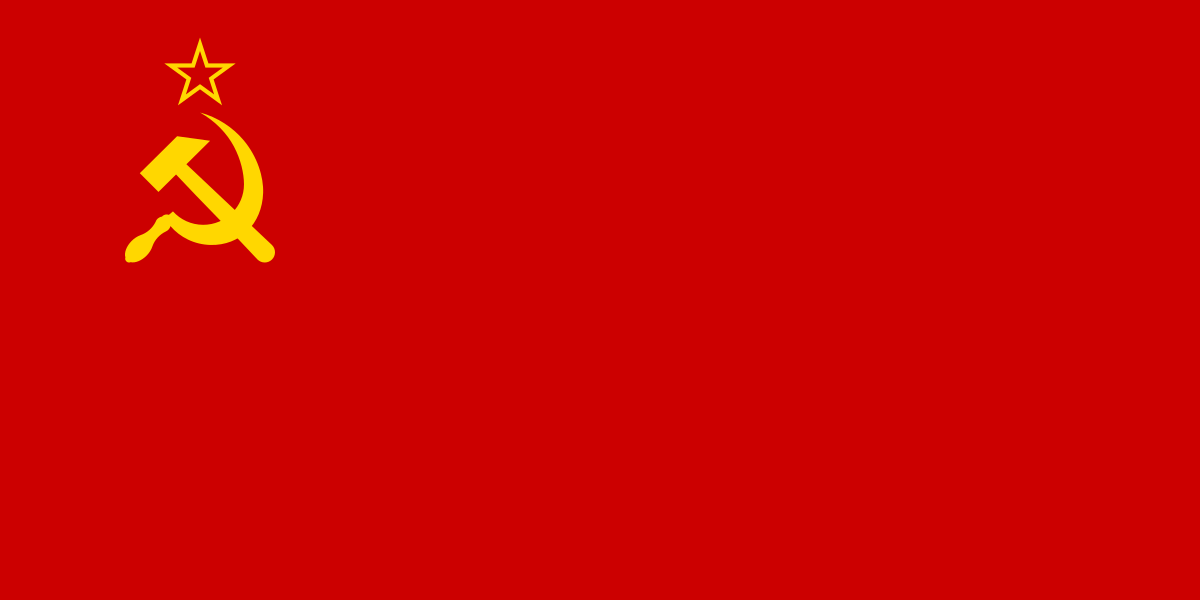
At its Sixth World Congress in 1928 the Comintern declared that the "partial, transient" stabilisation of capitalism of the mid-1920s was ending and that a "Third Period" of economic collapse and working-class radicalisation had begun. When Wall Street fell a year later the forecast seemed borne out. The Hungarian-born economist Evgeny Varga, who wrote the economic reports for the Comintern's congresses, and his Institute of World Economy and World Politics tracked output, investment and employment closely from the official statistics of many countries. In his report to the Sixteenth Party Congress in June 1930 Stalin defined the slump as "a crisis of over-production": more goods had been produced than the market could absorb, and the capitalists kept surplus grain and textiles in warehouses or destroyed them to prop up prices while laying off workers. 42 43 44 45
Stalin located the root of the crisis in "the contradiction between the social character of production and the capitalist form of appropriation of the results of production": capitalists expanded capacity and intensified exploitation to win the competition, while the purchasing power of the masses, the "effective demand" for goods, was held down. He saw it as the first post-war world crisis, an industrial crisis coinciding with an agricultural one, and concluded that "to abolish crises it is necessary to abolish capitalism". At the Seventeenth Congress in January 1934 he presented a table of industrial output with 1913 as 100, showing the USSR at 391.9 in 1933, the United States at 110.2, Britain at 85.2 and Germany at 75.4, and declared that capitalism had passed the lowest point of the crisis into "a depression of a special kind" that would not lead to a new boom, and that unemployment had disappeared in the Soviet Union. 45 46
As heavy investment drove Soviet heavy industry forward while the capitalist world was in crisis, many Western intellectuals came to view the Soviet system favourably. From 1928 to 1940 the number of Soviet workers in industry, construction and transport grew from 4.6 million to 12.6 million, and in the early Depression years 10,000 to 15,000 people emigrated to the Soviet Union from Finland alone. But the Soviet economy was not untouched by the slump. The exports of grain and raw materials that paid for industrialisation lost value as world prices collapsed: in 1934 the USSR exported more than in 1929 but earned only half as much. In the same years forced collectivisation and the famine of 1932–33 took between 3.3 and 7 million lives. 2 47
The Third Period also had its political tactics. Communist parties branded the social democrats "social fascists", the moderate wing of fascism, and refused cooperation with their leaders; they did succeed in organising the unemployed, and in the United States and elsewhere communist membership and influence grew. But in Germany the Nazis came to power while Communists and Social Democrats stood divided, and crushed the German communist movement; Trotskyists charged that the line had helped Hitler into power. From 1934 the Comintern changed course and adopted the Popular Front at its Seventh Congress in 1935, a turn covered in the event on the Comintern's Popular Front turn. 42
Which explanations of the Depression stand against each other?
In 1963, in the "Great Contraction" chapter of A Monetary History of the United States, Milton Friedman and Anna Schwartz argued that the banking collapse, which wiped out a third of all banks and cut the money supply by 35 percent, turned an ordinary recession into the Great Depression: had the Federal Reserve cut rates and bought bonds to supply the banks, the slump would have been far shorter. This monetarist reading became widely accepted, and in 2002 Fed Governor Ben Bernanke told the two authors: "Regarding the Great Depression, you're right. We did it. We're very sorry." Bernanke himself, building on Fisher's debt deflation, stressed that the failing banks destroyed the very channels that supplied credit. 48 2
The Keynesian reading puts the cause in a sudden fall in investment and consumer spending as confidence collapsed; economists are almost evenly split over whether monetary forces or the fall in spending were primary. Other readings take an international view. In The World in Depression (1973) Charles Kindleberger argued that the slump was long and deep because Britain could no longer underwrite the world economy and the United States hesitated to take its place: "for the world economy to be stabilized, there has to be a stabilizer, one stabilizer". In Golden Fetters (1992) Barry Eichengreen held that the gold standard carried deflation from country to country and kept each from countering its banking panics. On the other side, Hayek and the Austrian School see the root cause in the excessive credit expansion of the 1920s, which produced an unsustainable boom. 2 49 50 7
Marxists see the Depression as the outcome of the instability inherent in the capitalist mode of production, but they too divide. One line, like the official account of Stalin and the Comintern, stresses the gap between productive capacity and mass purchasing power, overproduction. Another takes as the root cause the law of the tendency of the rate of profit to fall, revived in 1929 by Henryk Grossman in The Law of Accumulation and Breakdown of the Capitalist System: as the organic composition of capital rises the rate of profit falls, and profitability recovers only after a crisis destroys capital values. In the same year Kuruma Samezō in Japan stressed crisis theory and called imperialist world war "crisis in its highest form". Others blamed the inequality of the 1920s for holding back purchasing power and causing over-investment, a view close to that of Marriner Eccles, later Chairman of the Federal Reserve. 2 51 45 7
How did the Depression end, and what did it leave behind?
The common view among economic historians is that the Depression ended with the Second World War. In Europe rearmament lifted economies in 1937–39: Britain began mass rearmament in 1936, unemployment there fell to 1.5 million by 1937, and once war broke out in 1939 the mobilisation of manpower ended it. In the United States about 10 million people moved from the civilian labour force into the armed forces from late 1941, and the government's share of American industrial capital investment leapt from 5 percent in 1940 to 67 percent in 1943. In the capitalist countries that the Depression had left with mass unemployment, what finally removed it was preparation for war and war itself. 2 12
Politically the Depression pushed many countries to the right: many democracies in Europe and Latin America gave way to dictatorship or authoritarian rule, most famously Germany in 1933. The State Department's historians note that it drove the United States deeper into isolationism, so that Japan's seizure of Manchuria, Italy's invasion of Ethiopia and German expansion drew little American response beyond statements. Colonies and peripheral countries that lived on raw-material exports were hit hardest by the price collapse, the League of Nations named Chile, which drew 80 percent of government revenue from copper and nitrate exports, the hardest-hit country of all. Mexico, by contrast, grew after 1931 through import substitution, as domestic industry filled the gap left when imports halved. 2 52 53
The experience of the Depression was written into post-war institutions. From the Reciprocal Trade Agreements Act of 1934 the United States turned to lowering tariffs by negotiation, which after the Second World War led to the General Agreement on Tariffs and Trade (GATT). The gold standard, largely abandoned during the Depression, was reinstated in a limited form in the post-war Bretton Woods system, which lasted until the United States ended the dollar's convertibility into gold in 1971. Deposit insurance, the separation of banking, and the Keynesian idea that governments should manage demand became the basis of Western economic policy for decades. 15 7 40 54
Consequences
The Depression ended with the rearmament and mobilisation of the Second World War. It helped bring the Nazis to power in Germany and many other democracies in Europe and Latin America down to dictatorship. In economics Keynes's General Theory opened macroeconomics, and deposit insurance, bank regulation, social insurance and government demand management became the basis of post-war Western economic policy. The gold standard, largely abandoned, was revived in a limited form in the post-war Bretton Woods system, and the negotiated lowering of tariffs carried over into the post-war trading system.
Timeline & Map
- 11929.10.24Black Thursday
A record 12.9 million shares changed hands on the New York Stock Exchange as prices collapsed. Leading bankers bought stock above market prices, bringing a brief recovery.
- 21929.10.29Black Tuesday
Panic selling of some 16 million shares sent the Dow down 11.73 percent; with the previous day's 12.82 percent, it had lost 23.05 percent in two days.
- 31930.01.11Japan lifts its gold embargo
The Hamaguchi cabinet lifted the gold embargo at the old pre-war parity, returning Japan to the gold standard.
- 41930.06.17Smoot–Hawley Tariff signed
President Hoover signed the Smoot–Hawley Tariff, raising duties on some 20,000 goods, after 1,028 economists had urged a veto.
- 51930.06.27Stalin's report to the Sixteenth Congress
In the political report to the Sixteenth Congress of the Soviet Communist Party, Stalin defined the world slump as a crisis of overproduction.
- 61930.12.11Bank of United States closes
The Bank of United States, the fourth-largest bank in New York City, ceased operations after merger talks broke down and depositors ran on it.
- 71931.05.11
 Creditanstalt crisis
Austria's largest bank, the Creditanstalt, announced that it could not publish its 1930 accounts, and runs spread across Central Europe.
- 81931.06.20
 Hoover proposes a moratorium
President Hoover proposed a one-year moratorium on reparations and war-debt payments.
- 91931.07.13German banking crisis
The Danat-Bank suspended payments, and the German government declared a bank holiday and imposed exchange controls.
- 101931.08.24Britain forms a National Government
With the Labour cabinet split over cuts to unemployment benefit, Ramsay MacDonald resigned and then formed a National Government with the Conservatives and Liberals.
- 111931.09.21Britain leaves gold
Unable to stem the gold drain, Britain suspended the convertibility of sterling into gold.
- 121931.12.13Japan re-imposes the gold embargo
Takahashi Korekiyo, Finance Minister in the new Inukai cabinet, re-imposed the gold embargo on his first day, taking Japan off gold.
- 131932.07.08The Dow hits bottom
The Dow closed at 41.22, its low point, 89 percent below the September 1929 peak.
- 141933.01.30Hitler appointed Chancellor
President Hindenburg appointed Adolf Hitler Chancellor of Germany.
- 151933.03.06US national bank holiday
President Roosevelt, inaugurated on 4 March, proclaimed a national bank holiday closing every bank in the country.
- 161933.03.09Emergency Banking Act
Congress passed the Emergency Banking Act, under which only banks found sound would reopen.
- 171933.04.20US suspends the gold standard
President Roosevelt issued a proclamation formally suspending the gold standard.
- 181933.07.03Roosevelt's "bombshell" message
Roosevelt sent the London Economic Conference a message rejecting currency stabilisation, and the conference ended without result.
- 191934.01.26Stalin's report to the Seventeenth Congress
Stalin reported that the capitalist world had entered "a depression of a special kind" and that unemployment had disappeared in the Soviet Union.
- 201934.01.30Gold Reserve Act
The Gold Reserve Act became law, and the next day the price of gold was fixed at $35 an ounce, up from $20.67.
- 211935.05.27NIRA struck down
In the Schechter case the Supreme Court unanimously struck down the code system of the National Industrial Recovery Act.
- 221935.08.14Social Security Act signed
President Roosevelt signed the Social Security Act, creating old-age pensions and unemployment insurance.
- 231936.02The General Theory published
Keynes published The General Theory of Employment, Interest and Money.
- 241936.02.26Takahashi Korekiyo killed
Rebel officers of the February 26 Incident killed Finance Minister Takahashi Korekiyo, who had been trying to restrain military spending.
- 1936.09Tripartite Agreement
The United States, Britain and France concluded the Tripartite Agreement, undertaking to refrain from competitive depreciation and stabilise their currencies.
- 1937.05–
1938.06 Recession of 1937–38 beginsThe US economy turned down again; by June 1938 real GDP had fallen 10 percent and unemployment had risen to 20 percent.
Related people 14
Leadership5
President through the crash and the banking panics; signed the Smoot–Hawley Tariff, proposed the 1931 moratorium on reparations and war debts and set up the Reconstruction Finance Corporation.
US PresidentFranklin D. Roosevelt1882–1945Took office in March 1933 and led the bank holiday, the suspension of the gold standard and the New Deal.
UK Prime MinisterRamsay MacDonald1866–1937Formed the National Government when the Labour cabinet split over benefit cuts in August 1931; under it Britain left gold.
German ChancellorHeinrich Brüning1885–1970As Chancellor in 1930–32 cut wages and spending by presidential emergency decree; unemployment passed six million.
German ChancellorAdolf Hitler1889–1945Became Chancellor in January 1933, dissolved the unions and drove a recovery led by public works and rearmament.
Implementers & commanders4
Roosevelt's close friend, who ran the Works Progress Administration and put millions to work on public projects.
Governor of the Bank of EnglandMontagu Norman1871–1950Governor of the Bank of England in 1920–44; championed the 1925 return to gold at the old parity and faced the gold drain of 1931.
Reichsbank President and Economics MinisterHjalmar Schacht1877–1970Financed rearmament covertly through Mefo bills and in 1934 built bilateral clearing trade and import controls into the New Plan.
Finance MinisterKorekiyo Takahashi1854–1936Re-imposed the gold embargo in December 1931 and expanded spending through Bank of Japan bond underwriting, leading Japan's early recovery; killed in the February 26 Incident of 1936 after trying to curb military spending.
Participants4
In his congress reports defined the slump as a crisis of overproduction and set Soviet industrial growth and the end of unemployment against the capitalist world.
Director of the Institute of World Economy and World PoliticsEvgeny Varga1879–1964Wrote the economic reports for the Comintern congresses, tracking the slump through each country's statistics.
EconomistJohn Maynard Keynes1883–1946Attacked the 1925 return to gold and argued in the General Theory of 1936 that deficient effective demand causes mass unemployment.
EconomistMichał Kalecki1899–1970Laid the foundations of a theory of effective demand in a Polish essay of 1933, independently of Keynes.
Related terms
Sources: reference 1reference 2reference 3reference 4reference 5reference 6reference 7reference 8reference 9reference 10reference 11reference 12reference 13reference 14reference 15reference 16reference 17reference 18reference 19reference 20reference 21reference 22reference 23reference 24reference 25reference 26reference 27reference 28reference 29reference 30reference 31reference 32reference 33reference 34reference 35reference 36reference 37reference 38reference 39reference 40reference 41reference 42reference 43reference 44reference 45reference 46reference 47reference 48reference 49reference 50reference 51reference 52reference 53reference 54