First World War
How did a Balkan crisis become a world war?
A global war in 1914–1918. The Allies, centred on France, Russia and the British Empire and joined by Japan, Italy, the United States and others, fought Germany, Austria-Hungary, the Ottoman Empire and Bulgaria. Mobilization extended to dominions and colonies; revolution and imperial collapse transformed the settlement.
Background: alliances and the arms race
The foundation of the German Empire in 1871 unsettled Europe’s long-standing balance of power. The 1879 alliance of Germany and Austria-Hungary became the Triple Alliance when Italy joined in 1882; on the other side came the Franco-Russian Alliance of 1894, the Anglo-French Entente Cordiale of 1904 and the Anglo-Russian Convention of 1907. These were not formal alliances obliging Britain to fight for France or Russia, but by settling colonial disputes in Asia and Africa they made British support for either in a future war a real possibility. 1 2
The arms race began at sea. Admiral Tirpitz’s fleet-building programme set out to rival the Royal Navy, but the launch of HMS Dreadnought in 1906 made every existing battleship obsolete, and in 1911 Germany shifted spending from the navy to the army. When Germany enlarged its standing army by 170,000 men in 1913, France extended compulsory service from two to three years, and the Balkan states, Italy, the Ottoman Empire and Austria-Hungary followed. From 1908 to 1913 the military spending of the six major European powers rose by more than 50% in real terms. 1
The Balkans were the “powder keg of Europe”. Austria-Hungary’s annexation of Bosnia and Herzegovina in 1908–1909 ended any chance of cooperation with Russia in the region, and the two Balkan Wars of 1912–1913 drove out the Ottomans only to leave resentment among the victors themselves. Vienna saw Serbian expansion as a threat to the empire’s existence, while Pan-Slav Russia regarded itself as Serbia’s protector. 1
Interpretations of the causes remain divided. In Imperialism, the Highest Stage of Capitalism, written in 1916, Lenin called the conflict “an annexationist, predatory, plunderous war” in which capitalist powers at the monopoly stage fought to redivide a world they had already partitioned. In the 1960s the German historian Fritz Fischer argued that Germany’s conservative leaders had deliberately sought war, setting off a worldwide debate. Few historians accepted his thesis in full, but by the 1980s it was generally agreed that Germany’s share of responsibility was larger than that of the other powers. Christopher Clark’s The Sleepwalkers (2012), by contrast, argued that no single country was to blame and that leaders stumbled into war through a chain of decisions whose risks they failed to see. 3 2 4
The July Crisis: from Sarajevo to Belgium
On 28 June 1914 in Sarajevo Gavrilo Princip, a young Bosnian Serb, shot dead Archduke Franz Ferdinand, heir to the Austro-Hungarian throne, and his wife. The assassins belonged to the Young Bosnia movement and had been armed by the Black Hand, a secret organisation within Serbian intelligence. Vienna resolved to punish Serbia militarily, and in early July Germany promised its unconditional support — the so-called “blank cheque” — while urging a quick strike before Russia could intervene. 1 5
On 23 July Austria-Hungary sent Serbia an ultimatum of ten demands, framed to be unacceptable. Serbia ordered general mobilisation on 25 July but accepted every term except those allowing Austrian officials to take part in investigations and trials inside Serbia. Vienna treated this as rejection, broke off relations and on 28 July declared war and began shelling Belgrade. Russia ordered general mobilisation in Serbia’s support on 30 July. 1 5
The German General Staff had long planned for a two-front war. The Schlieffen Plan envisaged using 80% of the army to defeat France first and then turning on Russia, which made speed paramount. Germany sent Russia a 12-hour ultimatum on 31 July, and on 1 August the two countries were at war. Germany occupied Luxembourg on 2 August, declared war on France on 3 August and demanded free passage through Belgium; refused, it invaded early on 4 August. Britain, a guarantor of Belgian neutrality under the 1839 Treaty of London, sent an ultimatum demanding withdrawal, and when it expired at midnight Britain too was at war. 1 6
 The belligerents: the Entente and its associates
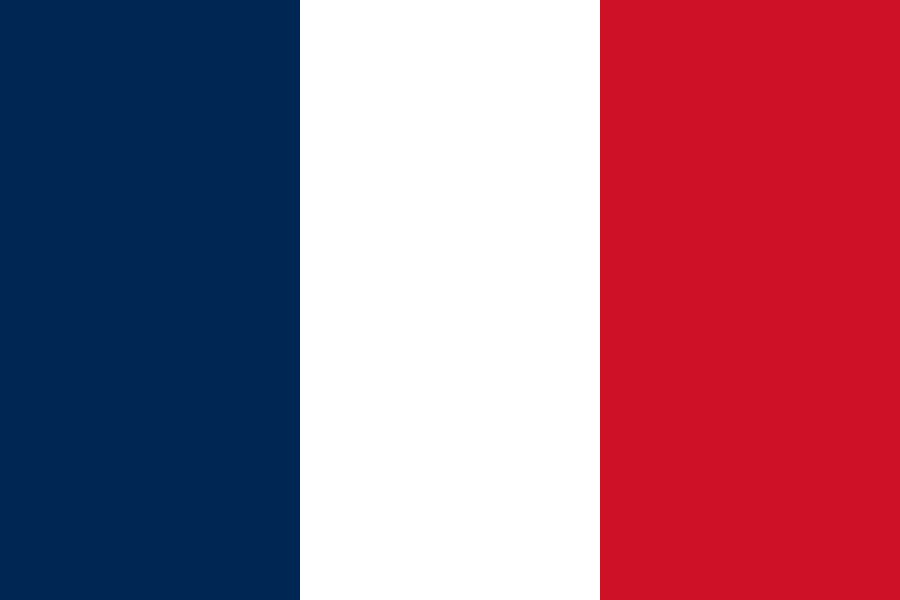
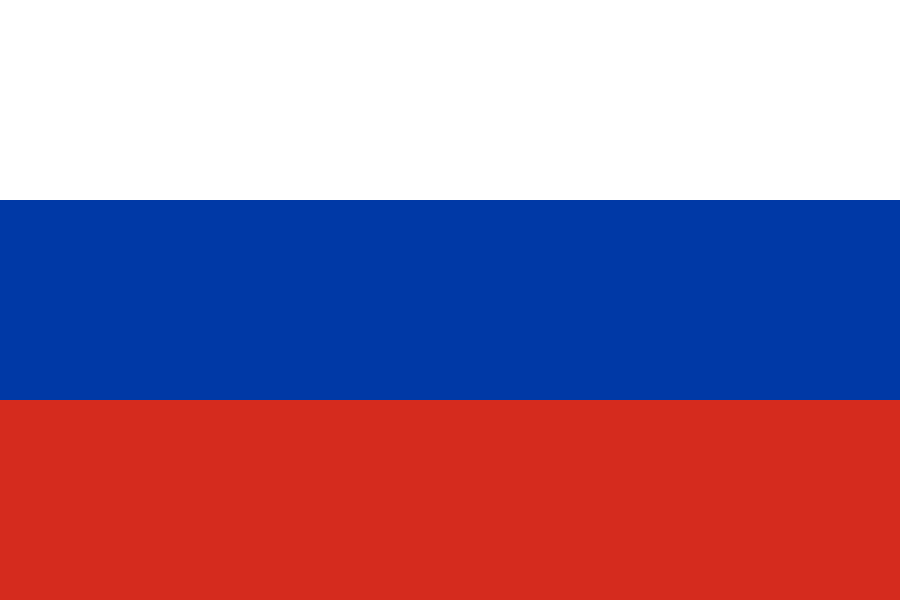
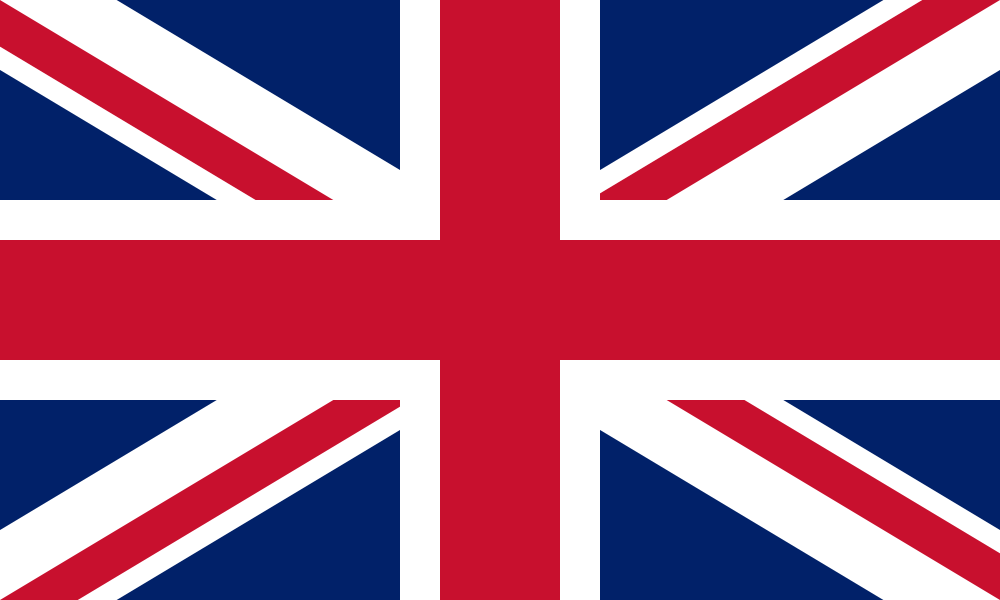
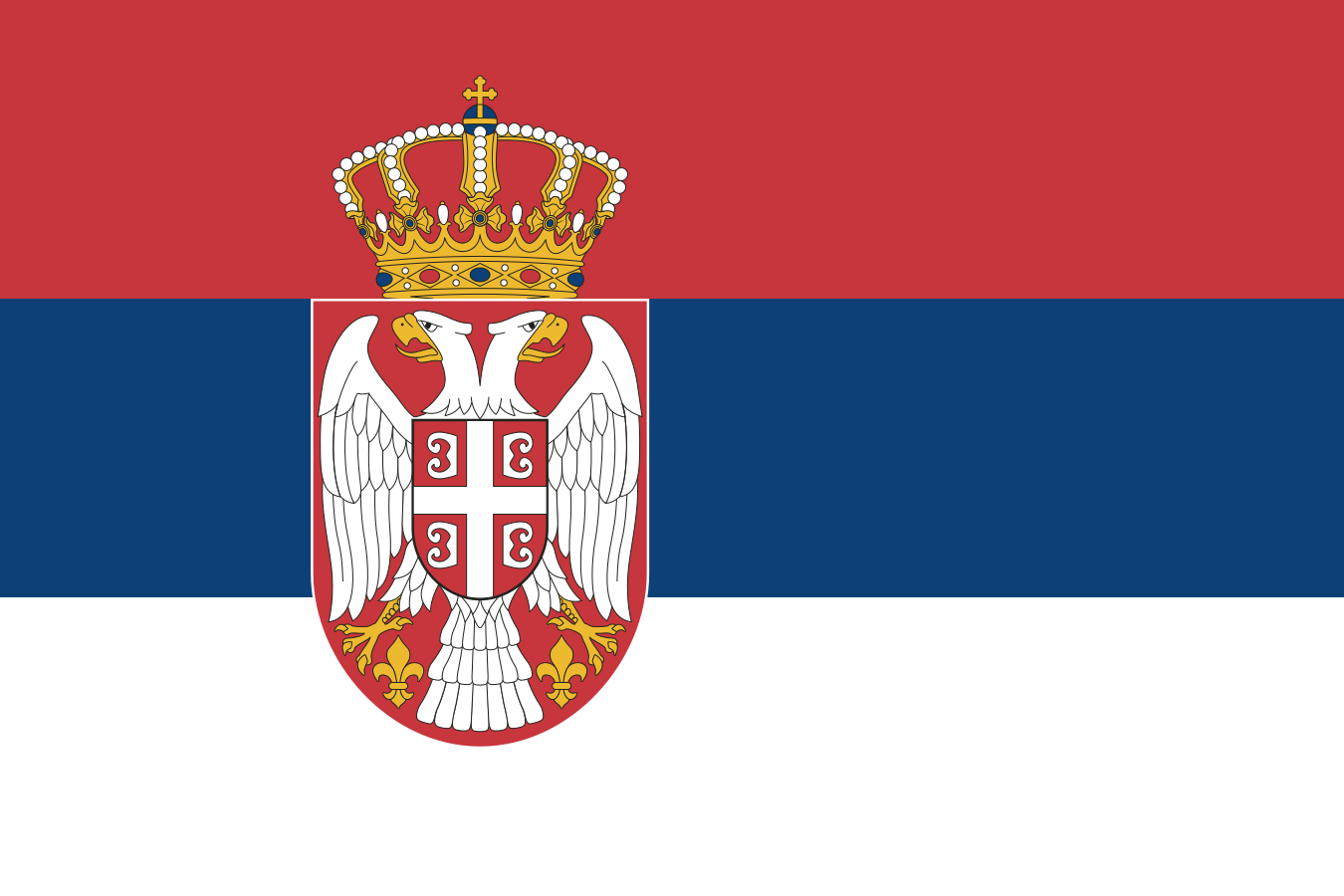
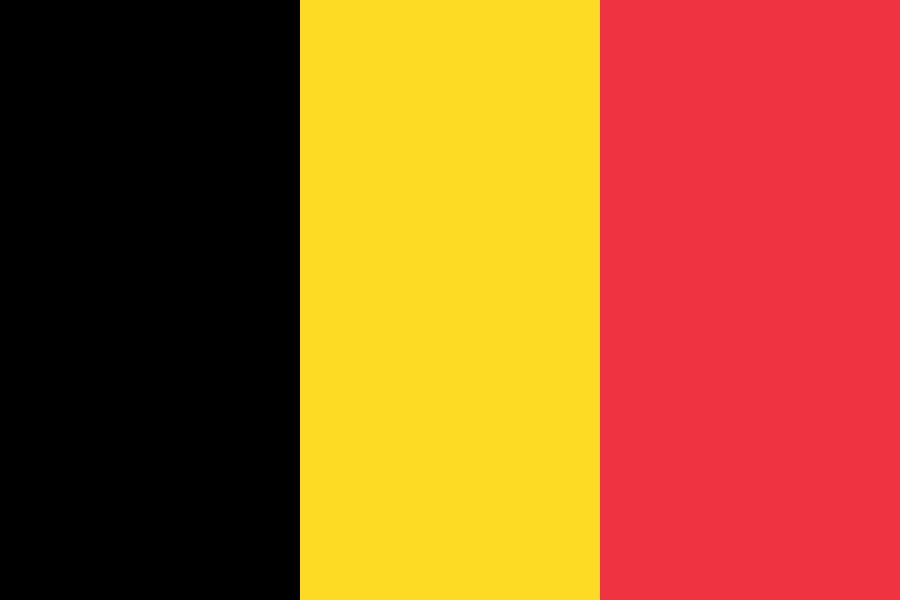
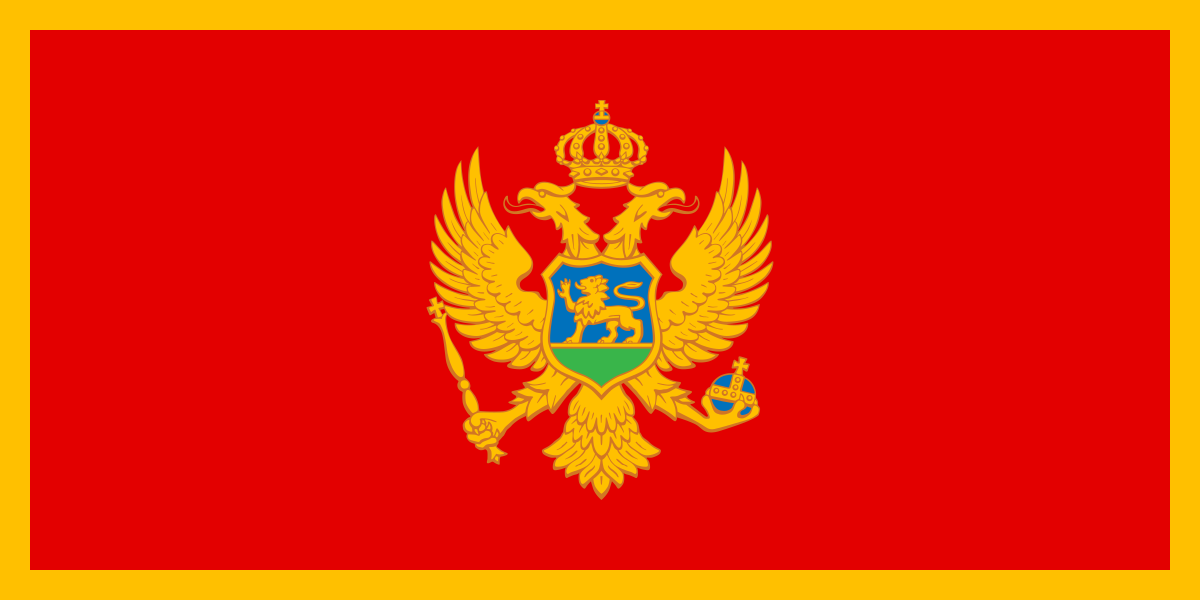
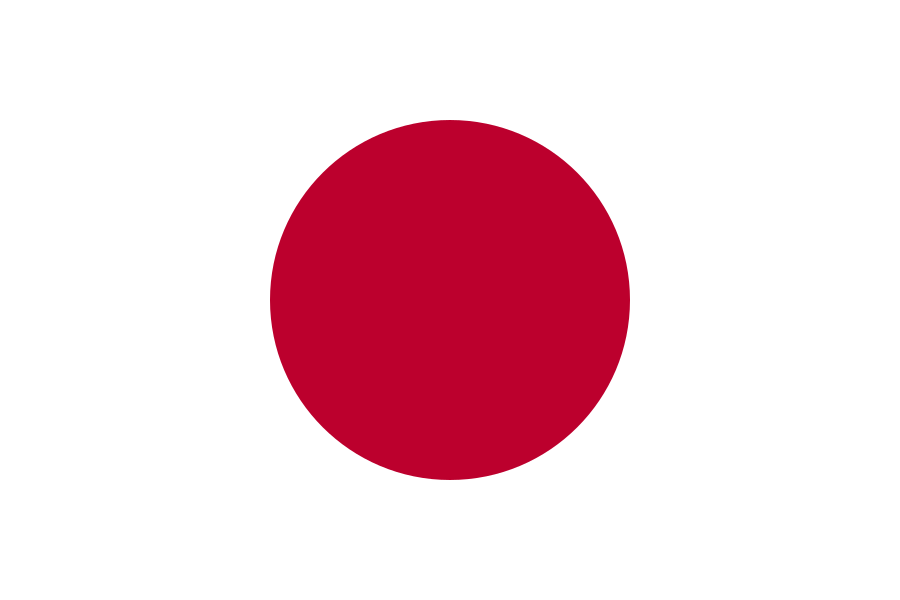
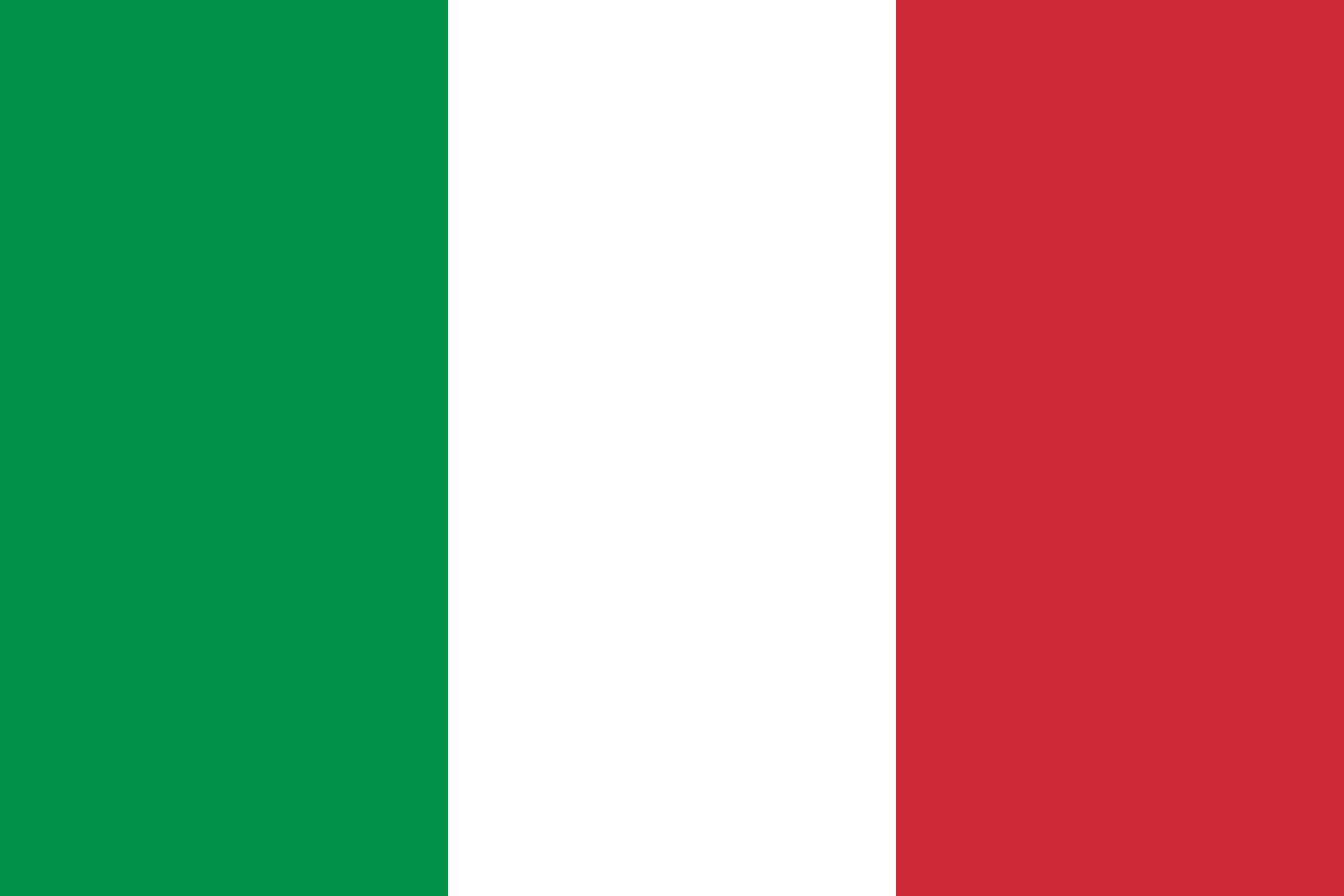
The core of the Entente was France, the Russian Empire and the British Empire, joined in the summer of 1914 by Serbia, Montenegro and Belgium. Japan declared war on Germany on 23 August, seized Qingdao and Germany’s Pacific colonies, and in 1915 presented China with the Twenty-One Demands to extend its influence in East Asia. Italy, a member of the Triple Alliance, stayed neutral in 1914; promised Austrian territory in the Treaty of London of April 1915, it declared war on Austria-Hungary on 23 May. War with Germany came fifteen months later. 6 1 7
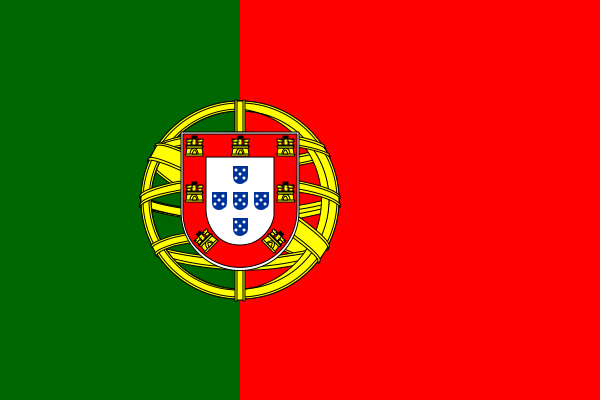
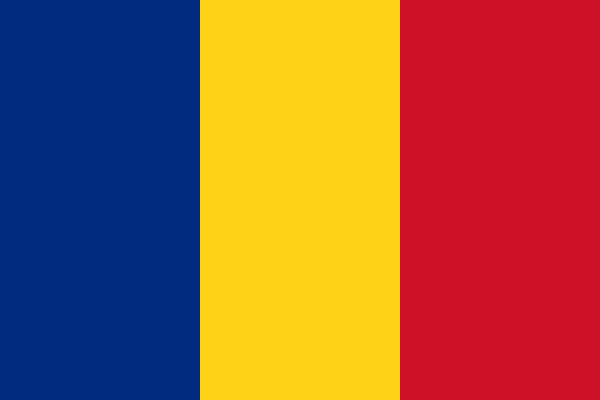
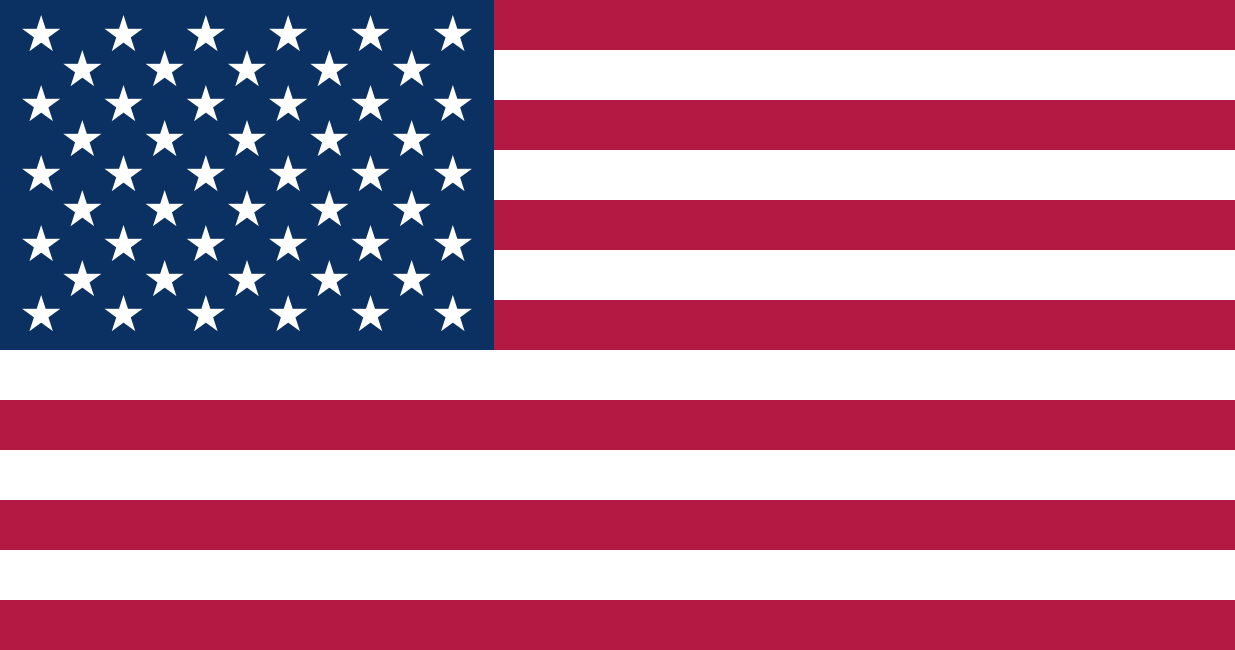
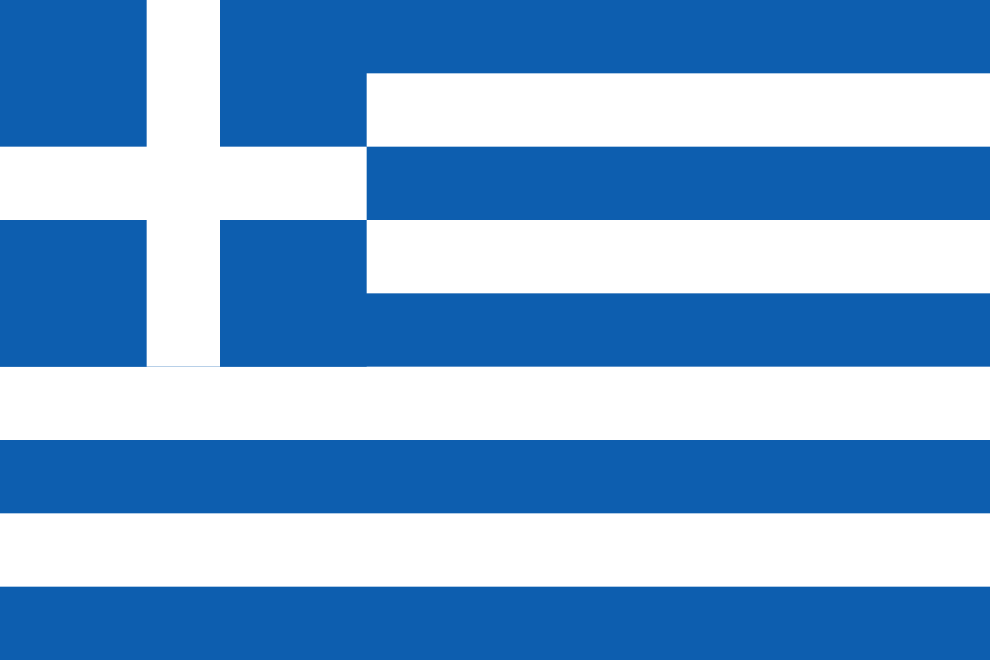
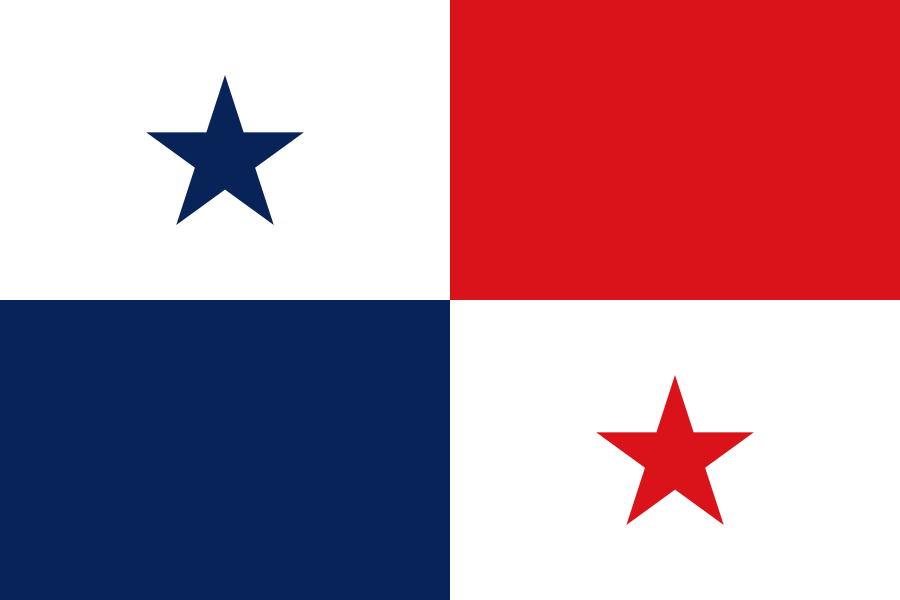
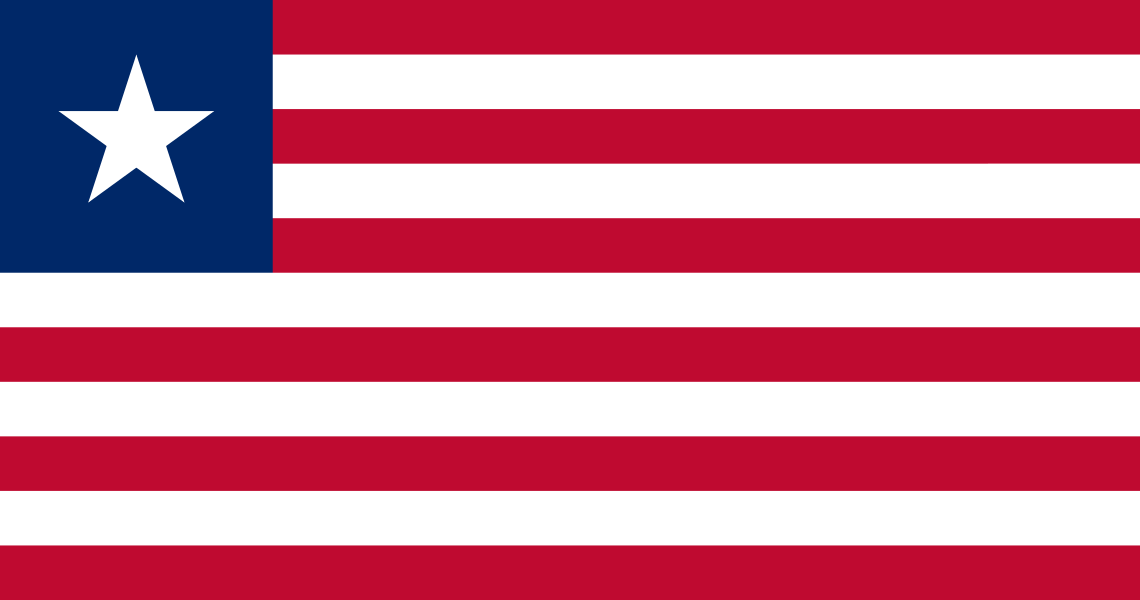
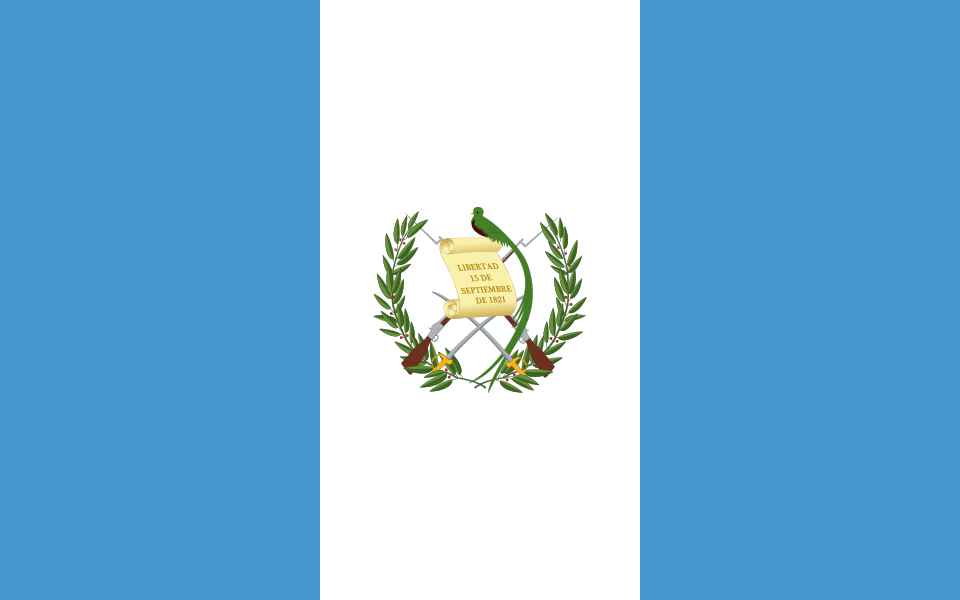
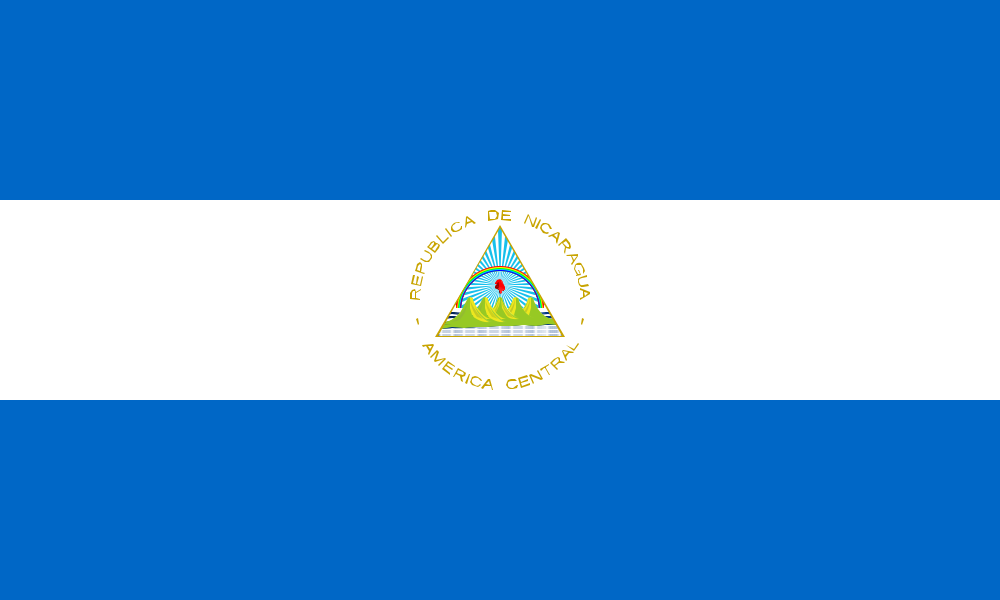
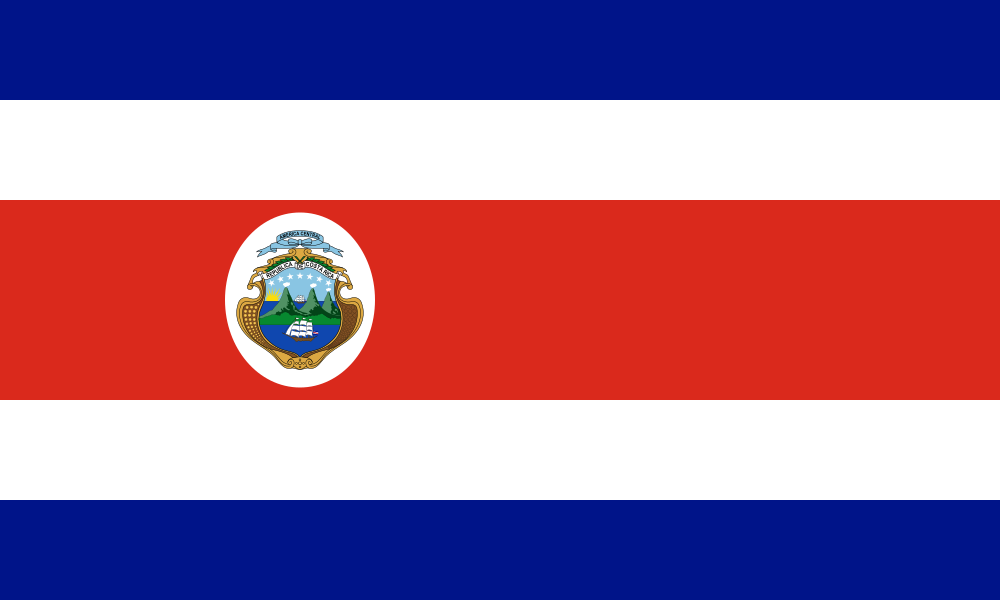
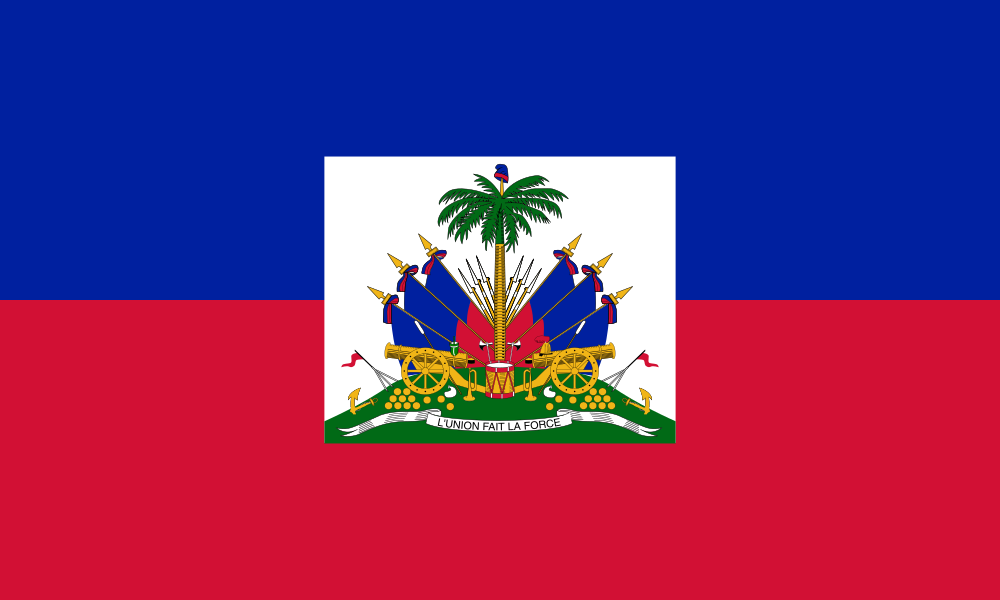
In March 1916 Germany declared war on Portugal, and Romania entered the war on 27 August with an eye on Transylvania. The United States declared war on Germany on 6 April 1917, but fought as an “associated power” rather than a formal ally. That year Greece, after the king was forced out, joined the Entente in June; the Republic of China declared war on Germany and Austria-Hungary on 14 August. Siam (now Thailand) and Brazil also joined the Allied side in 1917. Liberia declared war on Germany on 4 August 1917, and Latin American states including Cuba, Panama, Guatemala, Nicaragua, Costa Rica, Haiti and Honduras also declared war. 6 8 9 7
The forms of participation varied. Brazil sent a naval division to join the British fleet at Gibraltar and a medical mission to Europe. China sent labourers rather than combat divisions: some 140,000 Chinese workers served the British and French. A state that only declared war cannot be weighed alongside the powers that put mass armies on the main fronts. 6 10
 The belligerents: the Central Powers
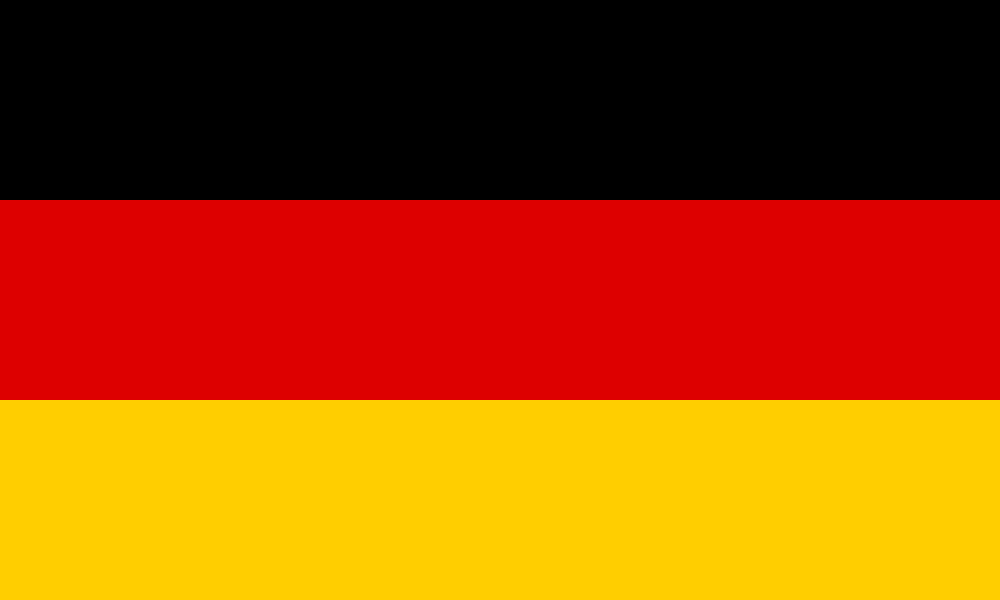
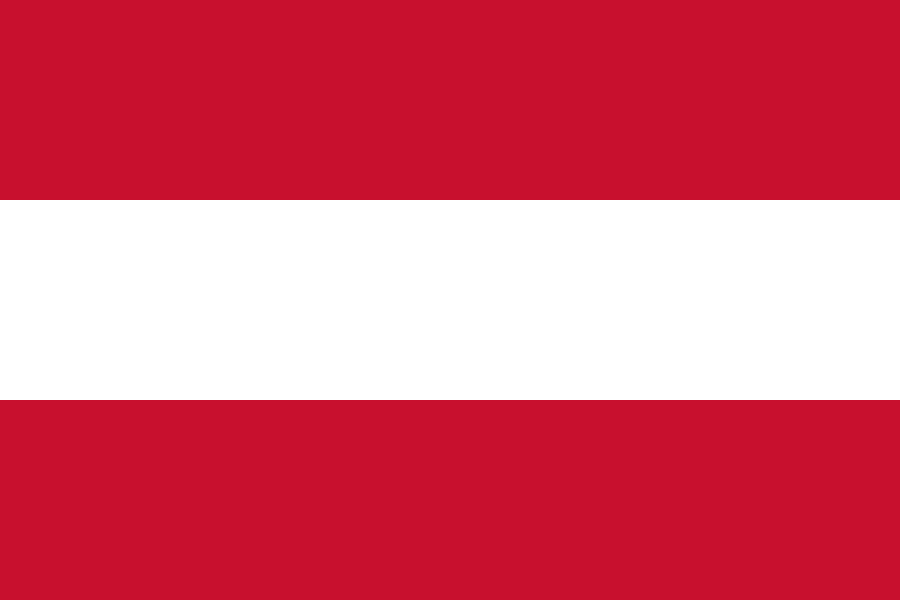
The Central Powers were four states: the German Empire, Austria-Hungary, the Ottoman Empire and the Kingdom of Bulgaria. Their origin was the German–Austro-Hungarian alliance of 1879. Austria and Hungary formed a single Dual Monarchy rather than two belligerents, and it opened the war by declaring war on Serbia on 28 July 1914. Germany, fighting on both the Western and Eastern Fronts, became the centre of the coalition’s war effort. 1 6 7
The Ottoman Empire held back from formal entry for some months after the outbreak of war. On 29 October 1914 former German warships under the Ottoman flag bombarded Odessa and other Russian Black Sea ports, and in November the Entente declared war on the Ottoman Empire. Bulgaria, which had lost most of Macedonia in the Second Balkan War of 1913, joined the Central Powers by declaring war on Serbia on 14 October 1915. 11 6 1
 Imperial mobilisation: dominions and colonies
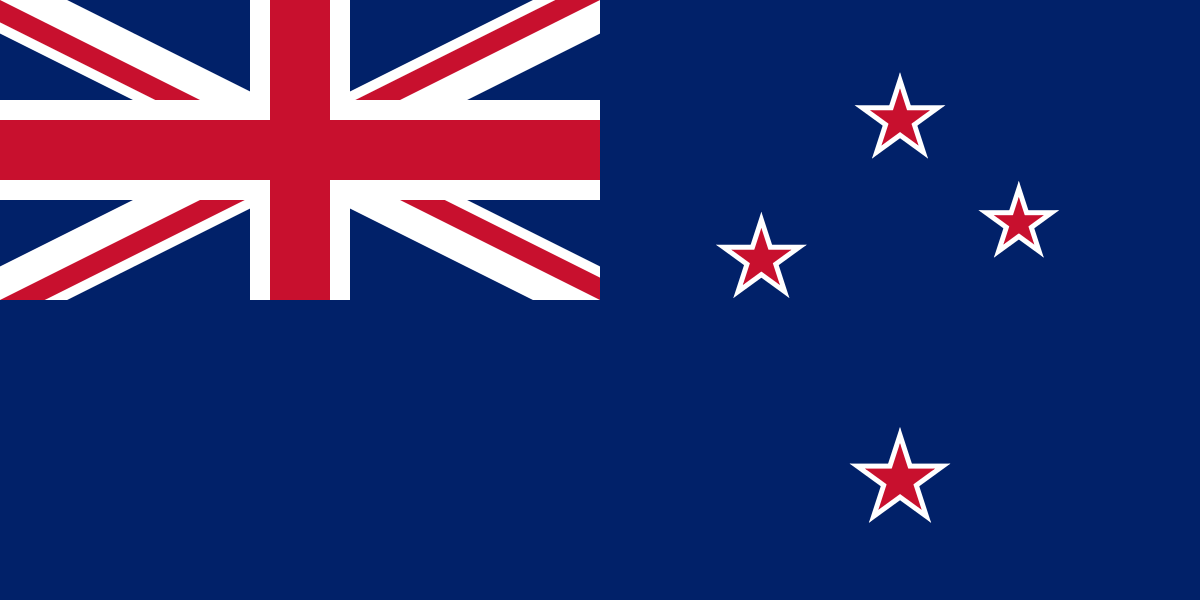
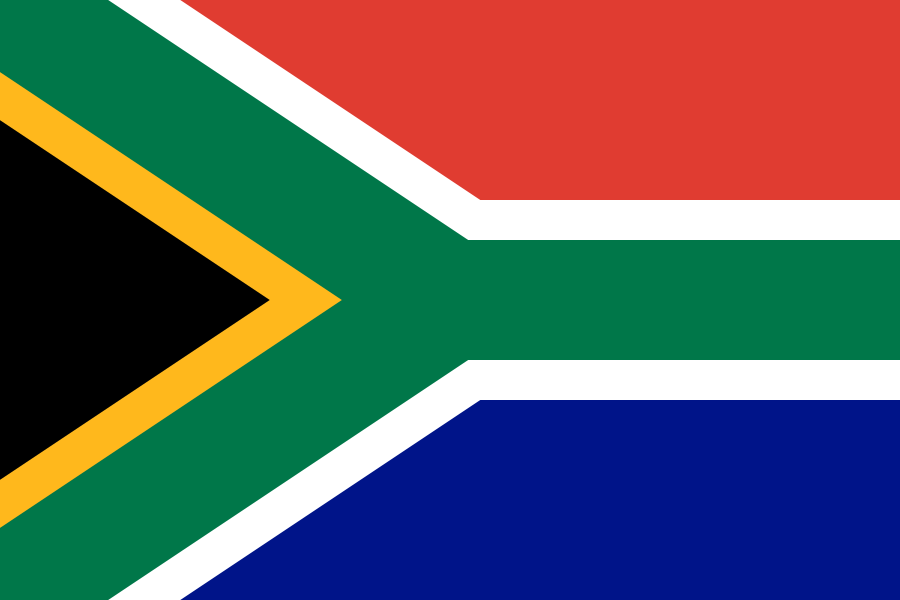
Britain’s declaration of war automatically brought in its dominions and colonies. Dominions such as Canada, Australia, New Zealand, Newfoundland and South Africa controlled their own domestic policy and military spending but not their foreign policy. According to the National Army Museum, more than three million soldiers and labourers from across the empire served alongside the British Army. Some 620,000 Canadians enlisted and over 60,000 were killed; more than 410,000 Australians served in the Australian Imperial Force; New Zealand sent almost 100,000 overseas and lost around 18,000. Newfoundland, which joined Canada only in 1949, sent its own regiment. 6 12
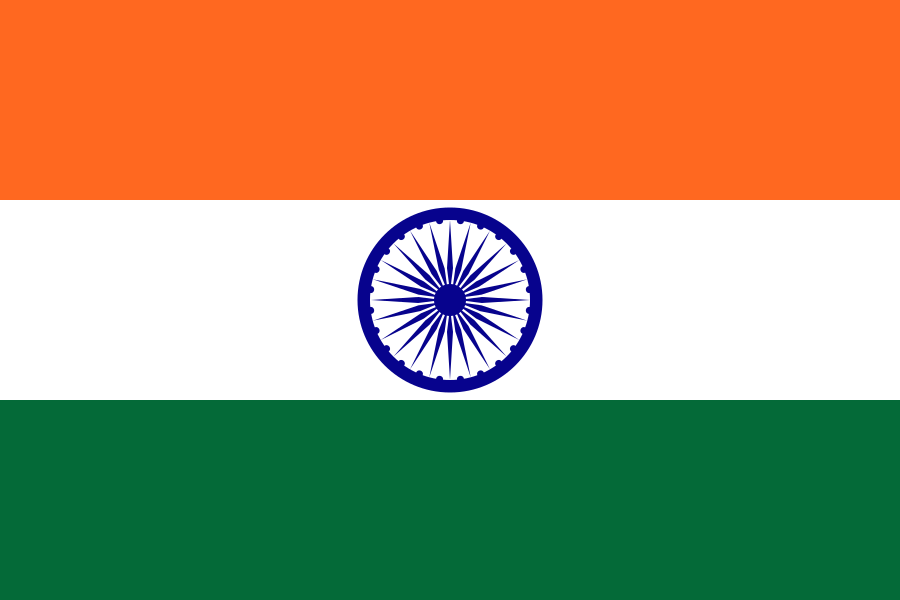
In 1914 the British Indian Army was larger than the British Army itself. Some 1.27–1.3 million Indians served as soldiers and labourers, about 140,000 on the Western Front and nearly 700,000 in the Middle East. In Africa the West African Frontier Force and the King’s African Rifles carried the East African campaign, and at least 180,000 Africans worked in the Carrier Corps; South Africa, unwilling to arm Black South Africans, sent over 60,000 as labourers only. Indian National Congress leaders hoped wartime support would hasten home rule; when self-government did not follow, disillusion fed the campaign for full independence. 1 12
France too looked to its colonies to offset its demographic weakness. Having lost nearly 300,000 dead on the Western Front between August and December 1914 alone, it partly filled the gaps with colonial troops, over 500,000 of whom served on the Western Front in 1914–1918. Around 200,000 Senegalese Tirailleurs were raised in West Africa; more than 135,000 fought in Europe and 30,000 were killed. They fought at Ypres and Dixmude, in the recapture of Fort Douaumont at Verdun and on the Chemin des Dames, with especially heavy losses in Flanders and on the Chemin des Dames. 6 13
From movement to trenches: the land fronts, 1914–1916
The German armies swept through Belgium into northern France and came within 40 km of Paris. But at the Battle of the Marne on 5–12 September French troops and the British Expeditionary Force struck at a gap that had opened between the German armies, and the German First and Second Armies fell back to the Aisne. Each side then tried to turn the other’s flank in a “race to the sea”, and by the end of 1914 an unbroken line of trenches ran from the Channel to the Swiss border. Germany had failed in its central aim of avoiding a long two-front war. 14 1
The Eastern Front was more fluid. Russia advanced early into East Prussia as promised to France, but defeats at Tannenberg and the Masurian Lakes in August and September forced it out of East Prussia. In Galicia the Russians defeated Austria-Hungary heavily, but by spring 1915 the Russians had been driven from Galicia, and the Gorlice–Tarnów offensive of May let the Central Powers invade Russian Poland. The Brusilov offensive, launched on 4 June 1916, inflicted irreparable losses on the Austro-Hungarian army, yet its cost in Russian lives was enormous and the exhaustion it left became a background to the revolution of the following year. 1 15
On the Western Front trenches, barbed wire, machine guns and artillery made attacking extraordinarily costly. On 22 April 1915 at Ypres the Germans used chlorine gas on a large scale for the first time; all the major belligerents went on to use gas, which caused about 1.3 million casualties and some 90,000 deaths. The Battle of Verdun, from 21 February to 18 December 1916, was the longest of the war, with an estimated 700,000 to 975,000 casualties on both sides. On the first day of the Somme, 1 July, the British Army suffered 57,470 casualties including 19,240 killed; by 18 November more than three million men had fought there and over a million had been killed or wounded. 1 16 17
The sea and the southern fronts: blockade, U-boats, Gallipoli
Britain began a naval blockade of Germany soon after the outbreak of war and, by declaring foodstuffs contraband, cut the Central Powers’ imports. The German navy met the Grand Fleet at Jutland in May–June 1916 without a decisive result, and thereafter the High Seas Fleet was largely confined to port. Germany answered with submarines. After the sinking of the liner Lusitania in 1915 drew American protests, Germany promised not to target passenger liners. 18 1
On 1 February 1917 Germany resumed unrestricted submarine warfare, aiming to sever Britain’s sea lanes before the United States could intervene. U-boats sank more than 5,000 Allied ships at the cost of 199 submarines, but losses fell sharply once escorted convoys were introduced in 1917. Blockade and submarine warfare shaped civilian life and the attitudes of neutrals more than any clash of battleships. 19 1
The Entente tried to knock the Ottoman Empire out by seizing the Straits, landing on the Gallipoli peninsula in 1915. After the fleet failed to force the Dardanelles in March, landings began in April, but by the withdrawal in January 1916 each side had suffered some 250,000 casualties and the campaign had failed. Mustafa Kemal, who rose to prominence there, later founded the Republic of Turkey. In December 1914 at Sarıkamış the Ottomans had lost 86% of Enver Pasha’s 100,000-strong force. In Mesopotamia they defeated the British at the siege of Kut, but lost Baghdad in March 1917 and Jerusalem in December, while in June 1916 the British-backed Arab Revolt began. 11 1
Under cover of war the Ottoman government deported Armenians from the eastern provinces to Syria, in death marches and massacres. The exact toll is unknown, but the International Association of Genocide Scholars estimates around 1.5 million; Assyrians and Greeks suffered similar attacks. The Turkish government still denies the genocide, a position most historians reject. 1
Between 1915 and 1917 the Italian army under General Cadorna made repeated frontal assaults along the Isonzo, bleeding heavily for little gain. On 24 October 1917 Austro-Hungarian forces reinforced by German units broke the Italian Second Army at Caporetto with infiltration tactics and gas; the Italians fell back 150 km to hold the Piave, and the Boselli government fell. In the Balkans Serbia repulsed two Austrian invasions in 1914, but collapsed under the Central Powers’ offensive of October 1915, now joined by Bulgaria, and retreated across Albania. The surviving Serbian troops were evacuated to Greece and fought on from the Salonika front. 1 20
Total war at home: war economy, hunger, strikes and mutiny
The long war turned into total war, with the state directing production, labour and food. In every belligerent the government’s share of GDP rose, exceeding 50% in Germany and France. Hindenburg and Ludendorff, who took over the General Staff in August 1916, launched the Hindenburg Programme to multiply munitions output, and the Auxiliary Services Act of the same year required every man aged 17 to 60 not already in the forces or war industry to perform national service. Women filled the places of men sent to the front, entering the workforce in unprecedented numbers — one background to the postwar extension of women’s suffrage. 1 21
Blockade, poor harvests and the diversion of farm labour and fertiliser to the war brought Germany the “Turnip Winter” of 1916–1917. Turnips replaced potatoes as the staple, and winter rations fell to 1,000 calories a day, a third of the 3,000 deemed necessary for an adult man. Hunger fed directly into labour unrest. After a strike in June 1916 against Liebknecht’s arrest and the “bread strike” of April 1917, a mass strike gripped Austria-Hungary from 3 to 25 January 1918, and in Germany more than a million workers downed tools demanding better living and working conditions, an end to the war and democratisation of the constitution. 22 23
The Berlin strike was organised by the Revolutionary Shop Stewards under Richard Müller, and workers’ councils were elected on a wide scale for the first time. The SPD leaders Ebert and Scheidemann joined the strike committee under pressure from the workers but worked to moderate it. Police and troops broke the strike; leaders such as Kurt Eisner, who had organised the munitions workers’ strike in Munich, were arrested, and many workers were drafted and sent to the front. Many of the workers’ and soldiers’ councils of November 1918 followed the pattern of the January strike. 23
Entente armies and home fronts wavered too. When the Nivelle offensive, begun on 16 April 1917 with the promise of decisive victory within 48 hours, produced only heavy losses, a division’s refusal to attack on 3 May set off mutinies that touched nearly half the French infantry divisions on the Western Front. The soldiers held their trenches but refused to attack. Nivelle’s successor Pétain halted futile assaults and granted more leave, while 3,400 courts-martial sentenced 554 mutineers to death, 26 of whom were executed. In Ireland the Easter Rising began on 24 April 1916 and was crushed within six days; the execution of sixteen of its leaders instead swelled support for independence. 1 24 25
The socialists and the war
In August 1914 most socialist parties, for all their commitment to class struggle and internationalism, sided with their own governments. The parties of the Reichstag agreed to a Burgfrieden, a political truce, and on 4 August the SPD deputies voted unanimously for war credits — fourteen of the ninety-two had opposed them in the party caucus but bowed to discipline; the same day French socialists rallied behind the war in what became known as the union sacrée. Most Austrian, British and Russian socialists did likewise. 26 1
Opposition began with a few and widened. Karl Liebknecht cast the lone vote against the second war credits in the Reichstag on 2 December 1914 and was arrested in Berlin on 1 May 1916 after crying “Down with the war!”. Anti-war socialists meeting at Zimmerwald in Switzerland on 5–8 September 1915 blamed the war on reactionary capitalist governments and called for a peace without annexations or reparations; with the later conference at Kienthal they became known as the Zimmerwald movement. Some, like Eugene Debs in the United States and Bertrand Russell in Britain, were jailed for opposing the war. The collapse of the International and the splits of the Zimmerwald movement are told in The Collapse of the Second International. 27 26 1
1917: revolution in Russia and American entry
By the end of 1916 Russian casualties — killed, wounded or captured — approached five million, and the cities suffered food shortages and soaring prices. On 7 March 1917 a strike shut the Putilov works, Petrograd’s largest plant, and the next day International Women’s Day rallies turned into demonstrations for bread. When troops refused to fire on the crowds, Nicholas II abdicated. The Provisional Government pledged to fight on, but with power divided between it and the Petrograd Soviet, frontline soldiers grew ever more demoralised. The Bolsheviks, promising immediate peace, took power on 7 November; an armistice in December was followed on 3 March 1918 by the Treaty of Brest-Litovsk, by which Russia left the war, losing 34% of the former empire’s population, 54% of its industrial land and 89% of its coalfields. The story continues in The February Revolution, The October Revolution and Brest-Litovsk and the German occupation of the East. Dates in this article follow the Gregorian calendar. 1 28 29
Neutral in 1914, the United States was nonetheless a major supplier of the Allies. Besides the resumption of unrestricted submarine warfare, the Zimmermann telegram of 17 January 1917 — offering Mexico Texas, Arizona and New Mexico if the US entered the war — was decrypted by British intelligence and made public, turning opinion. Congress declared war on Germany on 6 April. President Wilson wanted the United States to shape the peace, and in January 1918 set out his vision of a new international order and a League of Nations in the Fourteen Points. The Selective Service Act of 1917 drafted 2.8 million men, and by the end of November 1918 two million soldiers of the American Expeditionary Forces had crossed to France. 19 1 8
1918: the last offensives and the collapse of the Central Powers
With Russia out of the war and nearly fifty divisions freed in the east, Germany tried to force a decision before American troops arrived in strength. On 21 March 1918 Ludendorff opened the spring offensive with Operation Michael, driving the British front near Saint-Quentin back 60 km, and in five offensives the Germans again reached the Marne. But supply could not keep pace, the offensives ended in July, and Foch, Allied supreme commander since March, counter-attacked. On 8 August at Amiens Australian, Canadian, British and French troops with over 500 tanks broke the German line, and Ludendorff called it “the Black Day of the German Army”. In the Hundred Days Offensive that followed, the Allies breached the Hindenburg Line from 29 September. 30 1 6 31
The Central Powers crumbled from the south. On 15 September French, Serbian and Greek troops broke through at Dobro Pole on the Salonika front; the Bulgarian army collapsed, and on 29 September Bulgaria signed the Armistice of Salonica, the first of the Central Powers to leave the war. That same day the German Supreme Army Command told the Kaiser the military situation was hopeless. The Ottoman Empire, which had lost Damascus, signed the Armistice of Mudros on 30 October. 1
When the Italians opened the Vittorio Veneto offensive on 24 October, Austria-Hungary was already coming apart from within. In the last week of October independence was declared in Prague, Zagreb and Budapest, and Hungarian divisions demanded to be sent home. The imperial army disintegrated and the Italians took over 300,000 prisoners. On 3 November Austria-Hungary accepted the Armistice of Villa Giusti; after the fall of the Habsburg monarchy, Austria and Hungary signed separate armistices. 1
In Germany Prince Max of Baden became chancellor on 3 October and asked President Wilson for an armistice based on the Fourteen Points. But when the naval command, without the government’s knowledge, ordered a final battle against the British fleet, sailors at Wilhelmshaven refused to sail on 30 October, and on 3 November revolt broke out in Kiel. Sailors’ and workers’ councils spread across the country within days; on 9 November a republic was proclaimed and Wilhelm II abdicated, as told in The German Revolution of 1918–1919. At 5 a.m. on 11 November the armistice was signed in a railway carriage in the Compiègne forest and took effect at 11 a.m. Germany had to withdraw west of the Rhine and surrender its fleet and weapons, while the naval blockade remained in force. Even on the last day 2,738 men were killed. 1 32 33
The cost, the debates and the aftermath
Death tolls vary widely with the method of counting. Commonly cited estimates give 15 to 22 million deaths, 9 to 11 million of them military and 6 to 13 million civilian. Clodfelter notes that “the generally accepted figure of noncombatant deaths is 6.5 million” while warning that civilian deaths are hazardous to estimate. Of the 60 million Europeans mobilised, some 8 million died; Germany lost 15.1% of its active male population, Austria-Hungary 17.1% and France 10.5%. Serbia is estimated to have lost over 1.2 million people including civilians and deaths from disease, nearly 30% of its population. 34 1 6
The cost of the blockade is also disputed. The German Board of Public Health claimed in December 1918 that 763,000 civilians had died because of it; a 1928 study put the figure at 424,000, and Jay Winter estimated 300,000 excess deaths after excluding influenza. Critics note that the German figure was produced amid a campaign to have the blockade lifted. The so-called Spanish flu, spreading from the spring of 1918, was accelerated by mass troop movements, but estimates of its toll range from 17 to 50 million and possibly as high as 100 million. Since disease, the 1918 pandemic included, caused about a third of all military deaths, the line between war deaths and influenza deaths is itself blurred. 18 35 34
Historians have long debated not only why the war began but why the Allies won, how far the generals were responsible for the enormous casualties, how soldiers endured the trenches and how far the home fronts accepted the war. In the 21st century a cultural turn has added new questions about occupation, the radicalisation of politics, race, gender and mental health. In postwar Germany the “stab-in-the-back” myth held that the army had not been beaten in the field but betrayed by a home front of strikers and revolutionaries; yet the German high command itself had conceded defeat at the end of September, and scholars still differ over how far the blockade hastened the collapse. 1 36 18
The armistice of 11 November halted the fighting on the Western Front; it was not a peace. The war brought down four empires — the Russian, German, Austro-Hungarian and Ottoman — and with them the Romanov, Hohenzollern, Habsburg and Ottoman dynasties. The Paris Peace Conference of 1919–1920 and the treaties beginning with Versailles, the new states such as Poland, Finland, the Baltic states, Czechoslovakia and Yugoslavia, the revolutionary wave of 1918–1919 and the crisis of 1923 are continued in The aftermath of the First World War. 1 33
Consequences
The war ended in the defeat of the Central Powers, as Bulgaria, the Ottoman Empire, Austria-Hungary and Germany signed armistices between September and November 1918. Four empires fell — the Russian, German, Austro-Hungarian and Ottoman; the peace conference, the new states and the revolutionary wave are continued in “The aftermath of the First World War”.
Timeline & Map
- 11914.06.28Sarajevo assassination
The assassination of Franz Ferdinand and his wife triggered the July Crisis.
- 21914.07.28Austria-Hungary opens the war
Austria-Hungary declared war on Serbia.
- 1914.08European powers enter
The war widened through great-power intervention and Germany's invasion of Belgium. Montenegro sided with Serbia.
- 1914.08British imperial mobilization
Dominions and British India began contributing troops, labour and resources. Newfoundland was a separate dominion.
- 31914.08–
09 German advance through Belgium and FranceGerman forces advanced through Belgium into northern France. The arrow schematically follows Liège–Brussels–Mons toward the Marne, where the advance was checked in September.
- 1914.08.23Japan enters
Japan declared war on Germany.
- 41914.08.26–
30 Battle of TannenbergThe German Eighth Army encircled and almost destroyed the Russian Second Army in East Prussia.
- 51914.09.05–
12 First Battle of the MarneA Franco-British counter-attack drove the Germans back to the Aisne; the Western Front then settled into trench warfare.
- 61914.10.29–
11 Ottoman entryThe Ottoman attack on Russian Black Sea ports was followed by declarations of war.
- 71915.04.22Chlorine gas at Ypres
German troops used chlorine gas on a large scale for the first time on the Western Front.
- 81915.04.25Gallipoli landings
British, French, Australian and New Zealand forces landed at Gallipoli.
- 1915.05.07Sinking of the Lusitania
A German U-boat sank the liner Lusitania without warning; 1,197 people died.
- 91915.05.23Italy joins the Allies
Italy declared war on Austria-Hungary.
- 101915.10–
11 Central Powers invasion of SerbiaGerman and Austro-Hungarian forces attacked from the north, Bulgaria from the east. The arrow represents the northern advance from Belgrade down the Morava valley. Serbian forces retreated toward Albania.
- 111915.10.14Bulgaria joins the Central Powers
Bulgaria declared war on Serbia.
- 121916.02–
12 Battle of VerdunFrance and Germany fought a prolonged battle of attrition.
- 1916.03.09Germany declares war on Portugal
The seizure of German ships was followed by a formal state of war.
- 1916.05.31–
06.01 Battle of JutlandThe war’s only full-scale clash of battleship fleets ended without a decisive result.
- 131916.06–
09 Brusilov offensive: Lutsk breakthroughRussia’s Southwestern Front broke through Austro-Hungarian positions. The arrow sketches the northern axis from the Rovno area through Lutsk toward Kovel; Kovel was not captured.
- 141916.07–
11 Battle of the SommeBritish imperial and French forces fought Germany in a major battle of attrition.
- 151916.08.27Romania enters
Romania declared war on Austria-Hungary.
- 161917.02–
03 Recapture of Kut and advance to BaghdadReorganized after the 1916 surrender at Kut, British and Indian forces recaptured the town in February 1917 and advanced northwest along the Tigris, entering Baghdad on 11 March.
- 1917.02.01Unrestricted submarine warfare resumed
Germany resumed unrestricted submarine warfare against all shipping in the Atlantic.
- 171917.03February Revolution
Tsarism fell, but the Provisional Government continued the war. The name follows the Julian calendar.
- 1917.04.06US entry
The United States declared war on Germany.
- 1917.05.03French Army mutinies
After the failed Nivelle offensive, refusals to attack spread to nearly half the French infantry divisions on the Western Front.
- 181917.06Greece joins the Allies
Greece entered on the Allied side after a domestic split.
- 1917.07.22Siam enters
Siam declared war on Germany and Austria-Hungary.
- 1917.08.14China enters
China declared war on Germany and Austria-Hungary; Chinese labourers were already supporting the Allies.
- 191917.10.24–
11 Caporetto breakthrough and advance to the PiaveGerman and Austro-Hungarian troops broke through at Caporetto. Italian forces withdrew across the Tagliamento to the Piave. The arrow shows the broad southwestward advance via Udine.
- 1917.10.26Brazil enters
Brazil declared war on Germany.
- 201917.11.07October Revolution
The Bolsheviks seized power in Petrograd.
- 211918.01January strikes
Workers in Austria-Hungary and Germany struck for better living conditions and an end to the war; in Berlin workers’ councils were elected.
- 221918.03.03Brest-Litovsk treaty
Soviet Russia made peace with the Central Powers and withdrew.
- 231918.03.21German spring offensive
Ludendorff launched Operation Michael, Germany’s last great offensive in the west.
- 241918.08.08Amiens and the Hundred Days
The Allies broke the German line at Amiens; Ludendorff called it the Black Day of the German Army.
- 251918.09–
11 Successive Central Powers armisticesBulgaria, the Ottoman Empire and Austria-Hungary concluded armistices; Germany's armistice ended Western Front fighting on 11 November.
- 261918.09.19–
10.01 Megiddo breakthrough and pursuit to DamascusThe Egyptian Expeditionary Force broke the Ottoman front in Palestine; the Desert Mounted Corps and other formations pursued north via the Sea of Galilee. Arab forces advanced on a separate inland axis; Damascus fell on 1 October. The arrow sketches the British imperial advance.
- 271918.11.03Kiel mutiny
Sailors who refused to sail rose in Kiel; workers’ and soldiers’ councils spread across Germany.
Related people 279
Entente Powers178
Leadership6
Commanded the Allied armies from March 1918 and led the counter-attack after the spring offensive stalled in July.
French prime ministerGeorges Clemenceau1841–1929Became prime minister in November 1917, at one of the darkest hours of the war, and demanded total victory over Germany.
President of the United StatesWoodrow Wilson1856–1924Took the United States into the war in April 1917 and set out the Fourteen Points in January 1918, on which Germany asked for an armistice.
King of Italy as it entered the warVictor Emmanuel III1869–1947He was king of Italy as it entered the First World War.
Leader of the Menshevik defensistsAlexander Potresov1869–1934During the First World War, he led the Menshevik defensist wing.
Supreme commander of the Russian armyNicholas II1868–1918In 1915 he took supreme command and went to the front.
Implementers & commanders52
Repeated frontal assaults along the Isonzo in 1915–1917.
French commander-in-chiefRobert Nivelle1856–1924His April 1917 offensive produced only heavy losses and set off the French army mutinies.
Western Front division and corps commanderVladimir Dzhunkovsky1865–1938From 1915 to 1917, he commanded the 15th Siberian Division and 3rd Siberian Corps on the Western Front.
Supreme commander of the Eastern FrontNicholas Romanov1856–1929Appointed supreme commander at the outbreak of the First World War, he led the Eastern Front.
11th Army commanderVladimir Sakharov1853–1920He led the secondary axis of the Brusilov Offensive and captured Brody.
Commander of the Salonika expeditionary forceMikhail Diterikhs1874–1937During the First World War, he commanded the Russian expeditionary force on the Salonika front.
Latvian Rifle Regiment commanderIoakim Vatsetis1873–1938He served in the First World War as commander of a Latvian Rifle Regiment.
Regimental and division commanderAlexander Svechin1878–1938From 1914 to 1916 he commanded the 6th Finnish Rifle Regiment and the Black Sea Naval Division.
Russian corps commanderAndrei Snesarev1865–1937He commanded regiments, brigades, divisions and a corps in the First World War.
U.S. officer commanding a battalion in FranceJohn P. Lucas1890–1949He served in France as the 108th Field Signal Battalion's commander and was severely wounded near Amiens in 1918.
Western Front battalion commanderJohn Gort1886–1946He served as a staff officer and commanded a battalion on the Western Front.
Commander in the capture of Monte SabotinoPietro Badoglio1871–1956He directed the capture of Monte Sabotino in the First World War.
French army transport organizerAimé Doumenc1880–1948He organized motor transport in the First World War, sustaining supply and troop relief at Verdun in 1916.
Russian cavalry commanderAleksandr Krymov1871–1917He commanded cavalry units in the First World War.
Machine-gun battalion commander in FranceEdward Almond1892–1979In 1918, he commanded the 12th Machine Gun Battalion of the 4th Division in France.
U.S. tank brigade commanderGeorge S. Patton1885–1945He commanded tank units at Saint-Mihiel and in the Meuse-Argonne offensive.
Royal Flying Corps flight commanderArthur Harris1892–1984From 1915 to 1918, he served as a Royal Flying Corps pilot and flight commander.
French company commanderRobert Touchon1878–1960Wounded on Christmas night 1914, he led his company in holding the Tête des Faux summit against a German attack and earned two citations.
Salonika Front regimental commanderDušan Simović1882–1962He commanded the 7th Infantry Regiment on the Salonika Front.
Operations chief of the Allied Army of the OrientCharles Huntziger1880–1941As operations chief of the Allied Army of the Orient, he planned the Vardar offensive.
French division commanderMaurice Gamelin1872–1958He served in the First World War and commanded the 9th Infantry Division.
French army commanderPhilippe Pétain1856–1951He commanded French forces at Verdun.
Head of wartime relief and food agenciesHerbert C. Hoover1874–1964During the First World War, he led the Commission for Relief in Belgium and the U.S. Food Administration in feeding millions.
Commander of the 1st Guards CorpsVladimir May-Mayevsky1867–1920He commanded the 1st Guards Corps in World War I.
Sanitary detachment commanderViktor Pepelyaev1885–1920He led the 3rd Siberian Sanitary Detachment during the First World War.
Wartime relief administratorNikolai Kishkin1864–1930During the First World War, he was deputy chief of the Union of Cities, which coordinated medical and rear support.
Eighth Army artillery inspectorMikhail Hanzhin1871–1961During the First World War, he led the artillery planning for the Brusilov Offensive.
Russian front commanderNikolai Ruzsky1854–1918He commanded the Northwestern and Northern Fronts during the First World War.
Commander of the 1st Orenburg Cossack RegimentAlexander Dutov1879–1921He commanded the 1st Orenburg Cossack Regiment from 1914 to 1917.
Russian army chief of staff and corps commanderYevgeny Miller1867–1939In the First World War, he served as chief of staff of the 5th and 12th Armies and commanded the 26th Army Corps.
Eighth Army commanderAlexey Kaledin1861–1918He broke through at Lutsk during the Brusilov Offensive.
Commander of the Brusilov OffensiveAleksei Brusilov1853–1926As commander-in-chief of the Southwestern Front, he directed the Brusilov Offensive in 1916.
Russian army commander and staff officerMikhail Bonch-Bruyevich1870–1956He served in the First World War as commander of the 176th Regiment and quartermaster-general of the 3rd Army and Northwestern Front.
Commander of the Baltic and Black Sea FleetsAlexander Kolchak1874–1920He commanded the Baltic and Black Sea Fleets in the First World War.
Tsarist army company and battalion commanderVladimir Triandafillov1894–1931From 1914 to 1917, he served in the tsarist army as a company and battalion commander.
No. 8 Squadron commanderTrafford Leigh-Mallory1892–1944He commanded No. 8 Squadron, which directed tanks and artillery after the Battle of Cambrai.
Russian artillery commanderAlexander Kozlovsky1864–1940He commanded a Siberian artillery brigade in the First World War.
De facto commander of the Eastern FrontMikhail Alekseyev1857–1918As chief of staff of the Stavka, he oversaw Russian operations and logistics.
Russian cavalry corps commanderPyotr Krasnov1869–1947He led the Lutsk breakthrough during the Brusilov Offensive in 1916.
Caucasus Front commanderNikolai Yudenich1862–1933He commanded the battles of Sarikamish, Erzurum, and Trebizond on the Caucasus Front.
Iron Brigade commanderAnton Denikin1872–1947He commanded the 4th Rifle Iron Brigade and captured Lutsk twice in the Brusilov Offensive.
Cavalry charge commander at KaushenPyotr Wrangel (White commander)1878–1928He led a cavalry charge at the Battle of Kaushen in 1914.
Defence-body initiator and evacuation chiefMikhail Rodzianko1859–1924In 1915 he helped initiate the state defence council and headed its Evacuation Commission.
Imperial Army company commanderMikhail Shalin1897–1970From 1916 to 1918, he served as an Imperial Army ensign and commanded a reserve rifle company.
Russian Army platoon commanderVladimir Kurasov1897–1973He served as a platoon commander on the Western Front in the Imperial Russian Army.
Commander of a raid against Austrian forcesLavr Kornilov1870–1918In November 1914, he led a night assault that captured 1,200 Austrian prisoners.
Allied operations staff officerMaxime Weygand1867–1965As Foch's key staff officer, he coordinated Allied operations.
Russian corps and cavalry division commanderPavlo Skoropadskyi1873–1945He commanded cavalry divisions for Russia in the First World War.
1st Division operations plannerGeorge C. Marshall1880–1959As 1st Division G-3, he planned the Cantigny and Meuse-Argonne offensives.
Assistant Secretary of the Navy who drove expansionFranklin D. Roosevelt1882–1945He drove naval expansion during the First World War.
Russian War Minister directing the June OffensiveAlexander Kerensky1881–1970As War Minister, he pressed ahead with the June 1917 Offensive, which failed.
Imperial Army scout commanderPavel Batov1897–1985Conscripted in 1915, he commanded a scout section in the Life-Guards 3rd Rifle Regiment.
Participants118
He served in the First World War as an Imperial Russian Army officer from 1916 to 1917.
First World War servicemanPaul Karađorđević1893–1976He served in the First World War.
Russian cavalry volunteerNikolai Gumilyov1886–1921He volunteered as a cavalryman from 1914 to 1917 and received two St George Crosses.
Russian army officerMikhail Zoshchenko1894–1958He served as an officer from 1915 to 1917 and received five military orders.
French soldier in trench warfareBoris Souvarine1895–1984He was mobilised into the French Army and experienced trench warfare on the Western Front.
Empress influencing wartime domestic affairsAlexandra Romanova1872–1918While Nicholas II was at the front, she pressed for ministerial changes on Rasputin's advice.
Russian officer serving in the warAnatoly Pepelyayev1891–1938He served in the First World War from 1914 to 1917.
Imperial Russian Army privateBoris Feldman1890–1937He served as a private in the Imperial Russian Army from 1913 to 1917.
Deputy who provisionally supported the war effortMatvey Skobelev1885–1938He provisionally supported the war effort while criticising the government's conduct of the war.
Medical-nutrition unit member on the Western FrontMaria Ulyanova1878–1937After completing nursing courses, she served with a medical-nutrition unit on the Western Front.
Soldier serving as a junior non-commissioned officerIvan Kutyakov1897–1938He was conscripted into the First World War and served as a junior non-commissioned officer in 1916–1917.
Russian Army staff officerAugust Kork1887–1937He served as a staff officer with the 20th Corps, 3rd Siberian Corps, and 10th Army.
Soldier in the Imperial Russian ArmyStanislav Messing1890–1937Drafted into the Imperial Russian Army, he served on the Turkestan and Caucasus fronts from 1913 to 1917.
Russian Imperial Army artillery officerIeronim Uborevich1896–1937He served as an artillery officer in the First World War.
Latvian Riflemen officerEduard Berzin1894–1938He served in the First World War as a Latvian Rifleman.
Officer in the Life Grenadier RegimentGrigory Grinko1890–1938He served in the First World War as an officer in the 1st Life Grenadier Ekaterinoslav Regiment.
Soldier who served in the warVasily Blyukher1890–1938He served in the First World War from 1914 to 1915.
Russian soldier mobilized for the warMoisei Rukhimovich1889–1938He was mobilized into the army in 1914.
Junior officer on the Southwestern FrontNikolai Krylenko1885–1938In 1916 he served as a junior officer in a regimental communications unit on the Southwestern Front.
1st Guards Division officerMikhail Tukhachevsky1893–1937He served with the 1st Guards Division, was wounded, and was taken prisoner in February 1915.
First World War servicemanVoldemar Ulmer1896–1945After graduating from ensign school in 1916, he served in the First World War.
Socialist minister in Belgium's wartime governmentÉmile Vandervelde1866–1938After Germany invaded Belgium in August 1914, he entered the government as minister of state and backed national defence.
French wartime minister without portfolioJules Guesde1845–1922In August 1914, he joined the Union sacrée government as a minister without portfolio.
Officer serving on the Macedonian FrontNapoleon Zervas1891–1957He joined the Movement of National Defence and served on the Macedonian Front.
Royal Engineers officer on the Western FrontRonald Scobie1893–1969He served on the Western Front as a Royal Engineers officer from 1914 to 1918.
Italian army artillery captainGiuseppe Castellano1893–1977He served as an artillery captain in the Italian Royal Army during the First World War.
Italian Army officerVittorio Ambrosio1879–1958He served in the First World War and covered the retreat after Caporetto.
Clerk in Russian military administrationMikhail Ryzhov1889–1939During the First World War, he served as a clerk in the Morshansk district military chief’s office.
U.S. Army officer serving on the French frontJohn J. McCloy1895–1989He served as a U.S. Army artillery officer on the French front from 1917 to 1919.
Czech Družina member in the Russian ArmyStanislav Čeček1886–1930He joined the Czech Družina in the Imperial Russian Army during the First World War.
Military physician on the French frontHenry Beeuwkes1880–1959He served as a military physician on the French front from 1917 to 1918.
Soldier on the Austrian frontTimofey Kirpichnikov1892–1917/1918He served on the Austrian Front and was wounded during the First World War from 1914 to 1916.
Russian Army officerNikolai Skoblin1893–1937/1938?He served as a Russian Army officer in the First World War.
Imperial Russian Army servicemanPeretz Markish1895–1952He served in the Imperial Russian Army during the First World War.
Royal Navy battleship serviceReginald Drax1880–1967He served aboard HMS Lion and took part in major naval actions from 1914 to 1918.
Belgian officer who fought in battlesRaoul Van Overstraeten1885–1977He fought at Liège and Halen, in the siege of Antwerp, and in the Race to the Sea.
Serbian Army officerDraža Mihailović1893–1946He served as an officer in the Serbian Army during the First World War.
Western Front artillery officerAlan Brooke1883–1963During the First World War, he was assigned to a Royal Horse Artillery ammunition column on the Western Front.
French officer and prisoner of warCharles Delestraint1879–1945He served in the First World War and was taken prisoner by German forces.
French infantry officerCharles de Gaulle1890–1970He served as an army infantry officer in the First World War from 1912 to 1918.
Russian military pilotGeorgy Zinoviev1887–1934From 1915 to 1917, he served in the 2nd Army's aviation detachment on the Western Front.
French conscriptJacques Doriot1898–1945Conscripted into the First World War, his unit was destroyed at the Chemin des Dames.
First World War veteranPierre Taittinger1887–1965He served in the First World War.
French participant in the warMarceau Pivert1895–1958He served in the First World War, which made him an antimilitarist.
French prisoner who resisted forced labourRoger Salengro1890–1936Captured by German forces in October 1915, he urged fellow prisoners to refuse forced labour.
Artillery ensign in the Brusilov OffensiveMikhail Gr. Yefremov1897–1942As an Imperial Army artillery ensign, he fought in the Brusilov Offensive.
Tsarist army privateVasily Volsky1897–1946He served as a private in the tsarist army from 1916 to 1917.
Russian officer in the warRoman von Ungern-Sternberg1886–1921He served in the First World War from 1914 to 1916 and was wounded five times.
Russian cavalry officerGrigory Semyonov1890–1946He served in the First World War and received the Order of St. George and St. George's Weapon.
Cotton Distribution Committee memberWilliam L. Clayton1880–1966He served the government during the war on the War Industries Board's Cotton Distribution Committee.
Chair of the Russian POW Aid CommitteeNikolai Golitsyn1850–1925He chaired the Russian POW Aid Committee from 1915 to 1916.
Duma delegation leader visiting Entente powersAlexander Protopopov1866–1918In 1916, he led a Duma delegation visit to the Entente powers.
Russian staff officerVladimir Kappel1883–1920He served as a staff officer in World War I and helped plan the Brusilov Offensive.
Russian junior officer in the warNikolai Shchors1895–1919After serving as a military medic, he fought as a junior officer on the Southwestern Front.
Army relief organiserGeorgy Lvov1861–1925During the First World War, he led the Zemstvo Union and Zemgor, organising army supply and relief networks.
Tsarist artillerymanYakov Golev1894–1960He served in the tsarist artillery in 1916.
Imperial Russian Navy officerAksel Berg1893–1979He served in the Imperial Russian Navy from 1914 to 1918.
Russian-front staff officerPavel Lebedev1872–1933During the First World War, he held staff posts on the Southwestern and Western Fronts.
Red Cross surgical consultant on the Northwestern FrontNikolai Burdenko1876–1946He served as a Red Cross consultant on the Northwestern Front.
Imperial Army conscriptPyotr Baranov1892–1933He was mobilized into the Imperial Army in 1915.
Advocate of Revolutionary DefencismIrakli Tsereteli1881–1959He argued that Russia had to defend itself against German imperialism.
Russian army medical orderly and praporshchikDmitry Furmanov1891–1926He served as a medical orderly and praporshchik in the First World War from 1914 to 1917.
US Army 8th Regiment soldierHarry Haywood1898–1985He served in the US Army's 8th Regiment and saw action in France.
Russian army regiment soldierVasily Chapayev1887–1919Conscripted into the First World War, he served in the 326th Belgoray Regiment.
Russian military doctorAlexander Bogdanov1873–1928Mobilized as a military doctor during the First World War, he served at the front.
Russian Imperial Army staff officerJohan Laidoner1884–1953He served in the First World War as a staff officer in the Russian Imperial Army.
Southwestern Front officerNykyfor Hryhorivc.1885–1919He served as an officer on the Southwestern Front in the First World War.
British Army officer on the Western FrontAnthony Eden1897–1977He served as a British Army officer on the Western Front from 1915 to 1919.
French army officerJean de Lattre de Tassigny1889–1952He served in the 12th Dragoons and 93rd Infantry Regiment during the First World War.
Union leader who accepted the union sacréeLéon Jouhaux1879–1954In 1914, he abandoned the antiwar general-strike line and accepted the union sacrée.
French soldierJacques Duclos1896–1975He fought at Verdun, was wounded, and was later captured.
Czechoslovak Legion soldierLudvík Svoboda1895–1979He deserted the Austro-Hungarian army and joined the Czechoslovak Legion.
Engineer officer who served in the warDmitry Karbyshev1880–1945He served in the First World War, including the Brusilov Offensive.
Russian Imperial Army soldierVasily Zarubin1894–1972He served in the Russian Imperial Army on the Eastern Front from 1914 to 1917.
Russian Imperial Army soldierMikhail Khozin1896–1979Conscripted into the Imperial Russian Army in 1915, he served in the First World War.
Imperial Russian Army volunteerSemyon Bogdanov1894–1960He volunteered for the Imperial Russian Army in 1915 and rose to junior lieutenant.
Russian Army officer in the warSemyon Aralov1880–1969He served as a Russian officer in the East Prussian operation during the First World War.
First World War conscriptAndrei Yeryomenko1892–1970He was conscripted into the Imperial Army and served as an NCO on the Southwest and Romanian Fronts.
Imperial Russian officer on the Southwestern FrontAleksei Antonov1896–1962As an Imperial Russian ensign, he fought on the Southwestern Front and was wounded.
Front commissar who urged continuing the warBoris Savinkov1879–1925As chief commissar of the Southwestern Front, he argued for continuing the war until victory.
Russian army scout and NCOSydir Kovpak1887–1967He served as a scout and NCO in the Russian Imperial Army during the First World War.
Russian Imperial Army soldierPavel Rybalko1894–1948He served in the Russian Imperial Army, fought at Przemyśl and in the Brusilov Offensive, and was wounded.
Imperial Russian Army officerAlexander Todorsky1894–1965He served as an Imperial Army officer in the First World War from 1914 to 1917.
Serviceman on the Romanian FrontGrigory Kotovsky1881–1925Kotovsky served on the Romanian Front.
Russian conscript on the Northern FrontSemyon Roshal1896–1917Mobilized to the Northern Front in 1915, he engaged in front-line propaganda.
Aviation mechanic in the Russian armySergei Ilyushin1894–1977He served as a mechanic in the Russian army’s aviation units from 1914 to 1918.
Russian imperial cavalry officerStanisław Bułak-Bałachowicz1883–1940He fought as a cavalry officer in the Russian imperial army during the First World War.
Chief of cabinet to a Socialist ministerLéon Blum1872–1950He served as chief of cabinet to a Socialist minister in the wartime government.
Co-founder of the Czechoslovak National CouncilEdvard Beneš1884–1948During the First World War, he co-founded the National Council with Masaryk and Štefánik.
Russian Imperial lieutenant generalCarl Gustaf Emil Mannerheim1867–1951He served in the Russian Imperial Army and rose to lieutenant general during the First World War.
Soldier wounded in East PrussiaYakov Serebryansky1892–1956He was severely wounded in East Prussia while serving in the Imperial Army in 1914.
Russian Imperial Army NCOMikhail Kirponos1892–1941He was conscripted into the Russian Imperial Army in 1915 and served as an NCO.
Russian army soldierDmitry Pavlov1897–1941He fought in the First World War until he was taken prisoner by German forces.
Russian army non-commissioned officerAlexander Gorbatov1891–1973He served in the Imperial Russian Army during the First World War.
Imperial Russian Army ensignVasily Chernyshev1896–1952He served as an ensign in the Imperial Russian Army and took part in the First World War from 1915 to 1917.
Russian Imperial Army conscriptNikolai Yakovlev1898–1972Conscripted into the Russian Imperial Army in 1916, he served in the First World War.
Russian Army participantNikolai Antonov-Gritsyuk1893–1939He won all four classes of the St George Cross in the First World War.
Russian Imperial Army junior NCONikolai Vlasik1896–1967He served as a junior NCO in the Russian Imperial Army from 1915 to 1917.
Provisional Government foreign minister during the warPavel Milyukov1859–1943He served as foreign minister in the Provisional Government during the war.
Russian Imperial Army volunteerIvan Bagramyan1897–1982From 1915 to 1917, he volunteered in the Imperial Russian Army and served on the Persian expedition on the Caucasus Front.
Russian Imperial Army soldier on the Western FrontMikhail Koshkin1898–1940Drafted into the Imperial Russian Army in 1917–18, he was wounded on the Western Front.
Russian Imperial Army officerFyodor Tolbukhin1894–1949He volunteered for the Imperial Russian Army in 1914 and rose to staff-captain by 1917.
Western Front soldier and propagandistAlexander Myasnikov1886–1925He served on the Western Front in the First World War and spread revolutionary propaganda among soldiers.
Imperial artillery officerLeonid Govorov1897–1955He was mobilised for the First World War and commissioned as an imperial artillery ensign.
Imperial Russian Army officerAlexander Yegorov1883–1939He was wounded five times and received the Gold Sword for Bravery and other decorations in the First World War.
Soldier in the tsarist armyIzrail Dagin1895–1940He served in the tsarist army from 1915 to 1919.
Chair of the Romanian Front Soldiers' CouncilDmitry Kursky1874–1932During the First World War, he chaired the Soldiers' Council of the 4th Army on the Romanian Front.
Socialist journalist who supported the warGustave Hervé1871–1944At the outbreak of the First World War, he turned to patriotism and support for the war.
Russian army ensign and prisoner of warShalva Tsereteli1894–1955He served as an ensign in the Imperial Russian Army and became a prisoner of war in 1914–1915.
Imperial officer and participantBoris Shaposhnikov1882–1945He served as an officer in the Imperial Army during the First World War.
Russian army conscriptMikhail Lashevich1884–1928He was conscripted into the First World War and wounded twice.
Russian cavalrymanMikhail Frinovsky1898–1940He enlisted in the cavalry in January 1916 and deserted that August.
French soldier and officerÉdouard Daladier1884–1970He fought in the First World War from 1914 to 1918, rising from private to lieutenant.
Tsarist artillery NCO on the Romanian FrontLev Mekhlis1889–1953He served in the Tsarist artillery from 1911 to 1917, reaching senior NCO rank on the Romanian Front.
Junior NCO in Russian artilleryIvan Konev1897–1973He served in the First World War as a junior NCO in Imperial Russian artillery from 1916 to 1917.
Russian imperial cavalrymanKonstantin Rokossovsky1896–1968He served in the 5th Kargopol Dragoon Regiment in the First World War from 1914 to 1917.
Russian soldier on the French frontRodion Malinovsky1898–1967He served in France with the Russian Expeditionary Corps and earned the Croix de guerre.
Tsarist cavalry junior sergeantGeorgy Zhukov1896–1974Conscripted into the tsarist army in 1915, he rose to junior sergeant in a dragoon regiment.
Central Powers43
Leadership5
Lost 86% of his 100,000-strong force at Sarıkamış in December 1914.
First Quartermaster General of the German armyErich Ludendorff1865–1937Took over the General Staff with Hindenburg in August 1916 and opened the spring offensive with Operation Michael in March 1918.
German army commanderPaul von Hindenburg1847–1934He commanded the German army during the First World War.
German EmperorWilhelm II1859–1941Abdicated as the republic was proclaimed on 9 November 1918.
Ottoman interior minister and Grand VizierTalat Pasha1874–1921With Enver he concluded the secret alliance with Germany that brought the Ottoman Empire into the war, and in 1915 the arrests of Armenian intellectuals and the deportation law began the Armenian genocide. He became Grand Vizier in 1917.
Implementers & commanders10
Led the fleet-building programme meant to rival the Royal Navy.
Ottoman commanderMustafa Kemal Atatürk1881–1938Rose to prominence at Gallipoli and later founded the Republic of Turkey.
German wartime production and labour mobilisation chiefWilhelm Groener1867–1939During the war, he ran the War Office and directed munitions production and labour mobilisation.
German staff and field commanderHermann Hoth1885–1971He held staff and field commands for Germany in the First World War.
Company and battalion commander on the Western FrontRudolf Lüters1883–1945He commanded companies and a battalion on the Western Front in the First World War.
Commander of a Polish Legions officers' schoolWładysław Sikorski1881–1943He commanded a Polish Legions officers' school from 1914 to 1916.
German Eastern Front staff chiefMax Hoffmann1869–1927On the First World War's Eastern Front, he planned battles as chief of staff of the German Eighth Army.
German infantry regiment commanderRüdiger von der Goltz1865–1946He led the 76th Infantry Regiment and was wounded at the First Battle of the Marne.
Commander of the Polish Legions on Austria's sideJózef Piłsudski1867–1935In the First World War, he raised the Polish Legions on Austria's side and commanded the 1st Brigade.
German field army commanderHermann von Eichhorn1848–1918From 1915 he led the 10th Army and took Kovno and Grodno.
Participants27
He served in the Austro-Hungarian army during the First World War.
Officer who fought on the Eastern FrontHjalmar Fridolf Siilasvuo1892–1947He trained in Germany and fought on the Eastern Front from 1915 to 1918.
SPD deputy who voted on war creditsEduard Bernstein1850–1932In August 1914, he voted for war credits with the SPD parliamentary group.
German soldier who refused to carry weaponsKarl Korsch1886–1961He served in the German Army from 1914 to 1918 and refused to carry weapons.
Bavarian uhlan officerHans von Manteuffel-Szoege1894–1919He volunteered for the 2nd Bavarian Uhlan Regiment and fought on the Western and Eastern fronts.
SPD leader who backed war credits and the BurgfriedenFriedrich Ebert1871–1925During the war, he backed war credits and the Burgfrieden.
Austrian leader who backed the warVictor Adler1852–1918Despite private misgivings, he backed the government's war.
prisoner-of-war relief workerMax von Baden1867–1929During the war, he carried out Red Cross and prisoner-of-war relief work.
Artillery officer on the Western FrontAlfred Jodl1890–1946He served as an artillery officer on the Western Front during the First World War.
German-side Eastern Front servicemanWilhelm Ritter von Leeb1876–1956He served on the Eastern Front and in the Serbian campaign during the First World War.
Senior German naval staff officerErich Raeder1876–1960He served as a senior naval staff officer in the First World War.
Polish Legions infantry officerStefan Rowecki1895–1944He served in the 1st and 5th Infantry Regiments of the Polish Legions in the First World War.
Austro-Hungarian cavalry officerTadeusz Bór-Komorowski1895–1966He served as a cavalry officer in the Austro-Hungarian Army from 1915 to 1918.
German fighter pilotHermann Göring1893–1946He served as a German fighter pilot in the First World War.
German army staff officerGotthard Heinrici1886–1971He served on the Western and Eastern Fronts during the First World War.
German signals and staff officerHeinz Guderian1888–1954He served in the First World War as a German signals and staff officer.
Finnish Jäger who fought on the Eastern FrontErik Heinrichs1890–1965From 1915 to 1918, he trained in Germany and fought on the Eastern Front.
German staff officerWalter Model1891–1945He distinguished himself as a staff officer in the First World War.
Staff officer on both frontsErich von Manstein1887–1973He served as a staff officer on both fronts and ended the war as a captain.
Volunteer in a German Jäger battalionPaavo Talvela1897–1973In 1916, he served as a volunteer in the 27th Royal Prussian Jäger Battalion.
German staff officerFranz Halder1884–1972He served as a staff officer in the First World War.
Builder of a German-funded revolutionary networkAlexander Parvus1867–1924During the First World War, he built a revolutionary network inside Russia with German government funding.
German soldier on the Western FrontRichard Sorge1895–1944He was wounded three times on the Western Front of the First World War.
German Army soldierAdolf Hitler1889–1945He served in the German Army during the First World War.
German army volunteerErnst Toller1893–1939He volunteered for the German army and served in World War I.
Austro-Hungarian conscriptImre Nagy1896–1958Conscripted in the First World War, he was taken prisoner by the Russian army in 1916.
Austro-Hungarian Army soldierJosip Broz Tito1892–1980He served in the Austro-Hungarian Army during the First World War, was wounded, and became a prisoner of war.
Anti-war socialists53
Leadership3
He opposed the war and organised the Zimmerwald anti-war conference in 1915.
Organiser of the anti-war socialist movementHugo Haase1863–1919In 1917, he founded the USPD with opponents of the war.
Underground Spartacus League organizerLeo Jogiches1867–1919During the First World War, he led the underground organization of the Spartacus League in Germany.
Participants49
In July 1914, he sought to prevent the world war through an international general strike with the German Social Democrats.
Opponent of Bulgaria’s participationDimitar Blagoev1856–1924He opposed the First World War.
German left-wing opponent of the warFranz Mehring1846–1919At the outbreak of war, he opposed Germany’s participation.
signatory of an anti-war manifestoAlexander Schapiro1882–1946During the war, he opposed Kropotkin's pro-Allied position and signed the anti-war manifesto.
organiser of anti-war socialistsAngelica Balabanova1878–1965After the First World War broke out, she brought anti-war socialists together.
Leader of the anti-war oppositionFyodor Rothstein1871–1953During the First World War, he led the BSP's left-wing anti-war opposition against its pro-war line.
Deputy opposing war creditsKarl Liebknecht1871–1919On 2 December 1914, he alone voted against the war credits.
Socialist anti-war activistClara Zetkin1857–1933She opposed the war and organised an international women's anti-war conference in Berlin in 1915.
anti-war agitatorHeinrich Brandler1881–1967He engaged in anti-war agitation from 1914 to 1916.
Anti-war campaignerSylvia Pankhurst1882–1960From 1914 to 1918, she campaigned against the war and conscription.
Anti-war socialistKarl Kautsky1854–1938In 1917, he left the SPD over opposition to the war and co-founded the USPD.
Anti-war internationalistBoris Kamkov1885–1938He attended the Zimmerwald Conference and worked as an anti-war internationalist in 1915.
Bolshevik revolutionary-war advocateNikolai Bukharin1888–1938At Brest, he was the far-left voice for revolutionary war.
Anti-war opponentKurt Eisner1867–1919He joined the USPD in opposition to the war.
Labour chairman opposing war creditsRamsay MacDonald1866–1937He resigned as chairman in August 1914 when Labour backed the government’s war credits.
anti-war campaignerKeir Hardie1856–1915He opposed the war until his death in 1915.
Zimmerwaldist social democratVladimir Voitinsky1885–1960From 1914 to 1916, he worked with Siberian Zimmerwaldist social democrats.
Anti-war internationalistAbram Gots1882–1940In exile at Usolye, he joined the Siberian Zimmerwaldists in anti-war internationalist activity.
anti-war agitator in the armyGrigory Chudnovsky1890–1918He agitated against the war in the army in 1917.
German anti-war activistJulian Marchlewski1866–1925He was active in the Spartacus League and was imprisoned in Germany for anti-war activity.
Internationalist anti-war socialistMark Natanson1850–1919During the First World War, he took an internationalist position at the Zimmerwald and Kienthal conferences.
Voted against war creditsAleksei Badayev1883–1951When war broke out, he and the Bolshevik Duma deputies voted against war credits.
Anti-war internationalistAlfred Rosmer1877–1964He organised French participation in Zimmerwald and sustained anti-war activity throughout the war.
Anti-war activist drafted and jailedAugust Thalheimer1884–1948He was active in the Spartacus League, and was drafted and jailed for anti-war agitation.
Journalist opposing the warAnna Louise Strong1885–1970As a Seattle school board member, she opposed the First World War.
Anti-war newspaper publisherVyacheslav Karpinsky1880–1965When the First World War broke out, he handled the launch and distribution of Sotsial-Demokrat from Switzerland.
Deputy urging a negotiated peace without annexationsPhilipp Scheidemann1865–1939In a Reichstag speech on 15 May 1917, he urged ending the war through diplomacy and making peace without annexations.
Anarchist engaged in anti-war activityVsevolod Eikhenbaum1882–1945In 1915–1916, he fled France for the United States to escape persecution by the authorities for anti-war activity.
Socialist anti-war writerEugene V. Debs1855–1926In 1915 he wrote the anti-war article “Never Be a Soldier.”
Anti-draft organiserEmma Goldman1869–1940In 1917, she was sentenced to two years for anti-draft organizing.
Anti-war activistIsaac Steinberg1888–1957He was arrested for anti-war work and exiled to Ufa in 1915.
Anti-war socialistGustav Landauer1870–1919He opposed the First World War.
Zimmerwald Conference attendeeFeliks Kon1864–1941In Swiss exile, he attended the Zimmerwald Conference as an internationalist left activist.
Bolshevik deputy active against the warGrigory Petrovsky1878–1958From 1914 to 1917, he was arrested for anti-war activity and exiled to Turukhansk.
Anti-war activistRosa Luxemburg1871–1919She was imprisoned from 1915 to 1918 for anti-war work.
Anti-war activist in BritainGeorgy Chicherin1872–1936During the First World War, he conducted anti-war agitation in Britain.
Anti-war internationalistJulius Martov1873–1923Martov attended the Zimmerwald anti-war conference and opposed continuing the war throughout 1917.
Anti-war activist court-martialedWilhelm Pieck1876–1960He was court-martialed for anti-war agitation in 1915.
Anti-war internationalistAnatoly Lunacharsky1875–1933He engaged in anti-war activities in exile.
Internationalist anti-war BolshevikGrigory Sokolnikov1888–1939He opposed the First World War on internationalist grounds.
Anti-war socialistDmitry Manuilsky1883–1959He opposed the First World War and published anti-war papers with Trotsky.
Zimmerwald Conference organiserChristian Rakovsky1873–1941In 1915 he helped organise the Zimmerwald Conference of the international socialist left's anti-war wing.
Zimmerwald Left spokesmanGrigory Zinoviev1883–1936At the anti-war Zimmerwald Conference in early September 1915, he spoke for the revolutionary socialist left.
Anti-war socialist in the Zimmerwald LeftVladimir Lenin1870–1924From 1914 to 1917, he was in the Zimmerwald Left, which called for turning the imperialist war into civil war.
Anti-war socialistLeon Trotsky1879–1940He took an anti-war position during the First World War while in exile in Paris and New York.
Anti-war socialist party founderArthur Crispien1875–1946In 1917, he opposed support for the war and helped found the USPD.
Anti-war internationalist socialistFernand Loriot1870–1932During the First World War, he opposed support for the war and backed the Zimmerwald position.
Leader of the Revolutionary Shop StewardsRichard Müller1880–1943He led the Revolutionary Shop Stewards who organised the Berlin anti-war strike, the first broad election of workers' councils.
Leader of the Serbian Social Democratic PartyDimitrije Tucović1881–1914Killed as a Serbian soldier in the Battle of Kolubara in November 1914; Trotsky called his death the heaviest blow the war dealt to Serbian and Balkan social democracy.
Outside the camps
Implementers & commanders1
Participants2
In 1915–1916, he directed the American Commission for Relief in Belgium, organizing aid for wartime refugees and civilians.
German company commander on the Italian FrontErwin Rommel1891–1944During the Caporetto offensive of 1917 he took Mount Matajur and Longarone and received the Pour le Mérite.
Related terms
Sources: reference 1reference 2reference 3reference 4reference 5reference 6reference 7reference 8reference 9reference 10reference 11reference 12reference 13reference 14reference 15reference 16reference 17reference 18reference 19reference 20reference 21reference 22reference 23reference 24reference 25reference 26reference 27reference 28reference 29reference 30reference 31reference 32reference 33reference 34reference 35reference 36