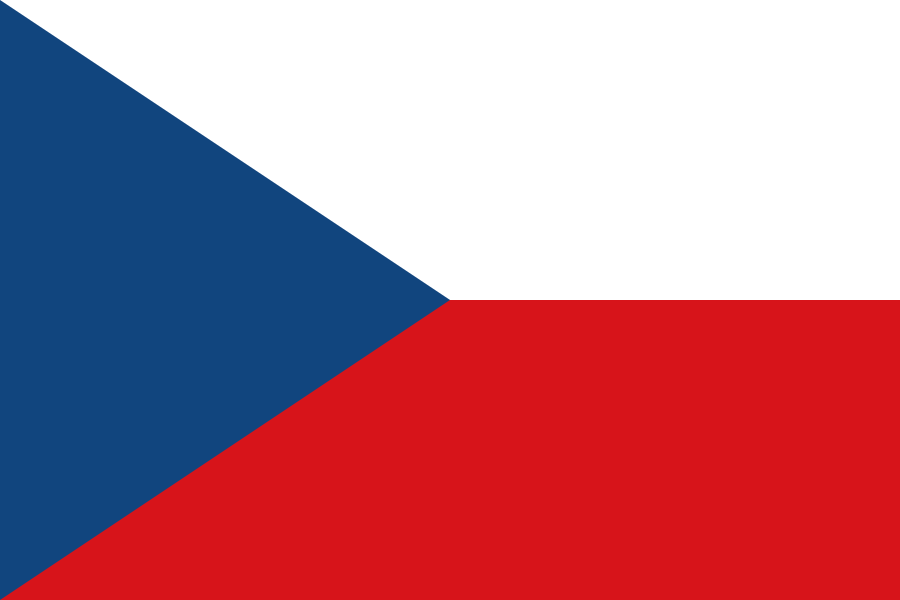
A national hero of two world wars who became an unlikely last bastion of the Prague Spring
In Moscow in August 1968, when Brezhnev demanded he install a 'workers'-peasants' government,' Svoboda replied that he would put a bullet in his own head unless Dubček and the reformist leaders were released.
A World War I veteran who deserted the Austro-Hungarian army for the Czechoslovak Legion, Svoboda organized the 1st Czechoslovak Army Corps in the USSR during World War II and emerged a national hero, liberating his homeland from the east. As Minister of Defense, he declared in February 1948 that 'the army will not march against the people,' enabling the Communist takeover, only to be purged and spend the 1950s imprisoned and in obscurity. Elected president in March 1968 on Dubček's recommendation, he consented to the Prague Spring reforms; after the Warsaw Pact invasion that August, he flew to Moscow and threatened to shoot himself in Brezhnev's presence unless the kidnapped reform leaders were freed. During normalization he passively acquiesced to the muzzling of the press and Dubček's removal, remaining in office until a constitutional provision forced him out in 1975.
Activities and affiliations
Career Timeline
- 1915–1920Czechoslovak Legion: battles of Zborov and Bakhmach, Siberian withdrawal
- 1921–1939Officer in the Czechoslovak Army; battalion commander at Munich
- 1939–1945Organizes Czechoslovak units in Poland and USSR; commands 1st Corps at Kiev and Dukla
- 1945–1950Minister of National Defense of Czechoslovakia
- 1950–1951Deputy Prime Minister and chairman of the State Committee for Sport
- 1951–1954Purged: arrested, imprisoned, then released to work on a cooperative farm
- 1954–1959Commandant of the Klement Gottwald Military Academy
- 1968–1975President of Czechoslovakia
Related historical events
- 1914–1918First World WarCzechoslovak Legion soldierHe deserted the Austro-Hungarian army and joined the Czechoslovak Legion.
- 1941–1945The Great Patriotic WarCommander of the 1st Czechoslovak CorpsHe organized Czechoslovak units in the USSR and commanded the 1st Corps at Kiev and Dukla.
- 1945–1948Czechoslovakia: from the Košice programme to February 1948Defence ministerKept the army in barracks so that it did not intervene.
- 1947–1948The Marshall Plan and the Cold WarKept the army in barracks as Defense MinisterAs the non-partisan Defense Minister, he kept the army confined to barracks during the coup, declaring 'the army will not march against the people,' effectively enabling the Communist takeover.
- 1968The Prague SpringPresident who consented to the Prague Spring reformsAs president, he consented to the Prague Spring reforms and secured the reform leaders' release after the invasion.