Southern Korea after Liberation: From the People's Committees to a Separate Government
How did Korea south of the 38th parallel, which in August 1945 was setting up its own government and organs of self-rule, arrive within three years at a government for the south alone?
When Japan surrendered, the Committee for the Preparation of Korean Independence and the people's committees took charge of order and administration, but the American forces that arrived in September rejected the People's Republic of Korea and set up a military government. Left and right split over the trusteeship clause of the Moscow decision, and the US-Soviet Joint Commission met twice without result. With the suppression of the general strike and the uprising of autumn 1946 the mass base of the left was broken, and the left-right coalition ended with the assassination of Yeo Un-hyeong. After the United States took the Korean question to the United Nations, an election was held only south of the 38th parallel on 10 May 1948, and the Republic of Korea was founded on 15 August.
Who held power in Korea on the day of liberation?
When Japan surrendered on 15 August 1945 not one Allied soldier had yet entered Korea. Governor-General Abe Nobuyuki looked for Korean leaders who could protect the Japanese, and Yeo Un-hyeong met Endo Ryusaku, the head of the civil administration, and obtained the release of political prisoners, three months of food supplies and a promise not to interfere with the keeping of order or the work of founding a state. That day Yeo set up the Committee for the Preparation of Korean Independence with himself as chairman and Ahn Chai-hong as vice chairman. It formed branches and security units in the provinces, more than 140 of them by the end of August. The Government-General still stood, but it was these bodies that looked after order in the streets, food and the factories. 1 2
The committee at first took in left and right alike, but it soon split. Talks on widening it with the nationalists broke down, and communists just released from prison took over its working posts. On 6 September, as word came that American troops were about to land, it convened in Seoul a national congress of some 600 people's representatives, which proclaimed the People's Republic of Korea. It named Syngman Rhee, then in the United States, as chairman, Yeo as vice chairman and Ho Hon as premier; most of the 55 central people's commissars were communists of Pak Hon-yong's group. By November the local branches and other spontaneous bodies had renamed themselves people's committees. These dealt with order, food, the custody of Japanese property and tenancy rents, and were in effect the local administration. 1 3 4
The right took another road. Song Jin-woo, Kim Seong-su, Chang Tŏksu and others stayed out of the committee and proposed to wait for the Korean Provisional Government, then in Chongqing in China, and to accept it as the government. On 8 September they issued, in the name of about a thousand promoters, a statement calling for the overthrow of the People's Republic, and on 16 September they founded the Korea Democratic Party (Hanmindang). Within a month of liberation, south of the 38th parallel, a left that stood on the People's Republic faced a right that stood on the Provisional Government. At this stage it was the left that had organisation and a following in the provinces. 3 5
What did the Americans reject, and what did they restore?
The Japanese surrender south of the 38th parallel was to be taken by the United States. MacArthur's Proclamation No. 1 of 7 September announced military government there; Lieutenant General Hodge, commander of the XXIV Corps, landed at Incheon on 8 September and received the Governor-General's surrender in Seoul the next day. Hodge at first meant to keep the Government-General and its Japanese officials in place. Korean anger forced him to dismiss the Governor-General on 12 September and appoint Major General Arnold as Military Governor, at the head of the United States Army Military Government in Korea. From January 1946 the Military Governor was Major General Lerch. 6
The military government declared itself the only government in the south. On 10 October it refused to recognise the People's Republic of Korea, and then the returning Provisional Government as well, whose leaders had to come home as private individuals. In the provinces it rejected the branches of the preparatory committee, the people's committees and the security units, and restored the machinery of colonial rule. The police were rebuilt around Koreans who had served in the Japanese force; more than 80 per cent of officers of the rank of inspector and above had such a record. Some repressive laws, such as the Peace Preservation Law, were repealed, but the rest of colonial law stayed in force, and Proclamation No. 2, which made disobedience to the occupying forces a crime, served to silence criticism. Members of the Korea Democratic Party became advisers to the Military Governor and took senior posts. 6 3
In the economy, too, policy ran against expectations. The military government took over Japanese state and private property as "vested property", estimated at about 80 per cent of all assets in the south. The farmland of the Oriental Development Company and other Japanese owners passed to the New Korea Company, whose tenants worked 27.7 per cent of the cultivated land in the south. Rice was freed for trade in October 1945 and then, as prices soared, put under compulsory purchase in February 1946; the purchase price was a third of the market price, and to the peasants it looked like the return of Japanese requisitioning. Land reform was put off: the sale of vested farmland to its tenants began only in March 1948. 7 8 9
What line and what organisations did the left have?
The Communist Party of Korea, dissolved in 1928, had not been rebuilt when liberation came. One group (the Jangan faction) proclaimed a party in Seoul the day after liberation, but on 20 August Pak Hon-yong issued "The Present Situation and Our Tasks", the August Theses, and formed a preparatory committee for rebuilding the party, and the lead passed to him. The party rebuilt in September took the theses as its line. They held that the Korean revolution was at the bourgeois-democratic stage, named complete national independence and a revolutionary solution of the land question as its tasks, and called for a united front centred on workers and peasants and open to all progressive forces, which was to found a people's government. Since they also held that Korea had been freed by the "progressive democratic states", the Soviet Union, Britain, the United States and China, the party did not confront the military government head-on in its first year. 10 11 12
The party quickly built mass organisations. On 5 November 1945, 505 delegates from across the country founded the National Council of Korean Trade Unions (Chŏnp'yŏng), with sixteen industrial unions, 1,194 branches and Ho Song-taek as chairman. Its nineteen demands included a minimum wage, a ban on the labour of children under fourteen and paid leave before and after childbirth for women workers. On 8 December the National Federation of Peasant Unions was founded; it counted about 3.3 million members and demanded land reform, rents of no more than 30 per cent and an end to grain collection. Both bodies backed the People's Republic of Korea. 13 14 15
In February 1946 the Communist Party and Yeo Un-hyeong's People's Party of Korea joined the parties and organisations of the left in the Democratic National Front. Yeo, Ho Hon, Pak Hon-yong, Kim Won-bong and Paek Nam-un were its chairmen and Yi Kang-guk headed its secretariat. It was the left's answer to the Emergency National Council formed by the right that month and to the Democratic Council, the military government's advisory body. In form it was an alliance; in practice, the Encyclopedia of Korean Culture judges, it was run by the Communist Party. Left and right were now divided in organisation as well as in opinion, and even held separate ceremonies for the anniversary of the March First Movement in 1946. 16 17
Why did the news of "trusteeship" split politics in two?
In December 1945 the foreign ministers of the United States, Britain and the Soviet Union met in Moscow. Their decision on Korea had four clauses: a provisional democratic government would be set up to re-establish Korea as an independent state; a US-Soviet Joint Commission would help form it; and on the basis of the commission's proposals, drawn up in consultation with that government, the four powers would work out "an agreement concerning a four-power trusteeship of Korea for a period of up to five years". Trusteeship had been an American post-war design, and agreement came when the Soviet side put forward an amended draft that placed the provisional government first and the United States accepted it. 18 19 17
The news that first reached Korea was different. At the end of December the Dong-A Ilbo reported that trusteeship was being imposed at Soviet insistence. To people just freed from colonial rule the word meant foreign rule again, and it roused fury. On 28 December Kim Ku and the Provisional Government group gathered representatives of all circles and the next day formed a committee for total national mobilisation against trusteeship; on 31 December they proclaimed that the Korean officials and police of the military government should obey the Provisional Government. Hodge called this a coup and warned Kim Ku. Meanwhile, on 30 December, Song Jin-woo, chief secretary of the Korea Democratic Party, who had taken a cautious line on trusteeship, was assassinated. 17 5
The left at first said it would oppose trusteeship if the report was true; in January 1946, when the full text became known, it swung to support of the Moscow decision as a whole. What it supported was the provisional government and the Joint Commission, but its opponents called this "pro-trusteeship". The affair gave the right, until then the weaker side, a popular cause and an organised base in "anti-trusteeship". Judgements still differ. Some see the campaign as national resistance to foreign interference; the Encyclopedia of Korean Culture holds that unconditional opposition deepened the confrontation between the United States and the Soviet Union rather than their cooperation and so could not prevent division. The Moscow decision itself is read by some as centred on the provisional government, by others as having settled nothing. 17 19
Why did the Joint Commission stall, and what changed afterwards?
The Joint Commission opened in Seoul on 20 March 1946. To form a provisional government it first had to decide which parties and organisations to consult. The Soviet side held that only those supporting the Moscow decision qualified; the Americans answered that most Koreans opposed trusteeship and could not be excluded for that. If the anti-trusteeship right was left out, no force speaking for American interests could lead the provisional government. The commission adjourned indefinitely on 6 May. In June Syngman Rhee, speaking at Jeongeup in North Jeolla, called for a government in the south alone. It was the first public appearance of the idea of a separate government. 20 21 22
Right after the adjournment the military government began to bear down on the left. On 15 May the police announced that officers of the Communist Party had printed about 12 million won in counterfeit notes at the Jeongpansa press, housed in the party's building (the Jeongpansa counterfeiting case). The party daily Haebang Ilbo was suspended, the party was evicted from the building, and in November Yi Gwan-sul and others were sentenced to life imprisonment. Views of the case are opposed. The Encyclopedia of Korean Culture's entry presents it as counterfeiting carried out to fund the party. The party called it a fabrication from the first, and the defendants retracted their confessions in court as extracted by torture. Korean Wikipedia cites recent research which finds decisive contradictions in the judgment and concludes that the military government fabricated the case to suppress the party. In early September warrants were issued for Pak Hon-yong, Yi Kang-guk and Yi Ju-ha and three left-wing newspapers were closed. The Communist Party dropped its conciliatory attitude to the military government and turned to the "new tactics" of mass struggle. 23 24 25
At the same time the military government tried to build up the centre. Lieutenant Bertsch, one of its advisers, brought Yeo Un-hyeong and Kim Kyu-sik together, and on 25 July the Left-Right Coalition Committee was launched. The left delegation called for support of the Moscow decision, land reform by confiscation and free distribution, exclusion of collaborators and transfer of power to the people's committees; the right delegation wanted trusteeship and the collaborators left until a provisional government existed. In October the two men agreed on seven principles, among them a provisional government, land reform with nationalisation of key industries, and an ordinance on collaborators. But the Communist Party and the Korea Democratic Party, Syngman Rhee and Kim Ku all turned away. Using the principle on a legislative body, the military government opened the South Korean Interim Legislative Assembly in December (Kim Kyu-sik in the chair, half the members appointed by Hodge) and then lost interest in the coalition. 21 26
What did the strike and the uprising of autumn 1946 demand?
In the summer of 1946 the towns of the south went hungry. Rice collection had failed, and with rice barred from moving freely into the cities the urban food situation became desperate. On 13 September some 3,000 workers of the railway workshops at Yongsan in Seoul demanded a midday meal, an end to day rates, wages in line with the price of rice, and food rations; the military government refused to accept a document in the union's name. On 23 September some 7,000 railway workers in Busan struck, the next day some 15,000 in Seoul followed, and every train in the south stopped. Printers, postal and electrical workers joined in, and students boycotted classes. This was the September general strike led by the National Council of Korean Trade Unions. Political demands were added: freedom for the labour movement, an end to arrests, the reopening of suspended newspapers. On 30 September the military government sent 3,000 police to arrest about a thousand railway workers occupying their yards, and the right-wing union federation and youth groups joined in breaking the strike. 27
On 1 October police fired on demonstrating workers outside Daegu station and killed at least one. The next day townspeople surrounded the police headquarters and the city hall, and the military government declared martial law and put the rising down. It spread through most counties of North and South Gyeongsang and then to Chungcheong, Gyeonggi, Gangwon and Jeolla, and by December had touched the whole south except Jeju Island (the October uprising, or Autumn Uprising). Towns demanded food rations, villages an end to grain requisitions and rents of no more than 30 per cent; the punishment of collaborators and the transfer of power to the people's committees were raised everywhere. Crowds occupied police stations and township offices and attacked policemen and officials. A tally given in English Wikipedia counts 92 policemen, 163 civil servants, 116 civilians and 240 participants killed, and 2,609 arrests. 25 28
How to read that autumn is disputed. The military government and the right saw a "riot" engineered by the Communist Party, and the Encyclopedia of Korean Culture's entry on the rice collection order also speaks of a peasant riot instigated by the party. The same encyclopedia's entry on the October events calls them an uprising that criticised the failures of the military government and demanded redress, and its entry on the strike sees desperate social conditions combined with the party's strategy. A joint Korean-American conference of the military government and centrist leaders named popular hatred of the police and collaborators inside the military government among the causes. The outcome was one-sided. The trade union council all but collapsed with the arrest of its officers, and the leaders of the people's committees and peasant unions were arrested or went into hiding. On 23 November the Communist Party merged with the People's Party of Korea and the South Korean New People's Party into the Workers' Party of South Korea, but Pak Hon-yong had already gone north and the party went underground. 9 25 27 12
How was a separate government decided?
The Joint Commission met again on 21 May 1947. This time almost every party and organisation except the followers of Syngman Rhee and Kim Ku applied to be consulted. The question of whom to consult was no nearer solution, and on 19 July Yeo Un-hyeong, one pillar of the coalition, was assassinated in Hyehwa-dong in Seoul. In August the military government arrested more than a thousand members of the Workers' Party of South Korea and other leftists; the Soviet delegate Shtykov protested and the talks stopped. On 17 September the United States took the Korean question to the UN General Assembly. The Soviet Union objected that this broke the US-Soviet agreement, and in October its delegation left Seoul. In December Chang Tŏksu of the Korea Democratic Party was assassinated. 20 29 6 30
On 14 November 1947 the UN General Assembly, with the Soviet bloc taking no part in the vote, adopted Resolution 112. It set up a UN Temporary Commission on Korea and recommended elections "on the basis of adult suffrage and by secret ballot" to choose representatives. The commission reached Seoul in January 1948, but the Soviet Union refused it entry north of the 38th parallel. On 26 February the Interim Committee of the General Assembly resolved that elections should be held in such parts of Korea as were accessible; within the commission Australia and Canada were opposed. Kim Ku and Kim Kyu-sik, against an election in the south alone, proposed a leaders' meeting to Kim Il Sung and Kim Tu-bong in the north. From 19 April a joint conference of parties and organisations of north and south met in Pyongyang and resolved against a separate election and for the withdrawal of both armies, but it could not stop the election. The conference is judged both as an occasion staged in advance by the north and as the last attempt to prevent division. 31 32 33
Resistance continued in the run-up to the election. On Jeju Island, where police shooting on 1 March 1947, the arrests that followed and the violence of the Northwest Youth League had turned opinion, 350 armed members of the island organisation of the Workers' Party of South Korea attacked twelve police posts on 3 April 1948 under the slogan of no separate election (the Jeju 4·3 incident). The government's inquiry report estimates that 25,000 to 30,000 people were killed in the suppression, which lasted until 1954. The election of 10 May was held only south of the 38th parallel. Of 200 seats, 198 were filled, two Jeju constituencies being left vacant, and turnout was announced as 95.5 per cent. Kim Ku's Korea Independence Party, the centrists and the left took no part; independents won 85 seats, Rhee's National Association for the Rapid Realisation of Korean Independence 55 and the Korea Democratic Party 29. The Constituent Assembly adopted a constitution in July and elected Rhee president, and on 15 August the government of the Republic of Korea was founded and the military government ended. On 9 September the Democratic People's Republic of Korea was founded in the north. 34 35 36 6
Consequences
Two states were founded, the Republic of Korea south of the 38th parallel and the Democratic People's Republic of Korea north of it. In the south the people's committees and the mass organisations of the left, the trade union council and the peasant federation, were dissolved or driven underground, while the police and bureaucracy restored by the military government, with the Korea Democratic Party and the forces around Syngman Rhee, formed the frame of the new state. Land reform and the reckoning with collaborators were left to the new government, and the armed conflict that began on Jeju went on after its founding, on the road to the Korean War.
Timeline & Map
- 11945.08.15
 Committee for the Preparation of Korean Independence formed
On the day of Japan's surrender Yeo Un-hyeong, having agreed with Endo of the Government-General to take charge of public order, founded the committee, with Ahn Chai-hong as vice chairman.
- 21945.08.20Pak Hon-yong issues the August Theses
Pak Hon-yong issued "The Present Situation and Our Tasks" and formed the preparatory committee for rebuilding the Communist Party of Korea.
- 31945.09.06People's Republic of Korea proclaimed
A national congress of people's representatives convened by the committee in Seoul proclaimed the People's Republic of Korea and elected 55 central people's commissars.
- 41945.09.08
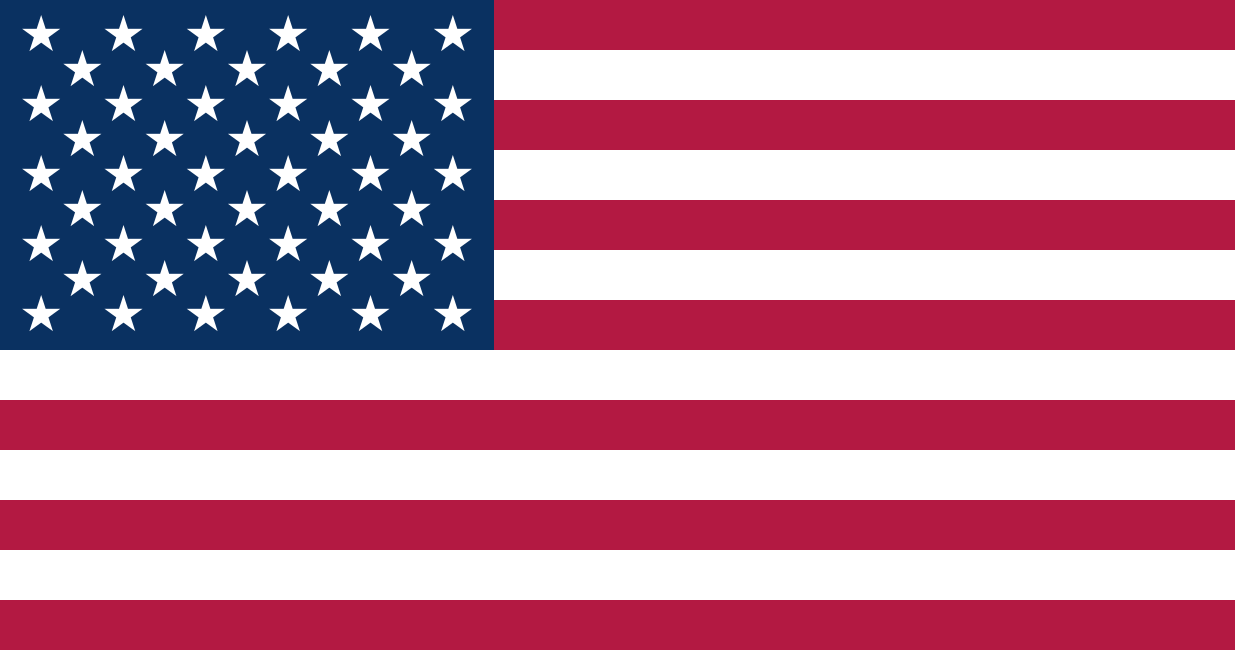 US forces land at Incheon
Lieutenant General Hodge's XXIV Corps landed at Incheon. The next day it received the Governor-General's surrender in Seoul, and military government began.
- 51945.09.16Korea Democratic Party founded
Song Jin-woo, Kim Seong-su and others founded the Korea Democratic Party in Seoul with Song as chief secretary, calling for the overthrow of the People's Republic and support for the Provisional Government.
- 61945.10.10Military government refuses to recognise the People's Republic
The military government stated that no government other than itself could exist south of the 38th parallel.
- 71945.11.05National Council of Korean Trade Unions founded
In Seoul 505 delegates from across the country founded the trade union council and elected Ho Song-taek chairman.
- 81945.12.16–
25  Moscow Conference of Foreign Ministers
The foreign ministers of the United States, Britain and the Soviet Union decided on a Korean provisional government, a US-Soviet Joint Commission and an agreement on trusteeship for up to five years.
- 91945.12.28Anti-trusteeship movement begins
Kim Ku and the Provisional Government group gathered representatives of all circles and the next day formed a committee for total national mobilisation against trusteeship.
- 101945.12.30Song Jin-woo assassinated
Song Jin-woo, chief secretary of the Korea Democratic Party, was assassinated in Seoul by Han Hyeon-u.
- 111946.02Democratic National Front formed
The Communist Party, the People's Party of Korea and other left parties and organisations formed the Democratic National Front, chaired by Yeo Un-hyeong, Ho Hon, Pak Hon-yong, Kim Won-bong and Paek Nam-un.
- 121946.03.20–
05.06 First US-Soviet Joint Commission opensThe Joint Commission opened in Seoul. Deadlocked over which Korean groups to consult, it adjourned indefinitely on 6 May.
- 131946.05.15Jeongpansa counterfeiting case announced
The police announced that Communist Party officers had printed counterfeit notes at the Jeongpansa press. The party called the case a fabrication.
- 141946.07.25Left-Right Coalition Committee launched
The committee was launched with Yeo Un-hyeong and Kim Kyu-sik at the head of five delegates from each side.
- 151946.09.23September general strike
Some 7,000 railway workers struck in Busan; the next day some 15,000 in Seoul joined them and the stoppage grew into a general strike.
- 161946.10.01October uprising begins in Daegu
Police fired on demonstrating workers outside Daegu station. The next day townspeople surrounded the police headquarters and the military government declared martial law.
- 171946.11.23Workers' Party of South Korea founded
The Communist Party merged with the People's Party of Korea and the South Korean New People's Party to form the Workers' Party of South Korea.
- 181946.12.12South Korean Interim Legislative Assembly opens
The assembly of 45 elected and 45 appointed members opened in Seoul with Kim Kyu-sik in the chair.
- 191947.05.21–
10.21 Second US-Soviet Joint Commission opensThe Joint Commission resumed but could not settle whom to consult; the Soviet delegation left Seoul on 21 October.
- 201947.07.19Yeo Un-hyeong assassinated
Yeo Un-hyeong was shot dead by Han Ji-geun at the Hyehwa-dong rotary in Seoul.
- 1947.09.17United States takes the Korean question to the UN
Secretary of State Marshall placed the Korean question before the UN General Assembly, which on 14 November resolved to send a temporary commission and to hold elections.
- 1948.02.26UN Interim Committee resolves on elections where accessible
After the Soviet Union refused the commission entry to the north, the Interim Committee resolved that elections be held in the parts of Korea accessible to it.
- 211948.04.03Jeju 4·3 incident
Some 350 armed members of the Jeju organisation of the Workers' Party of South Korea attacked twelve police posts under the slogan of no separate election.
- 221948.04.19–
30 North-south joint conference in PyongyangA joint conference of parties and organisations of north and south met in Pyongyang. Kim Ku and Kim Kyu-sik attended, and it resolved against a separate election and for the withdrawal of both armies.
- 231948.05.10Election of 10 May
The election to the Constituent Assembly was held only south of the 38th parallel and returned 198 members. Kim Ku, Kim Kyu-sik and the left took no part.
- 241948.08.15
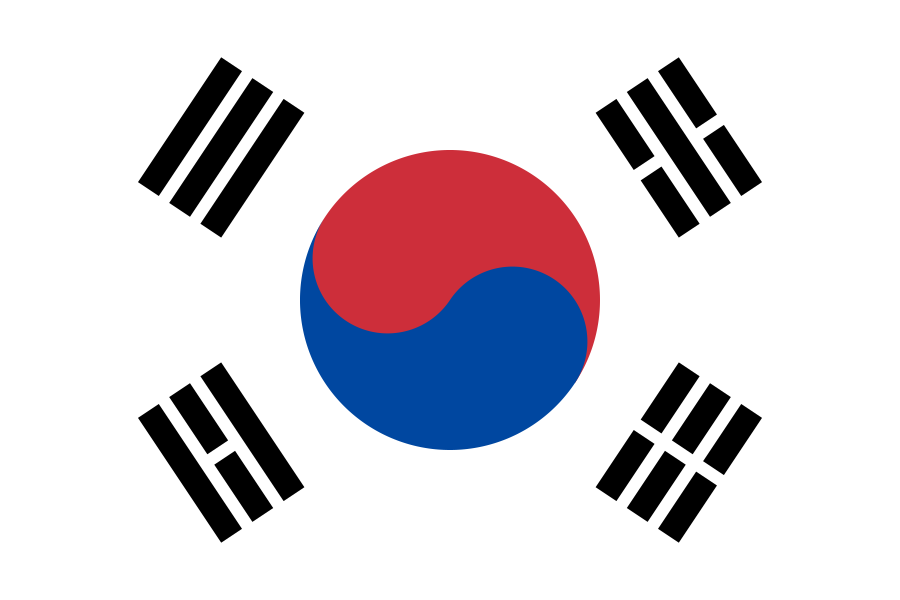 Republic of Korea founded; military government ends
The government of the Republic of Korea was proclaimed in Seoul and the rule of the US military government ended.
Related people 25
Left9
Leadership2
Issued the August Theses and rebuilt the Communist Party; went north after a warrant was issued in September 1946.
Chairman of the National Council of Korean Trade UnionsHo Song-taek1908–?As chairman of the council he directed the general strike of September 1946.
Participants7
Vice chairman of the preparatory committee, premier of the People's Republic and a chairman of the Democratic National Front.
Secretary-general of the preparatory committee; head of the Front's secretariatYi Kang-guk1906–1956Ran the working apparatus of the committee and the Front; went north when a warrant was issued in September 1946.
Head of organisation of the Communist Party and the Workers' Party of South KoreaKim Sam-ryong1908–1950In charge of organisation in the rebuilt Communist Party and the Workers' Party of South Korea; led the underground after Pak went north.
Central Committee member, Workers' Party of South KoreaYi Ju-ha1905–1950Named in the September 1946 warrants with Pak and Yi Kang-guk; led the underground party with Kim Sam-ryong.
Political Bureau member of the Communist Party; Central Committee member of the Workers' Party of South KoreaYi Sung-yop1905–1954Acting head of the justice department of the People's Republic; deputised for Pak at the head of the party in the south.
Chairman of the South Korean New People's Party; a chairman of the Democratic National FrontPaek Nam-un1894–1979Led the South Korean New People's Party, founded the Working People's Party with Yeo in 1947 and then went north.
A chairman of the Democratic National FrontKim Won-bong1898–1958Listed as head of military affairs of the People's Republic and one of the chairmen of the Democratic National Front.
Centre and coalition3
Leadership2
Founded the preparatory committee and the People's Republic, led the coalition effort with Kim Kyu-sik in 1946, and was assassinated in July 1947.
Head of the right side of the coalition committee; chairman of the Interim Legislative AssemblyKim Kyu-sik1881–1950Led the coalition effort and in 1948, opposing a separate election, went to the Pyongyang conference.
Right5
Leadership3
Declined the chairmanship of the People's Republic, called for a separate government at Jeongeup in June 1946 and became the first president in 1948.
President of the Korean Provisional GovernmentKim Ku1876–1949Led the anti-trusteeship movement; in 1948 opposed a separate election and attended the Pyongyang conference.
Chief secretary of the Korea Democratic PartySong Jin-woo1890–1945Founded the Korea Democratic Party against the People's Republic; assassinated on 30 December 1945.
Participants2
Led the Korea Democratic Party after Song's assassination and was an adviser to the Military Governor.
Head of the foreign affairs and political departments, Korea Democratic PartyChang Tŏksu1894–1947Led the founding of the Korea Democratic Party; assassinated in December 1947.
United States and military government5
Implementers & commanders1
Participants3
Proclaimed military government south of the 38th parallel in Proclamation No. 1 of 7 September 1945.
US Secretary of StateJames F. Byrnes1882–1972American representative at the Moscow Conference of December 1945.
US Secretary of StateGeorge C. Marshall1880–1959Took the Korean question to the UN General Assembly on 17 September 1947.
Soviet Union and northern Korea3
Participants3
Soviet representative at the Moscow Conference; negotiated the resumption of the Joint Commission with Marshall in 1947.
Chief Soviet delegate to the Joint CommissionTerentii Shtykov1907–1964Argued in the Joint Commission that only groups supporting the Moscow decision be consulted, and protested at the arrests of leftists in August 1947.
Chairman of the People's Committee of North KoreaKim Il Sung1912–1994Hosted the north-south joint conference in Pyongyang in April 1948 and met Kim Ku and Kim Kyu-sik.
Related terms
Sources: reference 1reference 2reference 3reference 4reference 5reference 6reference 7reference 8reference 9reference 10reference 11reference 12reference 13reference 14reference 15reference 16reference 17reference 18reference 19reference 20reference 21reference 22reference 23reference 24reference 25reference 26reference 27reference 28reference 29reference 30reference 31reference 32reference 33reference 34reference 35reference 36