Historical or cultural region

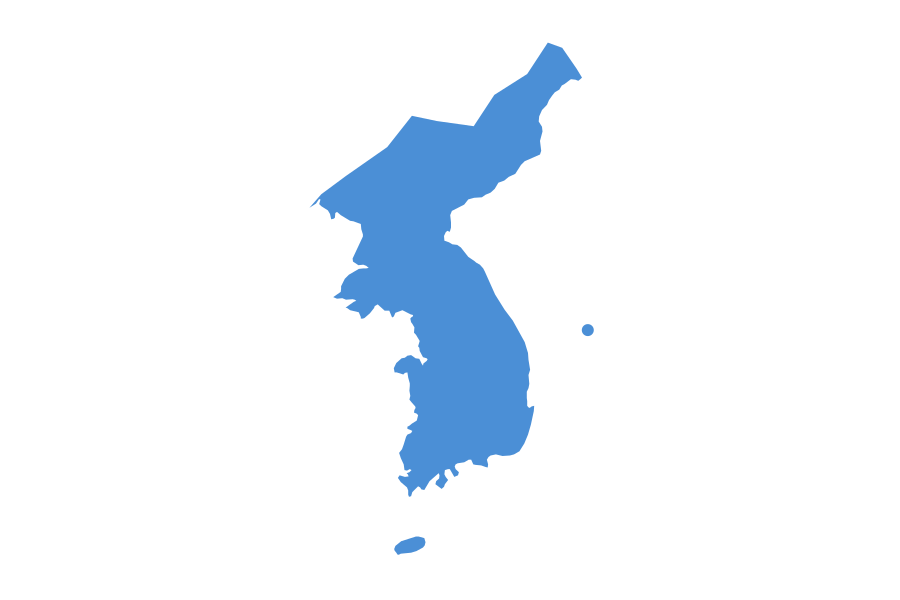
Korea

Events 5 · Citizens 5 · People of origin 24

AlgeriaAndorraAntigua & BarbudaAustraliaBahamasBahrainBangladeshBarbadosBelizeBeninBhutanBoliviaBotswanaBruneiBurundiCambodiaCameroonCanadaCape VerdeCentral African RepublicChadColombiaComorosCosta RicaCyprusDenmarkDjiboutiDominicaDominican RepublicEcuadorEgyptEquatorial GuineaEritreaEswatiniEthiopiaFijiGabonGambiaGuatemalaGuineaHaitiHondurasIcelandIranIraqCôte d’IvoireJamaicaJordanKenyaKiribatiKosovoKuwaitLaosLebanonLesothoLiberiaLibyaLiechtensteinLuxembourgMadagascarMalawiMalaysiaMaldivesMaliMaltaMarshall IslandsMauritaniaMauritiusMexicoMicronesiaMonacoMongoliaMoroccoMyanmarNamibiaNauruNepalNew ZealandNigerNigeriaNorth MacedoniaNorwayOmanPakistanPalauPalestinePanamaPapua New GuineaParaguayPhilippinesQatarCongo - BrazzavilleRwandaSt. Kitts & NevisSt. LuciaSt. Vincent & GrenadinesSamoaSan MarinoSão Tomé & PríncipeSaudi ArabiaSenegalSeychellesSierra LeoneSingaporeSolomon IslandsSomaliaSouth SudanSri LankaSudanSurinameSwedenSyriaTaiwanThailandTimor-LesteTogoTongaTunisiaTuvaluUgandaUnited Arab EmiratesUruguayVanuatuVatican CityVenezuelaYemenZambiaZimbabweRussiaUkraineGeorgiaArmeniaAzerbaijanBelarusKazakhstanLatviaLithuaniaEstoniaPolandFinlandGermanyAustriaHungaryFranceItalyUnited KingdomUnited StatesChinaNetherlandsBelgiumBulgariaCubaSpainRomaniaSerbiaCroatiaSloveniaMontenegroBosnia and HerzegovinaSwitzerlandCzechiaUzbekistanMoldovaTurkmenistanTajikistanKyrgyzstanJapanIndiaTurkeyGreeceArgentinaChileDemocratic People's Republic of KoreaSouth KoreaVietnamAlbaniaAngolaBurkina FasoDR CongoGhanaGuinea-BissauIndonesiaMozambiquePeruTrinidad and TobagoPortugalBrazilEl SalvadorGrenadaGuyanaNicaraguaSouth AfricaTanzaniaIrelandSlovakiaMartiniqueIsraelAfghanistan

Historical states and regions are approximate unions of present-day successor countries or administrative areas, not exact period borders.

State changes

  1. 1910 Annexed byJapanJapan
  2. 1945 Independent ofJapanJapan
  3. 1948 Divided;Democratic People's Republic of KoreaDemocratic People's Republic of KoreaSouth KoreaSouth Koreafounded

Directly involved historical events 5View all

  1. 1918–1923The aftermath of the First World War: peace treaties and the revolutionary waveAs Bulgaria, the Ottoman Empire, Austria-Hungary and Germany signed…
  2. 1924–1927The first united front, the Northern Expedition and the catastrophe of 1927With Soviet aid and on Comintern orders, Communists joined the…
  3. 1927–1936From Jinggangshan to Yan’an: the soviet bases and the Long MarchAfter the massacres of 1927 Mao and Zhu De built a Red Army and a…
  4. 1937–1945The war with Japan and the second united frontIn the full-scale war that began with the Marco Polo Bridge incident…
  5. 1945–1949The Chinese Civil WarAfter Japan’s surrender the Chongqing talks and Marshall’s mediation…

Parties, factions and organizations 3

People by citizenship 5View all

Yi Dong-hwi

이동휘

Pioneer of Korean communism who fused the Bolshevik revolution with national liberation against Japanese rule

On his deathbed he declared: 'I die without seeing the Korean revolution succeed. Comrades, you must establish a Korean Soviet Republic.'

A pioneer of Korean communism who transformed from a Korean Empire army officer into a socialist revolutionary, becoming the first to fuse Marxism with the Korean national liberation struggle. He founded the Korean Socialist Party in 1918, served as prime minister of the Korean Provisional Government where he championed armed resistance, and after breaking with Syngman Rhee led the Korean Communist Party (Shanghai faction) in pursuit of combining national liberation with class revolution.

Career timeline
  • 1895–1902Graduated from Imperial Military Academy; army major and Ganghwa garrison commander
  • 1906–1911Co-founded New People's Association; founded Bochang School; jailed in 105-Man Incident
  • 1913–1917Exiled to Primorsky Krai and Manchuria; established military academy, trained independence forces
  • 1918Founded Korean Socialist Party in Khabarovsk; chairman
  • 1919–1921Prime Minister of the Korean Provisional Government in Shanghai
  • 1921Founded Korean Communist Party (Shanghai faction)
  • 1922–1935Comintern liaison; Far East Korean director of MOPR

Cho Man-sik

조만식
Democratic Party of Korea National liberation and anti-colonial movements Korea Korea 1883–1950 Death date and circumstances unconfirmed

Kodang Cho Man-sik, the Korean Democratic Party leader removed from the northern political stage in 1946

On 30 December 1945 Cho's party adopted its anti-trusteeship resolution despite pressure from the Soviet military command, and on 5 January 1946 the command confined him to the Koryo Hotel. From this point nationalists disappeared from the northern political stage and the left took the lead.

Cho Man-sik (1883-1950), pen name Kodang, was born in Kangso, South Pyongan Province, and worked as an educator, Presbyterian elder, journalist and politician. He graduated from Meiji University in 1913, taught at Osan School and became its headmaster in 1915, and later headed the Pyongyang YMCA, the Korean Product Promotion Society and the Chosun Ilbo. He pursued anti-Japanese activity on Gandhi's nonviolent line. After liberation he chaired the South Pyongan Committee for the Preparation of Korean Independence and then the South Pyongan People's Political Committee, a left-right coalition that also included the South Pyongan Communist Party. He founded the Korean Democratic Party on 3 November 1945, and on 5 January 1946 the Soviet military command confined him to the Koryo Hotel. No confirmed reports of him remain and his death is reported rather than established.

Career timeline
  • 1913–1915Graduated from Meiji University in 1913, became a teacher at Osan School that year and its headmaster in 1915, working in national education
  • 1920s–1930sGeneral secretary of the Pyongyang YMCA and elder at Sanjonghyon Church; president of the Korean Product Promotion Society, chair of the Sin'ganhoe Pyongyang branch and president of the Chosun Ilbo
  • 1945.08Chaired the South Pyongan Committee for the Preparation of Korean Independence, then the South Pyongan People's Political Committee, a left-right coalition
  • 1945.10–11Land reform and tenancy disputes over the 7:3 system exposed his position; right-wing members left the committee for the South, and on 24 November its name dropped "political", turning it into a left-led body
  • 1945.11.03Founded the Korean Democratic Party and was elected its leader on an anti-trusteeship line
  • 1945.12.30His party's central committee adopted an anti-trusteeship resolution rejecting trusteeship outright
  • 1946.01.05Confined to the Koryo Hotel by the Soviet military command and removed from the political stage
  • 1946.02Choe Yong-gon took over the party, and its first congress on 24 February elected him leader
  • 1948–1950Kept in detention without trial amid failed exchange talks; confirmed reports end and his death is reported and presumed, its date and circumstances not established

Yeo Un-hyeong

여운형

He met Lenin and Sun Yat-sen, then staked everything on left-right unity: the last Korean unificationist before partition

“A revolutionary does not die in bed. I will die in the street.” He said this to his children after surviving multiple assassination attempts. On 19 July 1947, at the Hyehwa-dong rotary, a bullet from the White Shirts Society found him.

In 1918 he founded the New Korean Youth League and sparked the March First Movement through the February 8 Declaration of Independence. He co-founded the Korean Provisional Government, met Lenin and Trotsky in Moscow (1922), and joined the Chinese Nationalist Party at Sun Yat-sen's invitation. In August 1945 he secured peaceful transfer of authority from Japan's governor-general, formed the Committee for Preparation of Korean Independence, and became vice-chair of the People's Republic of Korea. In 1946–47 he led the left-right cooperation movement with Kim Kyu-sik, the last serious attempt at a unified Korea, before being assassinated by a right-wing terrorist. He is officially honored by both South and North Korea.

Career timeline
  • 1918Founded New Korean Youth League in Shanghai; became its leader
  • 1919Led the February 8 Declaration of Independence; Deputy Foreign Minister of the Korean Provisional Government
  • 1920–1922Joined Koryŏ Communist Party (Shanghai faction); met Lenin and Trotsky at the Congress of the Peoples of the East in Moscow
  • 1925–1929Joined Chinese Nationalist Party at Sun Yat-sen's invitation; participated in First United Front
  • 1933–1936President of Chosun JoongAng Ilbo; Chairman of Joseon Sports Council
  • 1944Founded the secret Korean Restoration Brotherhood; built nationwide network
  • 1945.08–09Chairman, Committee for Preparation of Korean Independence; Vice-Chair, People's Republic of Korea
  • 1946–1947Led left-right cooperation movement with Kim Kyu-sik; Chairman, Labor People's Party

Yang Lim

楊林

Korean revolutionary, Cheongsan-ri instructor and Long March staff officer, killed crossing the Yellow River in 1936

Born in North Pyongan, his real name was Kim Hun. After the March First Movement of 1919, in which his father was killed, he trained at the Sinheung Military Academy and fought at Cheongsan-ri in 1920 as an instructor. After the Yunnan Military Academy he taught Korean cadets as an instructor at Whampoa in Guangzhou, fought in the Eastern Expedition of 1925 and joined the Communist Party that year. A battalion commander in Ye Ting's Independent Regiment, he fought in the Northern Expedition and the Guangzhou Uprising. After further training in Moscow he went to Manchuria in 1930 as a provincial military secretary. As Bi Shiti he set out on the Long March in October 1934 as chief of staff of the Red Army cadres' regiment, and in February 1936, as chief of staff of the 15th Corps' 75th Division, he was killed leading the assault team across the Yellow River on the Eastern Expedition.

Career timeline
  • 1919March First Movement; enters the Sinheung Military Academy
  • 1920Instructor of the Northern Military Administration school; Battle of Cheongsan-ri
  • 1925Whampoa instructor; Eastern Expedition; joins the Communist Party
  • 1926–1927Battalion commander in Ye Ting's regiment; Northern Expedition and Guangzhou Uprising
  • 1930Secretary of the Manchurian committee's military commission
  • 1934–1935Long March as chief of staff of the cadres' regiment
  • 1936Killed crossing the Yellow River on the Eastern Expedition

People by national background 24View all

Yi Dong-hwi

이동휘

Pioneer of Korean communism who fused the Bolshevik revolution with national liberation against Japanese rule

On his deathbed he declared: 'I die without seeing the Korean revolution succeed. Comrades, you must establish a Korean Soviet Republic.'

A pioneer of Korean communism who transformed from a Korean Empire army officer into a socialist revolutionary, becoming the first to fuse Marxism with the Korean national liberation struggle. He founded the Korean Socialist Party in 1918, served as prime minister of the Korean Provisional Government where he championed armed resistance, and after breaking with Syngman Rhee led the Korean Communist Party (Shanghai faction) in pursuit of combining national liberation with class revolution.

Career timeline
  • 1895–1902Graduated from Imperial Military Academy; army major and Ganghwa garrison commander
  • 1906–1911Co-founded New People's Association; founded Bochang School; jailed in 105-Man Incident
  • 1913–1917Exiled to Primorsky Krai and Manchuria; established military academy, trained independence forces
  • 1918Founded Korean Socialist Party in Khabarovsk; chairman
  • 1919–1921Prime Minister of the Korean Provisional Government in Shanghai
  • 1921Founded Korean Communist Party (Shanghai faction)
  • 1922–1935Comintern liaison; Far East Korean director of MOPR

Rhee Syngman

이승만

First president of South Korea who demanded unification by force and refused to sign the armistice

In a July 1950 letter to Truman: 'I pray… that we can turn to the offensive, break through the hard crust of enemy forces and start the victorious march north.'

Syngman Rhee was a Korean independence activist imprisoned during the late Joseon period for his activities with the Independence Club; after his release he earned a PhD in political science at Princeton, and in 1919 became the first president of the Korean Provisional Government. In 1948 he was elected the first president of the Republic of Korea, building a fiercely anti-communist state under the National Security Law and publicly demanding the forcible reunification of the peninsula by marching north across the 38th parallel. During the Korean War he refused any armistice short of unification, and in 1953 he unilaterally released 27,000 anti-communist prisoners of war, nearly derailing the ceasefire talks; he never signed the armistice. Forced to resign by the April Revolution in 1960 after a rigged election, he died in exile in Hawaii.

Career timeline
  • 1896–1898Independence Club and Hyeopseong Club activist; editor of Maeil Sinmun
  • 1899–1904Imprisoned at Hanseong Prison; wrote The Spirit of Independence
  • 1905–1910Studied in the US; PhD in political science, Princeton
  • 1919–1925First President, Korean Provisional Government
  • 1948Speaker of Constituent Assembly; elected first President of ROK
  • 1948–19601st–3rd President; extended rule through constitutional amendments
  • 1960–1965Resigned after April Revolution; exiled in Hawaii

Cho Man-sik

조만식
Democratic Party of Korea National liberation and anti-colonial movements Korea Korea 1883–1950 Death date and circumstances unconfirmed

Kodang Cho Man-sik, the Korean Democratic Party leader removed from the northern political stage in 1946

On 30 December 1945 Cho's party adopted its anti-trusteeship resolution despite pressure from the Soviet military command, and on 5 January 1946 the command confined him to the Koryo Hotel. From this point nationalists disappeared from the northern political stage and the left took the lead.

Cho Man-sik (1883-1950), pen name Kodang, was born in Kangso, South Pyongan Province, and worked as an educator, Presbyterian elder, journalist and politician. He graduated from Meiji University in 1913, taught at Osan School and became its headmaster in 1915, and later headed the Pyongyang YMCA, the Korean Product Promotion Society and the Chosun Ilbo. He pursued anti-Japanese activity on Gandhi's nonviolent line. After liberation he chaired the South Pyongan Committee for the Preparation of Korean Independence and then the South Pyongan People's Political Committee, a left-right coalition that also included the South Pyongan Communist Party. He founded the Korean Democratic Party on 3 November 1945, and on 5 January 1946 the Soviet military command confined him to the Koryo Hotel. No confirmed reports of him remain and his death is reported rather than established.

Career timeline
  • 1913–1915Graduated from Meiji University in 1913, became a teacher at Osan School that year and its headmaster in 1915, working in national education
  • 1920s–1930sGeneral secretary of the Pyongyang YMCA and elder at Sanjonghyon Church; president of the Korean Product Promotion Society, chair of the Sin'ganhoe Pyongyang branch and president of the Chosun Ilbo
  • 1945.08Chaired the South Pyongan Committee for the Preparation of Korean Independence, then the South Pyongan People's Political Committee, a left-right coalition
  • 1945.10–11Land reform and tenancy disputes over the 7:3 system exposed his position; right-wing members left the committee for the South, and on 24 November its name dropped "political", turning it into a left-led body
  • 1945.11.03Founded the Korean Democratic Party and was elected its leader on an anti-trusteeship line
  • 1945.12.30His party's central committee adopted an anti-trusteeship resolution rejecting trusteeship outright
  • 1946.01.05Confined to the Koryo Hotel by the Soviet military command and removed from the political stage
  • 1946.02Choe Yong-gon took over the party, and its first congress on 24 February elected him leader
  • 1948–1950Kept in detention without trial amid failed exchange talks; confirmed reports end and his death is reported and presumed, its date and circumstances not established

Alexandra Petrovna Kim

Александра Петровна Ким

The first Korean communist, who gave her life bridging the Russian Revolution and Korean liberation

On September 16, 1918, dragged before Ataman Kalmykov's White Cossacks to be shot, her final cry: 'Freedom and independence for Korea!'

Born to Korean migrants in Siberia, she joined the Bolsheviks in 1916, becoming the first Korean communist. Dispatched to the Far East on Lenin's orders, she served as Commissar of Foreign Affairs for the Khabarovsk Soviet, co-founded the Korean Socialist Party with Yi Tong-hwi, and organized Korean Red Guard units against White and Japanese forces before her execution in 1918 at 33, a symbolic figure bridging the Russian Revolution and the Korean independence struggle.

Career timeline
  • 1916Joined the RSDLP(B)
  • 1917Secretary, Khabarovsk Bolshevik branch & Commissar of Foreign Affairs, Far Eastern Council of People's Commissars
  • 1918.04Co-founded the Korean Socialist Party in Khabarovsk
  • 1918.06–08Organized Korean and international Red Guard units against White and Japanese forces
  • 1918.09.04Captured by White and Japanese forces
  • 1918.09.16Executed by White Cossacks in Khabarovsk